
Echoes
G.K. Chesterton
1905
“When everything about a people is for the time growing weak and ineffective, it begins to talk about efficiency.”
❧

Iron rusts from disuse; stagnant water loses its purity and in cold weather becomes frozen; even so does inaction sap the vigor of the mind.

If we lose the virile, manly qualities, and sink into a nation of mere hucksters, putting gain over national honor, and subordinating everything to mere ease of life, then we shall indeed reach a condition worse than that of the ancient civilizations in the years of their decay.

We have only started on our development of our country — we have not as yet, with all our talk of wonderful progress, done more than scratch the surface. The progress has been wonderful enough — but when we compare what we have done with what there is to do, then our past accomplishments are as nothing. When we consider that more power is used merely in ploughing the soil than is used in all the industrial establishments of the country put together, an inkling comes of how much opportunity there is ahead. And now, with so many countries of the world in ferment and with so much unrest everywhere, is an excellent time to suggest something of the things that may be done — in the light of what has been done. When one speaks of increasing power, machinery, and industry there comes up a picture of a cold, metallic sort of world in which great factories will drive away the trees, the flowers, the birds, and the green fields. And that then we shall have a world composed of metal machines and human machines. With all of that I do not agree. I think that unless we know more about machines and their use, unless we better understand the mechanical portion of life, we cannot have the time to enjoy the trees, and the birds, and the flowers, and the green fields.

Everything can collapse. Houses, bodies, and enemies collapse when their rhythm becomes deranged.
More people are interested in trying to shuffle paper assets around than building lasting assets by producing real goods.

I cannot help fearing that men may reach a point where they look on every new theory as a danger, every innovation as a toilsome trouble, every social advance as a first step toward revolution, and that they may absolutely refuse to move at all.
The mental and moral, like the muscular powers, are improved only by being used.

It may be observed, that provinces amid the vicissitudes to which they are subject, pass from order into confusion, and afterward recur to a state of order again; for the nature of mundane affairs not allowing them to continue in an even course, when they have arrived at their greatest perfection, they soon begin to decline. In the same manner, having been reduced by disorder, and sunk to their utmost state of depression, unable to descend lower, they, of necessity, reascend; and thus from good they gradually decline to evil, and from evil again return to good. The reason is, that valor produces peace; peace, repose; repose, disorder; disorder, ruin; so from disorder order springs; from order virtue, and from this, glory and good fortune.
Human subtlety...will never devise an invention more beautiful, more simple or more direct than does nature, because in her inventions nothing is lacking, and nothing is superfluous.

This is only a foretaste of what is to come, and only the shadow of what is going to be. We have to have some experience with the machine before we really know its capabilities. It may take years before we settle down to the new possibilities, but I do not see why it should not enter any one of the fields normally covered by the human intellect, and eventually compete on equal terms.

Every one is familiar with the phenomenon of feeling more or less alive on different days. Every one knows on any given day that there are energies slumbering in him which the incitements of that day do not call forth, but which he might display if these were greater. Most of us feel as if we lived habitually with a sort of cloud weighing on us, below our highest notch of clearness in discernment, sureness in reasoning, or firmness in deciding. Compared with what we ought to be, we are only half-awake. Our fires are damped, our drafts are checked. We are making use of only a small part of our possible mental and physical resources.
We are so obsessed with doing that we have no time and no imagination left for being. As a result, men are valued not for what they are but for what they do or what they have.
There is a limit to the time assigned you, and if you don't use it to free yourself it will be gone and never return.

Good design is unobtrusive. Products fulfilling a purpose are like tools. They are neither decorative objects nor works of art. Their design should therefore be both neutral and restrained, to leave room for the user's self-expression.
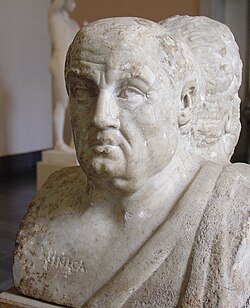
People are frugal in guarding their personal property; but as soon as it comes to squandering time they are most wasteful of the one thing in which it is right to be stingy.
The mind must be given relaxation — it will rise improved and sharper after a good rest. Just as we must not force fertile farmland, for uninterrupted productivity will soon exhaust it, so constant effort will sap our mental vigor.
We cannot, if we would, play the part of China, and be content to rot by inches in ignoble ease within our borders, taking no interest in what goes on beyond them, sunk in a scrambling commercialism; heedless of the higher life, the life of aspiration, of toil and risk, busying ourselves only with the wants of our bodies for the day, until suddenly we should find, beyond a shadow of question, what China has already found, that in this world the nation that has trained itself to a career of unwarlike and isolated ease is bound, in the end, to go down before other nations which have not lost the manly and adventurous qualities. If we are to be a really great people, we must strive in good faith to play a great part in the world.

So it comes about that if anyone spends almost the whole day in reading, and by way of relaxation devotes the intervals to some thoughtless pastime, he gradually loses the capacity for thinking; just as the man who always rides, at last forgets how to walk.

All great events hang by a hair. The man of ability takes advantage of everything and neglects nothing that can give him a chance of success; whilst the less able man sometimes loses everything by neglecting a single one of those chances.

Eaten bread is soon forgotten. Dangers which are warded off by effective precautions and foresight are never even remembered.

Vigorous writing is concise. A sentence should contain no unnecessary words, a paragraph no unnecessary sentences, for the same reason that a drawing should have no unnecessary lines and a machine no unnecessary parts. This requires not that the writer make all his sentences short, or that he avoid all detail and treat his subjects only in outline, but that every word tell.
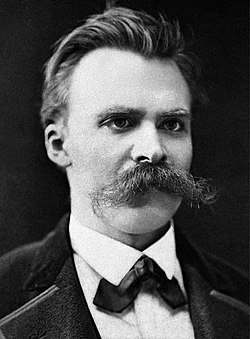
The snake which cannot cast its skin has to die.

Time is the friend of the wonderful business, the enemy of the mediocre.

Lack of activity destroys the good condition of every human being, while movement and methodical physical exercise save it and preserve it.