
Echoes

Francis Bacon
1625
“Age appears to be best in four things: old wood best to burn, old wine to drink, old friends to trust, and old authors to read.”
❧

You cannot stay on the summit forever; you have to come down again. So why bother in the first place? Just this: what is above knows what is below, but what is below does not know what is above. One climbs, one sees. One descends, one sees no longer, but one has seen. There is an art of conducting oneself in the lower regions by the memory of what one saw higher up. When one can no longer see, one can at least still know.
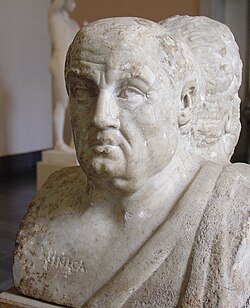
Hang on to your youthful enthusiasms — you'll be able to use them better when you're older.

That though the radiance which was once so bright be now for ever taken from my sight, though nothing can bring back the hour of splendour in the grass, of glory in the flower; we will grieve not, rather find strength in what remains behind.
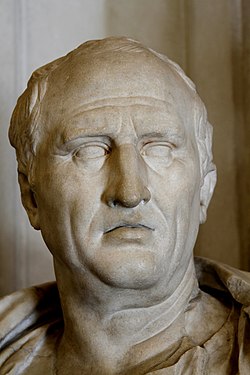
Therefore, young people seem to me to die in such a way that they are overwhelmed by the force of flames when faced with a multitude of waters, while old people die in a manner akin to a fire that is extinguished without any force applied to it; and just as unripe fruit is hardly plucked from trees, but ripe and cooked fruit falls off, so the force takes life from the young, while maturity takes it from the old; which indeed seems to me so pleasant that, the closer I get to death, I feel as if I am about to see land and eventually arrive in port after a long voyage.
No one can lead a happy life, or even one that is bearable, without the pursuit of wisdom, and the perfection of wisdom is what makes the happy life. Yet even the beginnings of wisdom make life bearable. But this conviction must be firmly grasped and not merely adopted in words, if we wish to draw any strength from what we know.

At the bottom of the fall we were able to stand again on dry land. The rope could not be recovered. We had flung down the adze from the top of the fall and also the logbook and the cooker wrapped in one of our blouses. That was all, except our wet clothes, that we brought out of the Antarctic, which we had entered a year and a half before with well-found ship, full equipment, and high hopes. That was all of tangible things; but in memories we were rich. We had pierced the veneer of outside things. We had "suffered, starved and triumphed, groveled down yet grasped at glory, grown bigger in the bigness of the whole. We had seen God in His splendours, heard the text that Nature renders." We had reached the naked soul of man.

It is good for us that we sometimes have sorrows and adversities, for they often make a man lay to heart that he is only a stranger and sojourner, and may not put his trust in any worldly thing. It is good that we sometimes endure contradictions, and are hardly and unfairly judged, when we do and mean what is good. For these things help us to be humble, and shield us from vain-glory.

Let the future tell the truth and evaluate each one according to his work and accomplishments. The present is theirs; the future, for which I really worked, is mine.

Life is an unfoldment, and the further we travel the more truth we can comprehend.
As is a tale, so is life: not how long it is, but how good it is, is what matters.
The fashion of this world passeth away and I would fain occupy myself with the things that are abiding.

The person who has lived the most is not the one who has lived the longest, but the one with the richest experiences.

A wise man should consider that health is the greatest of human blessings, and learn how by his own thought to derive benefit from his illnesses.
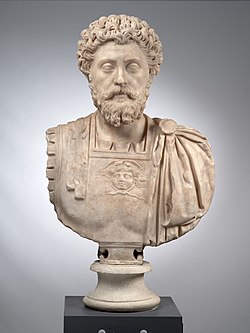
So remember this principle when something threatens to cause you pain: the thing itself was no misfortune at all; to endure it and prevail is great good fortune.

The value of life lies not in the length of days, but in the use we make of them... Whether you find satisfaction in life depends not on your tale of years, but on your will.

My Soul gave me good counsel, teaching me never to delight in praise or to be distressed by reproach. Before my Soul taught me, I doubted the value of my accomplishments until the passing days sent someone who would extol or disparage them. But now I know that trees blossom in the spring and give their fruits in the summer without any desire for accolades. And they scatter their leaves abroad in the fall and denude themselves in the winter without fear of reproof.

He who is in love is wise and is becoming wiser, sees newly every time he looks at the object beloved, drawing from it with his eyes and his mind those virtues which it possesses.
My Son, patience and humility in adversities are more pleasing to Me than much comfort and devotion in prosperity.

As a well-spent day brings happy sleep, so life well used brings happy death.

Knowing that certain nights whose sweetness lingers will keep returning to the earth and sea after we are gone, yes, this helps us to die.
Wherever your life ends, it is all there. The utility of living consists not in the length of days, but in the use of time; a man may have lived long, and yet lived but a little. Make use of time while it is present with you. It depends upon your will, and not upon the number of days, to have a sufficient length of life. Is it possible you can imagine never to arrive at the place towards which you are continually going? and yet there is no journey but hath its end. And, if company will make it more pleasant or more easy to you, does not all the world go the self-same way?

I do not think much of a man who is not wiser today than he was yesterday.
The point is, not how long you live, but how nobly you live. And often this living nobly means that you cannot live long.
He who remembers the evils he has undergone, and those that have threatened him, and the slight causes that have changed him from one state to another, prepares himself in that way for future changes and for recognizing his condition. The life of Caesar has no more to show us than our own; an emperor's or an ordinary man's, it is still a life subject to all human accidents.