
We face the future with our past and our present as guarantors of our promises; and we are content to stand or to fall by the record which we have made and are making.

“Tradition means giving votes to the most obscure of all classes, our ancestors. It is the democracy of the dead.”
We face the future with our past and our present as guarantors of our promises; and we are content to stand or to fall by the record which we have made and are making.

From the heights of these pyramids, forty centuries look down on us.

Let the future tell the truth and evaluate each one according to his work and accomplishments. The present is theirs; the future, for which I really worked, is mine.

The explorers of the past were great men and we should honour them. But let us not forget that their spirit lives on. It is still not hard to find a man who will adventure for the sake of a dream or one who will search, for the pleasure of searching, not for what he may find.

I don't know whether Napoleon did or did not try to get across there and I don't care. I don't know much about history, and I wouldn't give a nickel for all the history in the world. It means nothing to me. History is more or less bunk. It's tradition. We don't want tradition. We want to live in the present and the only history that is worth a tinker's damn is the history we make today.
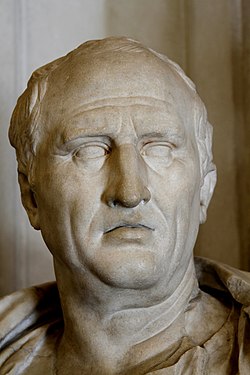
History is indeed the witness of times, the light of truth, the life of memory, the teacher of life, the messenger of antiquity; by what other voice, if not that of the orator, is immortality commended?
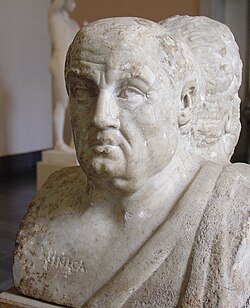
Men who have made these discoveries before us are not our masters, but our guides.

I rely on two precedents: first, to similar cases our Sages applied the verse, "It is time to do something in honour of the Lord: for they have made void thy law"... Secondly, they have said, "Let all thy acts be guided by pure intentions." ...Lastly, when I have a difficult subject before me—when I find the road narrow, and can see no other way of teaching a well established truth except by pleasing one intelligent man and displeasing ten thousand fools—I prefer to address myself to the one man, and to take no notice whatever of the condemnation of the multitude; I prefer to extricate that intelligent man from his embarrassment and show him the cause of his perplexity, so that he may attain perfection and be at peace.

It is a partnership in all science; a partnership in all art; a partnership in every virtue and in all perfection. As the ends of such a partnership cannot be obtained in many generations, it becomes a partnership not only between those who are living, but between those who are living, those who are dead, and those who are to be born.
He plants trees whose shade another age will enjoy.

Whoever wishes to foresee the future must consult the past; for human events ever resemble those of preceding times. This arises from the fact that they are produced by men who ever have been, and ever shall be, animated by the same passions, and thus they necessarily have the same results.

We must know what we think and speak out, even at the risk of unpopularity. In the final analysis, a democratic government represents the sum total of the courage and the integrity of its individuals. It cannot be better than they are. … In the long run there is no more exhilarating experience than to determine one's position, state it bravely and then act boldly.

If I have seen further it is by standing on ye sholders of Giants.

I have had three personal ideals: One to do the day's work well and not to bother about tomorrow. You may say that is not a satisfactory ideal. It is; and there is not one which the student can carry with him into practice with greater effect. To it more than anything else I owe whatever success I have had — to this power of settling down to the day's work and trying to do it well to the best of my ability, and letting the future take care of itself. The second ideal has been to act the Golden Rule, as far as in me lay, toward my professional brethren and toward the patients committed to my care. And the third has been to cultivate such a measure of equanimity as would enable me to bear success with humility, the affection of my friends without pride, and to be ready when the day of sorrow and grief came, to meet it with the courage befitting a man. What the future has in store for me, I cannot tell — you cannot tell. Nor do I care much, so long as I carry with me, as I shall, the memory of the past you have given me. Nothing can take that away.

You cannot stay on the summit forever; you have to come down again. So why bother in the first place? Just this: what is above knows what is below, but what is below does not know what is above. One climbs, one sees. One descends, one sees no longer, but one has seen. There is an art of conducting oneself in the lower regions by the memory of what one saw higher up. When one can no longer see, one can at least still know.

Tradition is a matter of much wider significance. It cannot be inherited, and if you want it you must obtain it by great labour. It involves, in the first place, the historical sense, which we may call nearly indispensable to anyone who would continue to be a poet beyond his twenty-fifth year; and the historical sense involves a perception, not only of the pastness of the past, but of its presence.
Time present and time past are both perhaps present in time future, and time future contained in time past.
Our country—this great republic—means nothing unless it means the triumph of a real democracy, the triumph of popular government, and, in the long run, of an economic system under which each man shall be guaranteed the opportunity to show the best that there is in him.

The principle of free governments adheres to the American soil. It is bedded in it, immovable as its mountains.

Do not go by revelation; Do not go by tradition; Do not go by hearsay; Do not go on the authority of sacred texts; Do not go on the grounds of pure logic; Do not go by a view that seems rational; Do not go by reflecting on mere appearances; Do not go along with a considered view because you agree with it; Do not go along on the grounds that the person is competent; Do not go along because "the recluse is our teacher." Kalamas, when you yourselves know: These things are unwholesome, these things are blameworthy; these things are censured by the wise; and when undertaken and observed, these things lead to harm and ill, abandon them... Kalamas, when you know for yourselves: These are wholesome; these things are not blameworthy; these things are praised by the wise; undertaken and observed, these things lead to benefit and happiness, having undertaken them, abide in them.

…And that government of the people, by the people, for the people, shall not perish from the Earth.

I must study politics and war, that my sons may have liberty to study mathematics and philosophy. My sons ought to study mathematics and philosophy, geography, natural history, naval architecture, navigation, commerce, and agriculture, in order to give their children a right to study painting, poetry, music, architecture, statuary, tapestry, and porcelain.
We must see that there is civic honesty, civic cleanliness, civic good sense in our home administration of city, State, and nation. We must strive for honesty in office, for honesty toward the creditors of the nation and of the individual; for the widest freedom of individual initiative where possible, and for the wisest control of individual initiative where it is hostile to the welfare of the many. But because we set our own household in order we are not thereby excused from playing our part in the great affairs of the world. A man's first duty is to his own home, but he is not thereby excused from doing his duty to the State; for if he fails in this second duty it is under the penalty of ceasing to be a freeman. In the same way, while a nation's first duty is within its own borders, it is not thereby absolved from facing its duties in the world as a whole; and if it refuses to do so, it merely forfeits its right to struggle for a place among the peoples that shape the destiny of mankind.

History will be kind to me for I intend to write it.

Bear in mind, that if through toil you accomplish a good deed, that toil will quickly pass from you, the good deed will not leave you so long as you live; but if through pleasure you do anything dishonourable, the pleasure will quickly pass away, that dishonourable act will remain with you for ever.