Echoes

William James
1890
“The art of being wise is the art of knowing what to overlook.”
❧

The five colors blind the eye. The five tones deafen the ear. The five flavors dull the taste. Racing and hunting madden the mind. Precious things lead one astray. Therefore the sage is guided by what he feels and not by what he sees. He lets go of that and chooses this.
A person who is said to be proficient at the arts is like a fool. Because of his foolishness in concerning himself with just one thing, he thinks of nothing else and thus becomes proficient.

The wise man should restrain his senses like the crane and accomplish his purpose with due knowledge of his place, time and ability.
The man of knowledge must be able not only to love his enemies but also to hate his friends.
In pursuit of learning, every day something is acquired. In pursuit of Tao, every day something is dropped.
Knowing others is intelligence; knowing yourself is true wisdom.

To account nothing of one’s self, and to think always kindly and highly of others, this is great and perfect wisdom.

He who knows all the answers has not been asked all the questions.
Knowing others is intelligence; knowing yourself is true wisdom. Mastering others is strength; mastering yourself is true power.

I know that I know nothing.
The Tao is like a bellows: it is empty yet infinitely capable. The more you use it, the more it produces; the more you talk of it, the less you understand.
Not-knowing is true knowledge. Presuming to know is a disease.
The only true wisdom is in knowing you know nothing.

This is the Way for men who want to learn my strategy: Do not think dishonestly. The Way is in training. Become acquainted with every art. Know the Ways of all professions. Distinguish between gain and loss in worldly matters. Develop intuitive judgment and understanding for everything. Perceive those things which cannot be seen. Pay attention even to trifles. Do nothing which is of no use.

Silence is a fence around wisdom.
Wise men don't need to prove their point; men who need to prove their point aren't wise. The Master has no possessions. The more he does for others, the happier he is. The more he gives to others, the wealthier he is. The Tao nourishes by not forcing. By not dominating, the Master leads.

Those who would administer wisely must, indeed, be wise, for one of the serious obstacles to the improvement of our race is indiscriminate charity.
Knowing yourself is the beginning of all wisdom.
The man of perfect virtue is cautious and slow in his speech. When a man feels the difficulty of doing, can he be other than cautious and slow in speaking?
To know thyself is the beginning of wisdom.
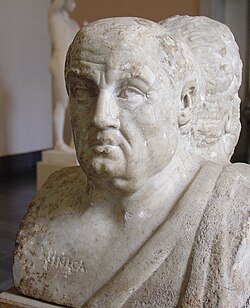
No one can lead a happy life, or even one that is bearable, without the pursuit of wisdom, and the perfection of wisdom is what makes the happy life. Yet even the beginnings of wisdom make life bearable. But this conviction must be firmly grasped and not merely adopted in words, if we wish to draw any strength from what we know.

Great wisdom is generous; petty wisdom is contentious. Great speech is impassioned, small speech cantankerous.

To explain all nature is too difficult a task for any one man or even for any one age. 'Tis much better to do a little with certainty, & leave the rest for others that come after you, than to explain all things by conjecture without making sure of any thing.

A man should learn to detect and watch that gleam of light which flashes across his mind from within, more than the lustre of the firmament of bards and sages. Yet he dismisses without notice his thought, because it is his. In every work of genius we recognize our own rejected thoughts: they come back to us with a certain alienated majesty.