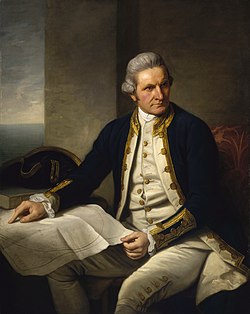
I whose ambition leads me not only farther than any other man has been before me, but as far as I think it possible for man to go.
“In prosecuting these discoveries, the dangers we are exposed to are obvious, but I rejoice that we are chosen to confront them.”
I whose ambition leads me not only farther than any other man has been before me, but as far as I think it possible for man to go.

It is better by noble boldness to run the risk of being subject to half of the evils we anticipate than to remain in cowardly listlessness for fear of what might happen.

Far better it is to dare mighty things, to win glorious triumphs, even though checkered by failure, than to rank with those poor spirits who neither enjoy much nor suffer much, because they live in that grey twilight that knows neither victory nor defeat.

I believe it is in our nature to explore, to reach out into the unknown. The only true failure would be not to explore at all.

You gain strength, courage, and confidence by every experience in which you really stop to look fear in the face. You are able to say to yourself, "I have lived through this horror. I can take the next thing that comes along." … You must do the thing you think you cannot do.
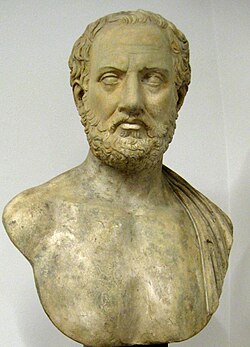
The bravest are surely those who have the clearest vision of what is before them, glory and danger alike, and yet notwithstanding go out to meet it.

We will either find a way through these mountains, or we will make a way through them. No barrier of nature shall stop us.
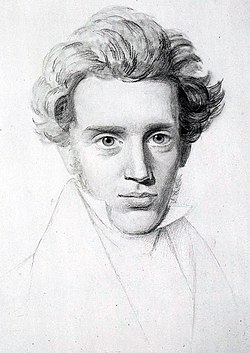
To dare is to lose one's footing momentarily. Not to dare is to lose oneself.

It is only by risking our persons from one hour to another that we live at all. And often enough our faith beforehand in an uncertified result is the only thing that makes the result come true.
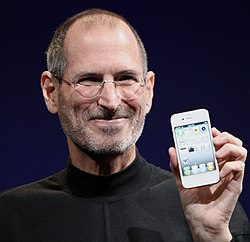
When I was young, there was an amazing publication called The Whole Earth Catalog, which was one of the bibles of my generation. It was created by a fellow named Stewart Brand not far from here in Menlo Park, and he brought it to life with his poetic touch. This was in the late 1960's, before personal computers and desktop publishing, so it was all made with typewriters, scissors, and Polaroid cameras. It was sort of like Google in paperback form, 35 years before Google came along: it was idealistic, and overflowing with neat tools and great notions. Stewart and his team put out several issues of The Whole Earth Catalog, and then when it had run its course, they put out a final issue. It was the mid-1970s, and I was your age. On the back cover of their final issue was a photograph of an early morning country road, the kind you might find yourself hitchhiking on if you were so adventurous. Beneath it were the words: "Stay Hungry. Stay Foolish." It was their farewell message as they signed off. Stay Hungry. Stay Foolish. And I have always wished that for myself. And now, as you graduate to begin anew, I wish that for you. Stay Hungry. Stay Foolish.
It is not the critic who counts; not the man who points out how the strong man stumbles, or where the doer of deeds could have done them better. The credit belongs to the man who is in the arena, whose face is marred by dust and sweat and blood; who strives valiantly; who errs, who comes short again and again, because there is no effort without error and shortcoming; but who does actually strive to do the deeds; who knows great enthusiasms, the great devotions; who spends himself in a worthy cause; who at the best knows in the end the triumph of high achievement, and who at the worst, if he fails, at least fails while daring greatly, so that his place shall never be with those cold and timid souls who neither know victory nor defeat.
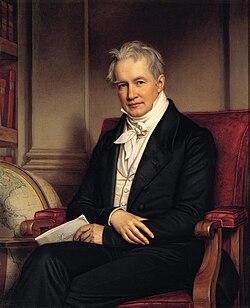
People often say that I'm curious about too many things at once. But can you really forbid a man from harboring a desire to know and embrace everything that surrounds him?

What dost thou fear? Strike, man, strike!

It is the part of cowardice, not of courage, to go and crouch in a hole under a massive tomb, to avoid the blows of fortune.
We cannot avoid meeting great issues. All that we can determine for ourselves is whether we shall meet them well or ill.
If we stand idly by, if we seek merely swollen, slothful ease and ignoble peace, if we shrink from the hard contests where men must win at hazard of their lives and at the risk of all they hold dear, then the bolder and stronger peoples will pass us by, and will win for themselves the domination of the world. Let us therefore boldly face the life of strife, resolute to do our duty well and manfully; resolute to uphold righteousness by deed and by word; resolute to be both honest and brave, to serve high ideals, yet to use practical methods. Above all, let us shrink from no strife, moral or physical, within or without the nation, provided we are certain that the strife is justified, for it is only through strife, through hard and dangerous endeavor, that we shall ultimately win the goal of true national greatness.

The explorers of the past were great men and we should honour them. But let us not forget that their spirit lives on. It is still not hard to find a man who will adventure for the sake of a dream or one who will search, for the pleasure of searching, not for what he may find.

The man of virtue makes the difficulty to be overcome his first business, and success only a subsequent consideration.
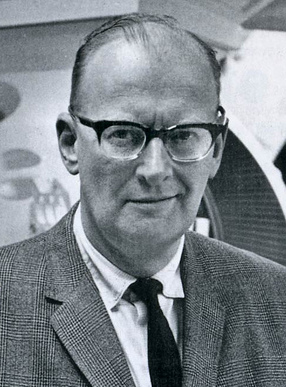
The only way of discovering the limits of the possible is to venture a little way past them into the impossible.

Not I, not any one else can travel that road for you. You must travel it for yourself.
We have a given problem to solve. If we undertake the solution, there is, of course, always danger that we may not solve it aright; but to refuse to undertake the solution simply renders it certain that we cannot possibly solve it aright.

For if he who resolveth bravely oftentimes falleth short, how shall it be with him who resolveth rarely or feebly?
The purpose of life...is to live it, to taste experience to the utmost, to reach out eagerly and without fear for newer and richer experience.

I must hold in balance the sense of the futility of effort and the sense of the necessity to struggle; the conviction of the inevitability of failure and still the determination to 'succeed'.

It is not a dream, it is a simple feat of scientific electrical engineering, only expensive — blind, faint-hearted, doubting world! . . . Humanity is not yet sufficiently advanced to be willingly led by the discover's keen searching sense. But who knows? Perhaps it is better in this present world of ours that a revolutionary idea or invention instead of being helped and patted, be hampered and ill-treated in its adolescence — by want of means, by selfish interest, pedantry, stupidity and ignorance; that it be attacked and stifled; that it pass through bitter trials and tribulations, through the heartless strife of commercial existence. So do we get our light. So all that was great in the past was ridiculed, condemned, combated, suppressed — only to emerge all the more powerfully, all the more triumphantly from the struggle.