
Echoes

Adam Smith
1776
“Every prodigal appears to be a public enemy, and every frugal man a public benefactor. By what a frugal man annually saves, he not only affords maintenance to an additional number of productive hands for that or the ensuing year, but, like the founder of a public workhouse, he establishes as it were a perpetual fund for the maintenance of an equal number in all times to come.”
❧
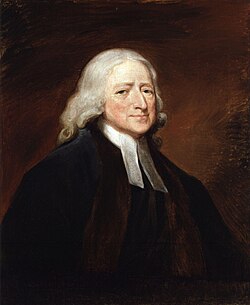
Gain all you can, save all you can, give all you can.
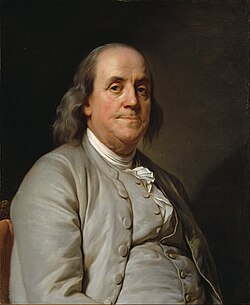
A penny saved is a penny earned.
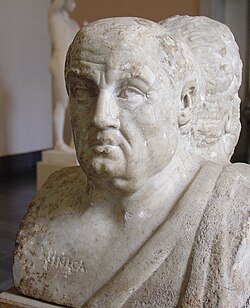
With parsimony a little is sufficient; without it nothing is sufficient; but frugality makes a poor man rich.

A man is rich in proportion to the number of things which he can afford to let alone.

Frugality is founded on the principle that all riches have limits.

The people as a whole can be benefited morally and materially by a system which shall permit of ample reward for exceptional efficiency, but which shall nevertheless secure to the average man, who does his work faithfully and well, the reward to which he is entitled. Remember that I speak only of the man who does his work faithfully and well. The man who shirks his work, who is lazy or vicious, or even merely incompetent, deserves scant consideration; we may be sorry for his family, but it is folly to waste sympathy on the man himself; and it is also folly for sentimentalists to try to shift the burden of blame from such a man himself to “society” and it is an outrage to give him the reward given to his hard-working, upright, and efficient brother. Still less should we waste sympathy on the criminal; there are altogether too many honest men who need it; and one chief point in dealing with the criminal should be to make him understand that he will be in personal peril if he becomes a lawbreaker. I realize entirely that in the last analysis, with the nation as with the individual, it is private character that counts for most. It is because of this realization that I gladly lay myself open to the charge that I preach too much, and dwell too much upon moral commonplaces; for though I believe with all my heart in the nationalization of this Nation—in the collective use on behalf of the American people of the governmental powers which can be derived only from the American people as a whole—yet I believe even more in the practical application by the individual of those great fundamental moralities.
Resolve not to be poor: whatever you have, spend less. Poverty is a great enemy to human happiness; it certainly destroys liberty, and it makes some virtues impracticable, and others extremely difficult.
Resolve not to be poor: whatever you have, spend less. Poverty is a great enemy to human happiness; it certainly destroys liberty, and it makes some virtues impracticable, and others extremely difficult.
If you would be wealthy, think of saving as well as getting.

Be ever active in the management of the economy, because the root of wealth is economic activity; inactivity brings material distress.
Think what you do when you run in debt; you give to another power over your liberty. If you cannot pay at the time, you will be ashamed to see your creditor; you will make poor pitiful sneaking excuses, and by degrees come to lose your veracity, and sink into base downright lying.
The way to wealth is as plain as the way to market. It depends chiefly on two words: industry and frugality — that is, waste neither time nor money, but make the best use of both.

The man who dies rich dies disgraced.
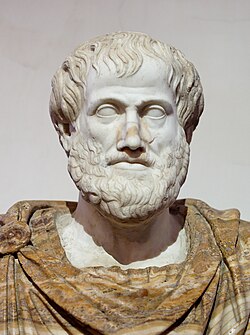
The liberal man will give to the right people, the right amounts, and at the right time, with all the other qualifications that accompany right giving; and that with pleasure or at least without pain.
We of the great modern democracies must strive unceasingly to make our several countries lands in which a poor man who works hard can live comfortably and honestly, and in which a rich man cannot live dishonestly nor in slothful avoidance of duty; and yet we must judge rich man and poor man alike by a standard which rests on conduct and not on caste, and we must frown with the same stern severity on the mean and vicious envy which hates and would plunder a man because he is well off and on the brutal and selfish arrogance which looks down on and exploits the man with whom life has gone hard.
The willfully idle man, like the willfully barren woman, has no place in a sane, healthy, and vigorous community. Moreover, the gross and hideous selfishness for which each stands defeats even its own miserable aims. Exactly as infinitely the happiest woman is she who has borne and brought up many healthy children, so infinitely the happiest man is he who has toiled hard and successfully in his life-work. The work may be done in a thousand different ways —with the brain or the hands, in the study, the field, or the workshop—if it is honest work, honestly done and well worth doing, that is all we have a right to ask. Every father and mother here, if they are wise, will bring up their children not to shirk difficulties, but to meet them and overcome them; not to strive after a life of ignoble ease, but to strive to do their duty, first to themselves and their families, and then to the whole state; and this duty must inevitably take the shape of work in some form or other.
More people are interested in trying to shuffle paper assets around than building lasting assets by producing real goods.

Every excess causes a defect; every defect an excess. Every sweet hath its sour; every evil its good.
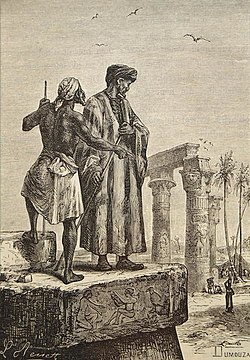
The inhabitants of these islands are the most hospitable people I have ever encountered; they give freely of what they possess, asking nothing in return.
Rather go to bed supperless than rise in debt.
Accumulated wealth is saved by spending, just as incoming fresh water is saved by letting out stagnant water.

No man is entirely free from weakness and imperfection in this life. Men of the most exalted genius and active minds are generally most perfect slaves to the love of fame. They sometimes descend to as mean tricks and artifices in pursuit of honor or reputation as the miser descends to in pursuit of gold.
Thus is the problem of Rich and Poor to be solved. The laws of accumulation will be left free; the laws of distribution free. Individualism will continue, but the millionaire will be but a trustee of the poor; intrusted for a season with a great part of the increased wealth of the community, but administering it for the community far better than it could or would have done for itself. (pp. 663-664)
I am for doing good to the poor, but I differ in opinion of the means. I think the best way of doing good to the poor, is not making them easy in poverty, but leading or driving them out of it. In my youth I travelled much, and I observed in different countries, that the more public provisions were made for the poor, the less they provided for themselves, and of course became poorer. And, on the contrary, the less was done for them, the more they did for themselves, and became richer. There is no country in the world where so many provisions are established for them; so many hospitals to receive them when they are sick or lame, founded and maintained by voluntary charities; so many alms-houses for the aged of both sexes, together with a solemn general law made by the rich to subject their estates to a heavy tax for the support of the poor. Under all these obligations, are our poor modest, humble, and thankful; and do they use their best endeavours to maintain themselves, and lighten our shoulders of this burthen? On the contrary, I affirm that there is no country in the world in which the poor are more idle, dissolute, drunken, and insolent. The day you passed that act, you took away from before their eyes the greatest of all inducements to industry, frugality, and sobriety, by giving them a dependence on somewhat else than a careful accumulation during youth and health, for support in age or sickness. In short, you offered a premium for the encouragement of idleness, and you should not now wonder that it has had its effect in the increase of poverty.