HomeSearchEssaysCollected
Nobody
@ephemeral

Today's News

What's happening

Who to follow

Phineas Rudd
Phineas Rudd
@PhinneasRudd
Titus Oates
Titus Oates
@TitusOates
Margery Fenn
Margery Fenn
@MistressFenn

Echoes

Source
Winston Churchill
Winston Churchill
1940

“You must sleep sometime between lunch and dinner, and no halfway measures. Take off your clothes and get into bed. That's what I always do. Don't think you will be doing less work because you sleep during the day. That's a foolish notion held by people who have no imagination. You will be able to accomplish more. You get two days in one — well, at least one and a half, I'm sure.”

❧
Henri Poincaré
Henri Poincaré
·1908·Paris, France

These sudden inspirations never happen except after some days of voluntary effort which has appeared absolutely fruitless. The role of this unconscious work in mathematical invention appears to me incontestable. Rest gives back to the mind its force and freshness.

Amos Tversky
Amos Tversky
·1972·Jerusalem, Israel

The secret to doing good research is always to be a little underemployed. You waste years by not being able to waste hours.

Albert Camus
Albert Camus
·1940

To have time was at once the most magnificent and the most dangerous of experiments. Idleness is fatal only to the mediocre.

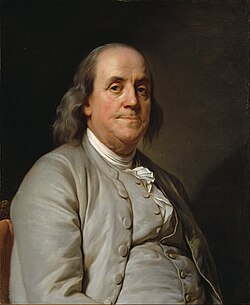
Benjamin Franklin
Benjamin Franklin
·1735·Philadelphia

Early to bed and early to rise makes a man healthy, wealthy, and wise.

Leonardo da Vinci
Leonardo da Vinci
·1500

As a well-spent day brings happy sleep, so life well used brings happy death.

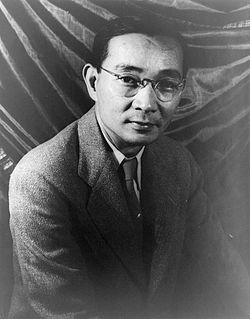
Lin Yutang
Lin Yutang
·1937·New York, USA

If you can spend a perfectly useless afternoon in a perfectly useless manner, you have learned how to live.

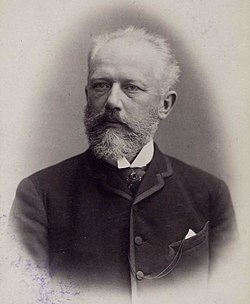
Pyotr Ilyich Tchaikovsky
·1878·Clarens, Switzerland

Inspiration is a guest that does not always answer the first invitation. Meanwhile we must work, and a self-respecting artist must not fold his hands on the pretext that he is not in the mood. If we wait for the mood, without endeavouring to meet it halfway, we easily become indolent and apathetic. We must be patient, and believe that inspiration will come to those who can master their despondency.

Hippocrates
Hippocrates

Sleep and watchfulness, both of them, when immoderate, constitute disease.

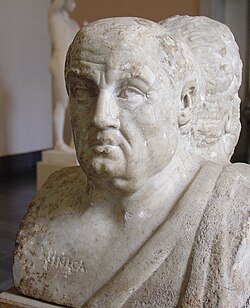
Seneca
Seneca
·65 AD·Rome, Italy

Assert your right to your own time, and gather together and save the time which up till lately has been either taken from you or filched away or has simply passed by unused.

Seneca
Seneca
·60 CE AD·Rome, Italy

The mind must be given relaxation — it will rise improved and sharper after a good rest. Just as we must not force fertile farmland, for uninterrupted productivity will soon exhaust it, so constant effort will sap our mental vigor.

Lin Yutang
Lin Yutang
·1937·New York, USA

Besides the noble art of getting things done, there is the noble art of leaving things undone. The wisdom of life consists in the elimination of non-essentials.

Thomas à Kempis
Thomas à Kempis

Be thou never without something to do; be reading, or writing, or praying, or meditating, or doing something that is useful to the community.

Samuel Johnson
Samuel Johnson
·1749

To-morrow's action! Can that hoary wisdom, Borne down with years, still doat upon tomorrow! That fatal mistress of the young, the lazy, The coward, and the fool, condemn'd to lose A useless life in waiting for to-morrow, To gaze with longing eyes upon to-morrow, Till interposing death destroys the prospect Strange! that this general fraud from day to day Should fill the world with wretches undetected. The soldier, labouring through a winter's march, Still sees to-morrow drest in robes of triumph; Still to the lover's long-expecting arms To-morrow brings the visionary bride. But thou, too old to hear another cheat, Learn, that the present hour alone is man's.

Theodore Roosevelt
Theodore Roosevelt
·1899

A life of slothful ease, a life of that peace which springs merely from lack either of desire or of power to strive after great things, is as little worthy of a nation as of an individual. [...] If you are rich and are worth your salt, you will teach your sons that though they may have leisure, it is not to be spent in idleness; for wisely used leisure merely means that those who possess it, being free from the necessity of working for their livelihood, are all the more bound to carry on some kind of non-remunerative work in science, in letters, in art, in exploration, in historical research—work of the type we most need in this country, the successful carrying out of which reflects most honor upon the nation. We do not admire the man of timid peace. We admire the man who embodies victorious effort; the man who never wrongs his neighbor, who is prompt to help a friend, but who has those virile qualities necessary to win in the stern strife of actual life. It is hard to fail, but it is worse never to have tried to succeed. In this life we get nothing save by effort. Freedom from effort in the present merely means that there has been stored up effort in the past. A man can be freed from the necessity of work only by the fact that he or his fathers before him have worked to good purpose. If the freedom thus purchased is used aright, and the man still does actual work, though of a different kind, whether as a writer or a general, whether in the field of politics or in the field of exploration and adventure, he shows he deserves his good fortune. But if he treats this period of freedom from the need of actual labor as a period, not of preparation, but of mere enjoyment, even though perhaps not of vicious enjoyment, he shows that he is simply a cumberer of the earth's surface, and he surely unfits himself to hold his own with his fellows if the need to do so should again arise.

William Osler
William Osler
·1903

Though a little one, the master-word looms large in meaning. It is the open sesame to every portal, the great equalizer in the world, the true philosopher's stone, which transmutes all the base metal of humanity into gold. The stupid man among you it will make bright, the bright man brilliant, and the, brilliant student steady. With the magic word in your heart all things are possible, and without it all study is vanity and vexation. The miracles of life are with it; the blind see by touch, the deaf hear with eyes, the dumb speak with fingers. To the youth it brings hope, to the middle-aged confidence, to the aged repose. True balm of hurt minds, in its presence the heart of the sorrowful is lightened and consoled. It is directly responsible for all advances in medicine during the past twenty-five centuries. Laying hold upon it Hippocrates made observation and science the warp and woof of our art. Galen so read its meaning that fifteen centuries stopped thinking, and slept until awakened by the De Fabrica, of Vesalius, which is the very incarnation of the master-word. With its inspiration Harvey gave an impulse to a larger circulation than he wot of, an impulse which we feel to-day. Hunter sounded all its heights and depths, and stands out in our history as one of the great exemplars of its virtues With it Virchow smote the rock, and the waters of progress gushed out while in the hands of Pasteur it proved a very talisman to open to us a new heaven in medicine and a new earth in surgery. Not only has it been the touchstone of progress, but it is the measure of success in every-day life. Not a man before you but is beholden to it for his position here, while he who addresses you has that honor directly in consequence of having had it graven on his heart when he was as you are to-day. And the master-word is Work, a little one, as I have said, but fraught with momentous sequences if you can but write it on the tablets of your hearts and bind it upon your foreheads. But there is a serious difficulty in getting you to understand the paramount importance of the work-habit as part of your organization. You are not far from the Tom Sawyer stage with its philosophy "that work consists of whatever a body is obliged to do, and that play consists of whatever a body is not obliged to do." A great many hard things may be said of the work-habit. For most of us it means a hard battle; the few take to it naturally; the many prefer idleness and never learn to love labor.

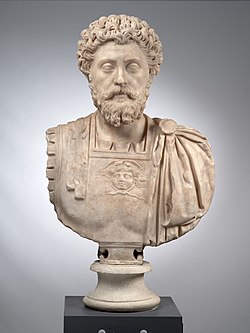
Marcus Aurelius
Marcus Aurelius
·180 AD

There is a limit to the time assigned you, and if you don't use it to free yourself it will be gone and never return.

Leonardo da Vinci
Leonardo da Vinci
·1500

Iron rusts from disuse; stagnant water loses its purity and in cold weather becomes frozen; even so does inaction sap the vigor of the mind.

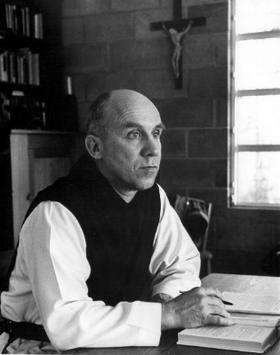
Thomas Merton
Thomas Merton
·1958·Trappist, Kentucky, USA

Not all of us are called to be hermits, but all of us need enough silence and solitude to enable the deeper voice of our own self to be heard.

Seneca
Seneca
·49 AD·Corsica

Begin at once to live, and count each separate day as a separate life.

Seneca
Seneca
·49 AD·Corsica

It is not that we have a short time to live, but that we waste a great deal of it.

Henry David Thoreau
Henry David Thoreau
·1851

Methinks that the moment my legs begin to move, my thoughts begin to flow.

Marcus Aurelius
Marcus Aurelius
·170 AD·Rome, Italy

In the morning when thou risest unwillingly, let this thought be present — I am rising to the work of a human being.

Herodotus
Herodotus
·-440 AD

If a man insisted always on being serious, and never allowed himself a bit of fun and relaxation, he would go mad or become unstable without knowing it.

Michel de Montaigne
Michel de Montaigne

Wherever your life ends, it is all there. The utility of living consists not in the length of days, but in the use of time; a man may have lived long, and yet lived but a little. Make use of time while it is present with you. It depends upon your will, and not upon the number of days, to have a sufficient length of life. Is it possible you can imagine never to arrive at the place towards which you are continually going? and yet there is no journey but hath its end. And, if company will make it more pleasant or more easy to you, does not all the world go the self-same way?

Rainer Maria Rilke
Rainer Maria Rilke
·1903

If your daily life seems poor, do not blame it; blame yourself, tell yourself that you are not poet enough to call forth its riches.