
Echoes

Rumi
13th century AD
“I died as a mineral and became a plant, I died as plant and rose to animal, I died as animal and I was Man. Why should I fear? When was I less by dying?”
❧

One is constantly reminded of the infinite lavishness and fertility of Nature — inexhaustible abundance amid what seems enormous waste. And yet when we look into any of her operations that lie within reach of our minds, we learn that no particle of her material is wasted or worn out. It is eternally flowing from use to use, beauty to yet higher beauty; and we soon cease to lament waste and death, and rather rejoice and exult in the imperishable, unspeakable wealth of the universe, and faithfully watch and wait the reappearance of everything that melts and fades and dies about us, feeling sure that its next appearance will be better and more beautiful than the last.

Never say of anything, 'I have lost it'; but, 'I have returned it.' Is your child dead? It is returned. Is your wife dead? She is returned. Is your estate taken away? Well, and is not that likewise returned?

What we call the beginning is often the end. And to make an end is to make a beginning. The end is where we start from.

What once sprung from the earth sinks back into the earth.

To every thing there is a season, and a time to every purpose under the heaven: A time to be born, and a time to die; a time to plant, and a time to pluck up that which is planted; A time to kill, and a time to heal; a time to break down, and a time to build up; A time to weep, and a time to laugh; a time to mourn, and a time to dance.

Knowing that certain nights whose sweetness lingers will keep returning to the earth and sea after we are gone, yes, this helps us to die.

The bud disappears when the blossom breaks through, and we might say that the former is refuted by the latter; in the same way when the fruit comes, the blossom may be explained to be a false form of the plant's existence, for the fruit appears as its true nature in place of the blossom. These stages are not merely differentiated; they supplant one another as being incompatible with one another. But the ceaseless activity of their own inherent nature makes them at the same time moments of an organic unity, in which they not only do not contradict one another, but one is as necessary as the other; and this equal necessity of all moments constitutes alone and thereby the life of the whole.
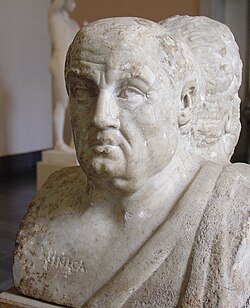
Most men ebb and flow in wretchedness between the fear of death and the hardships of life; they are unwilling to live, and yet they do not know how to die.
He realized now that to be afraid of this death he was staring at with animal terror meant to be afraid of life. Fear of dying justified a limitless attachment to what is alive in man. And all those who had not made the gestures necessary to live their lives, all those who feared and exalted impotence — they were afraid of death because of the sanction it gave to a life in which they had not been involved. They had not lived enough, never having lived at all.
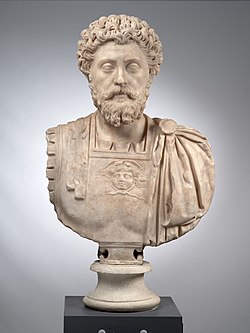
Loss is nothing else but change, and change is Nature's delight.
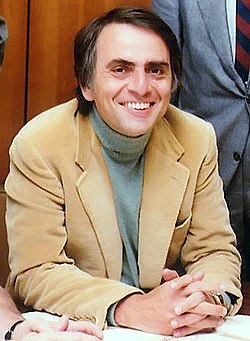
I would love to believe that when I die I will live again, that some thinking, feeling, remembering part of me will continue. But much as I want to believe that, and despite the ancient and worldwide cultural traditions that assert an afterlife, I know of nothing to suggest that it is more than wishful thinking. The world is so exquisite with so much love and moral depth, that there is no reason to deceive ourselves with pretty stories for which there's little good evidence. Far better it seems to me, in our vulnerability, is to look death in the eye and to be grateful every day for the brief but magnificent opportunity that life provides.

It appears to me impossible that I should cease to exist, or that this active, restless spirit, equally alive to joy and sorrow, should only be organised dust — ready to fly abroad the moment the spring snaps, or the spark goes out which kept it together. Surely something resides in this heart that is not perishable, and life is more than a dream.

Cowards die many times before their deaths;The valiant never taste of death but once.
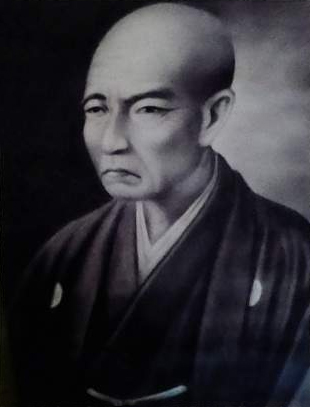
Meditation on inevitable death should be performed daily. Every day when one's body and mind are at peace, one should meditate upon being ripped apart by arrows, rifles, spears and swords, being carried away by surging waves, being thrown into the midst of a great fire, being struck by lightning, being shaken to death by a great earthquake, falling from thousand-foot cliffs, dying of disease or committing seppuku at the death of one's master. And every day without fail one should consider himself as dead.

Nothing is permanent in all the world. All things are fluid; every image forms, wandering through change. Time itself flows on in constant motion, just like a river, for neither the river nor the swift hour can stop its course; but as wave impels wave, and as each wave comes, the one before is both impelled by the next and impels the one ahead, so time both flees and follows and is always new.
From nothing comes nothing. Nothing that exists can be destroyed. All changes are due to the combination and separation of atoms.
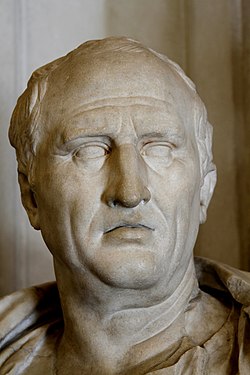
Therefore, young people seem to me to die in such a way that they are overwhelmed by the force of flames when faced with a multitude of waters, while old people die in a manner akin to a fire that is extinguished without any force applied to it; and just as unripe fruit is hardly plucked from trees, but ripe and cooked fruit falls off, so the force takes life from the young, while maturity takes it from the old; which indeed seems to me so pleasant that, the closer I get to death, I feel as if I am about to see land and eventually arrive in port after a long voyage.
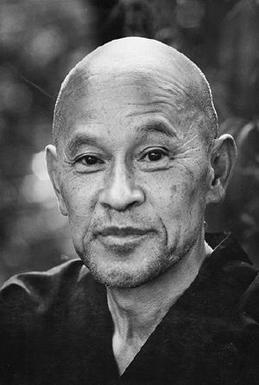
The basic teaching of Buddhism is the teaching of transiency or change. That everything changes is the basic truth for each existence. No one can deny this truth and all teaching of Buddhism is condensed within it. This is the teaching for all of us. Wherever we go this teaching is true. This teaching is also understood as the teaching of selflessness. Because each existence is in constant change, there is no abiding self.
Tomorrow, and tomorrow, and tomorrow,Creeps in this petty pace from day to day,To the last syllable of recorded time;And all our yesterdays have lighted foolsThe way to dusty death. Out, out, brief candle!Life's but a walking shadow, a poor playerThat struts and frets his hour upon the stage,And then is heard no more. It is a taleTold by an idiot, full of sound and fury,Signifying nothing.

Happy is the man who hath the hour of his death always before his eyes, and daily prepareth himself to die.

Life is a series of natural and spontaneous changes. Don't resist them; that only creates sorrow.

That though the radiance which was once so bright be now for ever taken from my sight, though nothing can bring back the hour of splendour in the grass, of glory in the flower; we will grieve not, rather find strength in what remains behind.

Eventually, all things merge into one, and a river runs through it. The river was cut by the world's great flood and runs over rocks from the basement of time. On some of those rocks are timeless raindrops. Under the rocks are the words, and some of the words are theirs. I am haunted by waters.
We are such stuff As dreams are made on; and our little life Is rounded with a sleep.