
In each moment the fire rages, it will burn away a hundred veils. And carry you a thousand steps toward your goal.
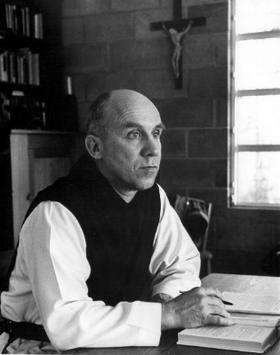
“The fire watch is an examination of conscience in which your task as watchman suddenly appears in its true light: a pretext devised by God to isolate you, and to search your soul with lamps and questions, in the heart of darkness.”
In each moment the fire rages, it will burn away a hundred veils. And carry you a thousand steps toward your goal.

Men go to a fire for entertainment. When I see how eagerly men will run to a fire, whether in warm or in cold weather, by day or by night, dragging an engine at their heels, I'm astonished to perceive how good a purpose the level of excitement is made to serve.

I only went out for a walk, and finally concluded to stay out till sundown, for going out, I found, was really going in.
I only went out for a walk, and finally concluded to stay out till sundown, for going out, I found, was really going in.

Night, the beloved. Night, when words fade and things come alive. When the destructive analysis of day is done, and all that is truly important becomes whole and sound again. When man reassembles his fragmentary self and grows with the calm of a tree.

Man is a dream of a shadow. But when god-given brightness comes, a shining light rests on men, and life is sweet.

I am the wheat of God, and let me be ground by the teeth of the wild beasts, that I may be found the pure bread of Christ.

With your spirit settled, accumulate practice day by day, and hour by hour. Polish the twofold spirit heart and mind, and sharpen the twofold gaze perception and sight. When your spirit is not in the least clouded, when the clouds of bewilderment clear away, there is the true void.

To go in the dark with a light is to know the light. To know the dark, go dark. Go without sight, and find that the dark, too, blooms and sings, and is traveled by dark feet and dark wings.

A man should learn to detect and watch that gleam of light which flashes across his mind from within, more than the lustre of the firmament of bards and sages. Yet he dismisses without notice his thought, because it is his. In every work of genius we recognize our own rejected thoughts: they come back to us with a certain alienated majesty.

My soul, my soul, where are you? Do you hear me? I speak, I call you—are you there? I have returned, here I am again. I have shaken the dust of all the lands from my feet, and I have come to you again, I am with you. After long years of long wandering, I have come to you anew. Shall I tell you everything I have seen, experienced, and drunk in? Or do you not want to hear about all the noise of life and the world? But one thing you must know, the one thing I have learned is that one must live this life. This life is the way, the long sought-after way to the unfathomable, which we call "divine". There is no other way. All other ways are false paths.

The demon of acedia — also called the noonday demon — is the one that causes the most serious trouble of all. He presses his attack upon the monk about the fourth hour and besieges the soul until the eighth hour. First of all he makes it seem that the sun barely moves, if at all, and that the day is fifty hours long. Then he constrains the monk to look constantly out the windows, to walk outside the cell, to gaze carefully at the sun.
Your vision will become clear only when you can look into your own heart. Without, everything seems discordant; only within does it coalesce into unity. Who looks outside dreams; who looks inside awakes.

To study the meaning of man and of life — I am making significant progress here. I have faith in myself. Man is a mystery: if you spend your entire life trying to puzzle it out, then do not say that you have wasted your time. I occupy myself with this mystery, because I want to be a man.

When I endeavour to examine my own conduct, when I endeavour to pass sentence upon it, and either to approve or condemn it, it is evident that, in all such cases, I divide myself, as it were, into two persons; and that I, the examiner and judge, represent a different character from that other I, the person whose conduct is examined into and judged of.
I went to the woods because I wished to live deliberately, to front only the essential facts of life, and see if I could not learn what it had to teach, and not, when I came to die, discover that I had not lived. I did not wish to live what was not life, living is so dear; nor did I wish to practise resignation, unless it was quite necessary. I wanted to live deep and suck out all the marrow of life, to live so sturdily and Spartan-like as to put to rout all that was not life, to cut a broad swath and shave close, to drive life into a corner, and reduce it to its lowest terms, and, if it proved to be mean, why then to get the whole and genuine meanness of it, and publish its meanness to the world; or if it were sublime, to know it by experience, and be able to give a true account of it in my next excursion. For most men, it appears to me, are in a strange uncertainty about it, whether it is of the devil or of God, and have somewhat hastily concluded that it is the chief end of man here to "glorify God and enjoy him forever."
Morning is when I am awake and there is a dawn in me. Moral reform is the effort to throw off sleep. We must learn to reawaken and keep ourselves awake, not by mechanical aids, but by an infinite expectation of the dawn, which does not forsake us in our soundest sleep.
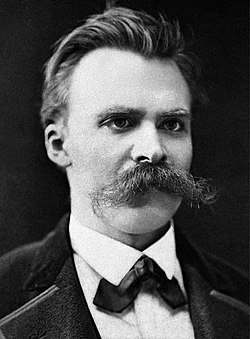
Here the ways of men part: if you wish to strive for peace of soul and pleasure, then believe; if you wish to be a devotee of truth, then inquire.

He who cannot find himself the retreat of his own soul, let him appeal to solitude — if he can even bear himself.

Last of all he will be able to see the sun, not turning aside to the illusory reflections of it in the water, but gazing directly at it in its own proper place and contemplating it as it is.

I study myself more than any other subject. That is my metaphysics; that is my physics.

Do not go by revelation; Do not go by tradition; Do not go by hearsay; Do not go on the authority of sacred texts; Do not go on the grounds of pure logic; Do not go by a view that seems rational; Do not go by reflecting on mere appearances; Do not go along with a considered view because you agree with it; Do not go along on the grounds that the person is competent; Do not go along because "the recluse is our teacher." Kalamas, when you yourselves know: These things are unwholesome, these things are blameworthy; these things are censured by the wise; and when undertaken and observed, these things lead to harm and ill, abandon them... Kalamas, when you know for yourselves: These are wholesome; these things are not blameworthy; these things are praised by the wise; undertaken and observed, these things lead to benefit and happiness, having undertaken them, abide in them.

Never did I think so much, never did I realize my own existence so much, never was I so much alive, so much myself, as in those journeys which I made alone and on foot.

Occasions of adversity best discover how great virtue or strength each one hath. For occasions do not make a man frail, but they show what he is.

After the dazzle of day is gone, only the dark, dark night shows to my eyes the stars; after the plain of the surface and the breakers have gone, the depths of the ocean show beautiful forms.