“So it comes about that if anyone spends almost the whole day in reading, and by way of relaxation devotes the intervals to some thoughtless pastime, he gradually loses the capacity for thinking; just as the man who always rides, at last forgets how to walk.”
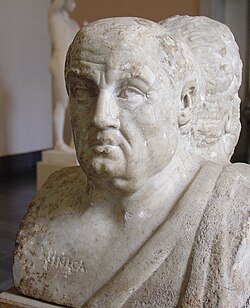
When we read, another person thinks for us: we merely repeat his mental process.
In reading of many books is distraction. Accordingly, since you cannot read all the books which you may possess, it is enough to possess only as many books as you can read.
Buying books would be a good thing if one could also buy the time to read them in: but as a rule the purchase of books is mistaken for the appropriation of their contents.
Iron rusts from disuse; stagnant water loses its purity and in cold weather becomes frozen; even so does inaction sap the vigor of the mind.
You must sleep sometime between lunch and dinner, and no halfway measures. Take off your clothes and get into bed. That's what I always do. Don't think you will be doing less work because you sleep during the day. That's a foolish notion held by people who have no imagination. You will be able to accomplish more. You get two days in one — well, at least one and a half, I'm sure.
You must linger among a limited number of master-thinkers, and digest their works, if you would derive ideas which shall win firm hold in your mind.
To have time was at once the most magnificent and the most dangerous of experiments. Idleness is fatal only to the mediocre.
I can only think while walking; as soon as I stop, I no longer think, and my mind only moves with my feet.
It is certain that habit eventually has such power over human nature that it becomes, as it were, a second nature, and forces it to practise that to which it has become accustomed, regardless of whether or not it is good for health.
Above all, do not lose your desire to walk. Every day I walk myself into a state of well-being and walk away from every illness. I have walked myself into my best thoughts, and I know of no thought so burdensome that one cannot walk away from it.
As a well-spent day brings happy sleep, so life well used brings happy death.
If you wish to have leisure for your mind, either be a poor man, or resemble a poor man. Study cannot be helpful unless you take pains to live simply; and living simply is voluntary poverty.
A person who is said to be proficient at the arts is like a fool. Because of his foolishness in concerning himself with just one thing, he thinks of nothing else and thus becomes proficient.
Thinking is the hardest work there is, which is the probable reason why so few engage in it.
Most of us feel as if we lived habitually with a sort of cloud weighing on us, below our highest notch of clearness in discernment, sureness in reasoning, or firmness in deciding. Compared with what we ought to be, we are only half awake. Our fires are damped, our drafts are checked.
Read the best books first, or you may not have a chance to read them at all.
Not all of us are called to be hermits, but all of us need enough silence and solitude to enable the deeper voice of our own self to be heard.
The secret to doing good research is always to be a little underemployed. You waste years by not being able to waste hours.
People are frugal in guarding their personal property; but as soon as it comes to squandering time they are most wasteful of the one thing in which it is right to be stingy.
In pursuit of learning, every day something is acquired. In pursuit of Tao, every day something is dropped.
I only went out for a walk, and finally concluded to stay out till sundown, for going out, I found, was really going in.
The faculty of voluntarily bringing back a wandering attention, over and over again, is the very root of judgment, character, and will. No one is compos sui if he have it not. An education which should improve this faculty would be the education par excellence.
I think that I cannot preserve my health and spirits, unless I spend four hours a day at least — and it is commonly more than that — sauntering through the woods and over the hills and fields, absolutely free from all worldly engagements.
There is no area in our minds reserved for superstition, such as the Greeks had in their mythology; and superstition, under cover of an abstract vocabulary, has revenged itself by invading the entire realm of thought. Our science is like a store filled with the most subtle intellectual devices for solving the most complex problems, and yet we are almost incapable of applying the elementary principles of rational thought. In every sphere, we seem to have lost the very elements of intelligence: the ideas of limit, measure, degree, proportion, relation, comparison, contingency, interdependence, interrelation of means and ends. To keep to the social level, our political universe is peopled exclusively by myths and monsters; all it contains is absolutes and abstract entities. This is illustrated by all the words of our political and social vocabulary: nation, security, capitalism, communism, fascism, order, authority, property, democracy. We never use them in phrases such as: There is democracy to the extent that... or: There is capitalism in so far as... The use of expressions like "to the extent that" is beyond our intellectual capacity. Each of these words seems to represent for us an absolute reality, unaffected by conditions, or an absolute objective, independent of methods of action, or an absolute evil; and at the same time we make all these words mean, successively or simultaneously, anything whatsoever. Our lives are lived, in actual fact, among changing, varying realities, subject to the casual play of external necessities, and modifying themselves according to specific conditions within specific limits; and yet we act and strive and sacrifice ourselves and others by reference to fixed and isolated abstractions which cannot possibly be related either to one another or to any concrete facts. In this so-called age of technicians, the only battles we know how to fight are battles against windmills.