
Iron rusts from disuse; stagnant water loses its purity and in cold weather becomes frozen; even so does inaction sap the vigor of the mind.
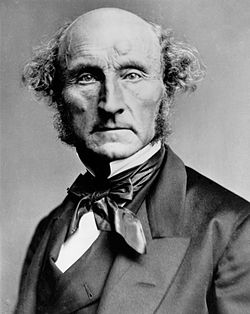
“The mental and moral, like the muscular powers, are improved only by being used.”
Iron rusts from disuse; stagnant water loses its purity and in cold weather becomes frozen; even so does inaction sap the vigor of the mind.

If the body be feeble, the mind will not be strong. The sovereign invigorator of the body is exercise, and of all the exercises walking is best. A horse gives but a kind of half exercise, and a carriage is no better than a cradle.
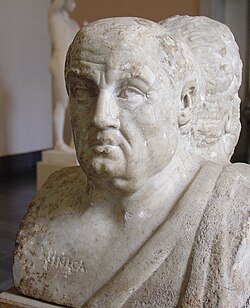
The mind must be given relaxation — it will rise improved and sharper after a good rest. Just as we must not force fertile farmland, for uninterrupted productivity will soon exhaust it, so constant effort will sap our mental vigor.

Lack of activity destroys the good condition of every human being, while movement and methodical physical exercise save it and preserve it.
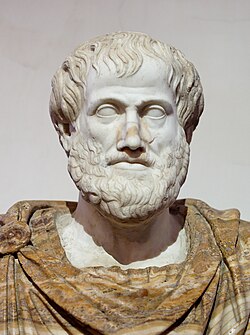
It is well said, then, that it is by doing just acts that the just man is produced, and by doing temperate acts the temperate man; without doing these no one would have even a prospect of becoming good. But most people do not do these, but take refuge in theory and think they are being philosophers and will become good in this way, behaving somewhat like patients who listen attentively to their doctors, but do none of the things they are ordered to do.

Methinks that the moment my legs begin to move, my thoughts begin to flow.

He whose intellect overcomes his desire is higher than the angels; he whose desire overcomes his intellect is less than an animal.

I can only think while walking; as soon as I stop, I no longer think, and my mind only moves with my feet.

Books are the best of things, well used; abused, among the worst. What is the right use? What is the one end, which all means go to effect? They are for nothing but to inspire.

Force has no place where there is need of skill.

As long as a person exercises, exerts himself greatly, does not eat to the point of being overly full, and keeps his bowels soft, illness will not come upon him and his strength will increase.

The authority of a king is purely physical, and it controls the actions of the subject without subduing his private will; but the majority possesses a power which is physical and moral at the same time; it acts upon the will as well as upon the actions of men, and it represses not only all contest, but all controversy.
You are no doubt aware that the Almighty, desiring to lead us to perfection and to improve our state of society, has revealed to us laws which are to regulate our actions. These laws, however, presuppose an advanced state of intellectual culture. We must first form a conception of the Existence of the Creator according to our capabilities; that is, we must have a knowledge of Metaphysics. But this discipline can only be approached after the study of Physics: for the science of Physics borders on Metaphysics, and must even precede it in the course of our studies, as is clear to all who are familiar with these questions.
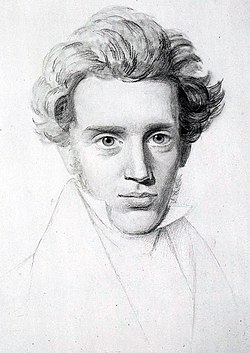
Above all, do not lose your desire to walk. Every day I walk myself into a state of well-being and walk away from every illness. I have walked myself into my best thoughts, and I know of no thought so burdensome that one cannot walk away from it.

It is good to rub and polish our brain against that of others.
Character is higher than intellect...A great soul will be strong to live, as well as strong to think.
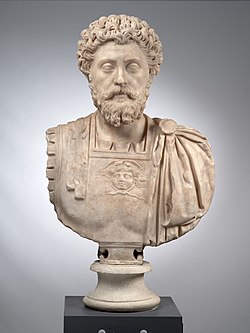
You have power over your mind — not outside events. Realize this, and you will find strength.
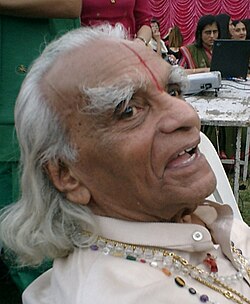
Mind is the king of the senses; breath is the king of the mind.

Keep the faculty of effort alive in you by a little gratuitous exercise every day. That is, be systematically ascetic or heroic in little unnecessary points, do every day or two something for no other reason than that you would rather not do it, so that when the hour of dire need draws nigh, it may find you not unnerved and untrained to stand the test. So with the man who has daily inured himself to habits of concentrated attention, energetic volition, and self-denial in unnecessary things. He will stand like a tower when everything rocks around him, and when his softer fellow-mortals are winnowed like chaff in the blast.
The great thing, then, in all education, is to make our nervous system our ally instead of our enemy. It is to fund and capitalize our acquisitions, and live at ease upon the interest of the fund. For this we must make automatic and habitual, as early as possible, as many useful actions as we can, and guard against the growing into ways that are likely to be disadvantageous to us, as we should guard against the plague.

Those who are slaves to their appetites cannot preserve their reason, their memory, or their senses in their full vigour; for a full belly does not produce a fine mind.
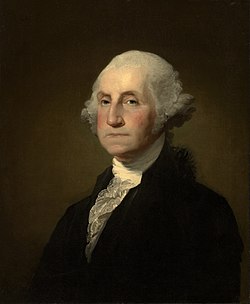
Discipline is the soul of an army. It makes small numbers formidable; procures success to the weak, and esteem to all.

Though a little one, the master-word looms large in meaning. It is the open sesame to every portal, the great equalizer in the world, the true philosopher's stone, which transmutes all the base metal of humanity into gold. The stupid man among you it will make bright, the bright man brilliant, and the, brilliant student steady. With the magic word in your heart all things are possible, and without it all study is vanity and vexation. The miracles of life are with it; the blind see by touch, the deaf hear with eyes, the dumb speak with fingers. To the youth it brings hope, to the middle-aged confidence, to the aged repose. True balm of hurt minds, in its presence the heart of the sorrowful is lightened and consoled. It is directly responsible for all advances in medicine during the past twenty-five centuries. Laying hold upon it Hippocrates made observation and science the warp and woof of our art. Galen so read its meaning that fifteen centuries stopped thinking, and slept until awakened by the De Fabrica, of Vesalius, which is the very incarnation of the master-word. With its inspiration Harvey gave an impulse to a larger circulation than he wot of, an impulse which we feel to-day. Hunter sounded all its heights and depths, and stands out in our history as one of the great exemplars of its virtues With it Virchow smote the rock, and the waters of progress gushed out while in the hands of Pasteur it proved a very talisman to open to us a new heaven in medicine and a new earth in surgery. Not only has it been the touchstone of progress, but it is the measure of success in every-day life. Not a man before you but is beholden to it for his position here, while he who addresses you has that honor directly in consequence of having had it graven on his heart when he was as you are to-day. And the master-word is Work, a little one, as I have said, but fraught with momentous sequences if you can but write it on the tablets of your hearts and bind it upon your foreheads. But there is a serious difficulty in getting you to understand the paramount importance of the work-habit as part of your organization. You are not far from the Tom Sawyer stage with its philosophy "that work consists of whatever a body is obliged to do, and that play consists of whatever a body is not obliged to do." A great many hard things may be said of the work-habit. For most of us it means a hard battle; the few take to it naturally; the many prefer idleness and never learn to love labor.
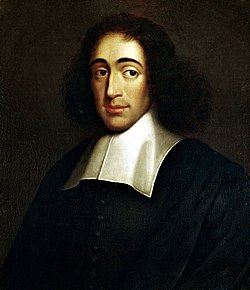
Blessedness is not the reward of virtue, but virtue itself; neither do we rejoice therein, because we control our lusts, but, contrariwise, because we rejoice therein, we are able to control our lusts.
The faculty of voluntarily bringing back a wandering attention, over and over again, is the very root of judgment, character, and will. No one is compos sui if he have it not. An education which should improve this faculty would be the education par excellence.