
Resolve not to be poor: whatever you have, spend less. Poverty is a great enemy to human happiness; it certainly destroys liberty, and it makes some virtues impracticable, and others extremely difficult.
“Resolve not to be poor: whatever you have, spend less. Poverty is a great enemy to human happiness; it certainly destroys liberty, and it makes some virtues impracticable, and others extremely difficult.”
Resolve not to be poor: whatever you have, spend less. Poverty is a great enemy to human happiness; it certainly destroys liberty, and it makes some virtues impracticable, and others extremely difficult.

Poverty is a bitter thing; but it is not as bitter as the existence of restless vacuity and physical, moral, and intellectual flabbiness, to which those doom themselves who elect to spend all their years in that vainest of all vain pursuits—the pursuit of mere pleasure as a sufficient end in itself.

Independence I have long considered as the grand blessing of life, the basis of every virtue; and independence I will ever secure by contracting my wants, though I were to live on a barren heath.
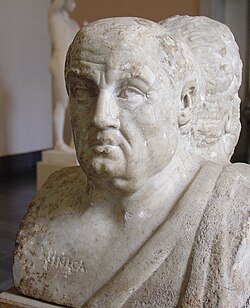
Let us become intimate with poverty, so that Fortune may not catch us off our guard. We shall be rich with all the more comfort, if we once learn how far poverty is from being a burden.

Money is coined liberty, and so it is ten times dearer to the man who is deprived of freedom. If money is jingling in his pocket, he is half consoled, even though he cannot spend it. But money can always and everywhere be spent, and, moreover, forbidden fruit is sweetest of all.
With parsimony a little is sufficient; without it nothing is sufficient; but frugality makes a poor man rich.
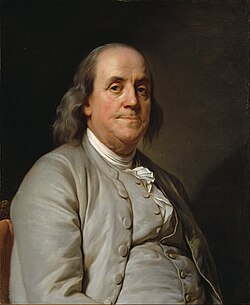
I am for doing good to the poor, but I differ in opinion of the means. I think the best way of doing good to the poor, is not making them easy in poverty, but leading or driving them out of it. In my youth I travelled much, and I observed in different countries, that the more public provisions were made for the poor, the less they provided for themselves, and of course became poorer. And, on the contrary, the less was done for them, the more they did for themselves, and became richer. There is no country in the world where so many provisions are established for them; so many hospitals to receive them when they are sick or lame, founded and maintained by voluntary charities; so many alms-houses for the aged of both sexes, together with a solemn general law made by the rich to subject their estates to a heavy tax for the support of the poor. Under all these obligations, are our poor modest, humble, and thankful; and do they use their best endeavours to maintain themselves, and lighten our shoulders of this burthen? On the contrary, I affirm that there is no country in the world in which the poor are more idle, dissolute, drunken, and insolent. The day you passed that act, you took away from before their eyes the greatest of all inducements to industry, frugality, and sobriety, by giving them a dependence on somewhat else than a careful accumulation during youth and health, for support in age or sickness. In short, you offered a premium for the encouragement of idleness, and you should not now wonder that it has had its effect in the increase of poverty.

What can be added to the happiness of a man who is in health, out of debt, and has a clear conscience?
The way to wealth is as plain as the way to market. It depends chiefly on two words: industry and frugality — that is, waste neither time nor money, but make the best use of both.

The love of money as a possession — as distinguished from the love of money as a means to the enjoyments and realities of life — will be recognised for what it is, a somewhat disgusting morbidity, one of those semi-criminal, semi-pathological propensities which one hands over with a shudder to the specialists in mental disease.

Be ever active in the management of the economy, because the root of wealth is economic activity; inactivity brings material distress.

Such, in my opinion, is the true Gospel concerning Wealth, obedience to which is destined some day to solve the problem of the Rich and the Poor, and to bring "Peace on earth, among men Good Will."

Faith is the best wealth for a man in this world. Righteousness when well practised brings happiness. Truth is the sweetest of flavours. They say the life of one living by wisdom is the best.
Rather go to bed supperless than rise in debt.

If one advances confidently in the direction of his dreams, and endeavors to live the life which he has imagined, he will meet with a success unexpected in common hours ... In proportion as he simplifies his life, the laws of the universe will appear less complex, and solitude will not be solitude, nor poverty poverty, nor weakness weakness.
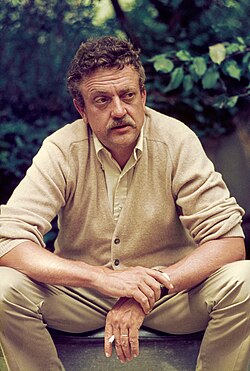
True story, Word of Honor: Joseph Heller, an important and funny writer now dead, and I were at a party given by a billionaire on Shelter Island. I said, 'Joe, how does it make you feel to know that our host only yesterday may have made more money than your novel Catch-22 has earned in its entire history?' And Joe said, 'I've got something he can never have.' And I said, 'What on earth could that be, Joe?' And Joe said, 'The knowledge that I've got enough.' Not bad!

That is not riches, which may be lost; virtue is our true good and the true reward of its possessor. That cannot be lost; that never deserts us, but when life leaves us. As to property and external riches, hold them with trembling; they often leave their possessor in contempt, and mocked at for having lost them.
If you wish to have leisure for your mind, either be a poor man, or resemble a poor man. Study cannot be helpful unless you take pains to live simply; and living simply is voluntary poverty.
There is no reason why poverty should call us away from philosophy—no, nor even actual want. For when hastening after wisdom, we must endure even hunger. Men have endured hunger when their towns were besieged, and what other reward for their endurance did they obtain than that they did not fall under the conqueror’s power? How much greater is the promise of the prize of everlasting liberty, and the assurance that we need fear neither God nor man! Even though we starve, we must reach that goal.
Idleness and Pride Tax with a heavier Hand than Kings and Parliaments; If we can get rid of the former we may easily bear the Latter.

It is the preoccupation with possessions, more than anything else, that prevents us from living freely and nobly.

The rich in all societies may be thrown into two classes. The first is of those who are powerful as well as rich, and conduct the operations of the vast political machine. The other is of those who employ their riches wholly in the acquisition of pleasure. As to the first sort, their continual care and anxiety, their toilsome days and sleepless nights, are next to proverbial. These circumstances are sufficient almost to level their condition to that of the unhappy majority; but there are other circumstances which place them in a far lower condition. Not only their understandings labour continually, which is the severest labour, but their hearts are torn by the worst, most troublesome, and insatiable of all passions, by avarice, by ambition, by fear and jealousy. No part of the mind has rest. Power gradually extirpates from the mind every humane and gentle virtue. Pity, benevolence, friendship, are things almost unknown in high stations.

There are some men who expose themselves to damnation so foolishly by avarice, by brutality, by debauches, by violence, by excesses, by blasphemies! ...it is always a great folly for a man to expose himself to damnation... He must despise desire and its kingdom, and aspire to that kingdom of love in which all the subjects breathe nothing but love, and desire nothing but the benefits of love.
The great source of both the misery and disorders of human life, seems to arise from over-rating the difference between one permanent situation and another. Avarice over-rates the difference between poverty and riches: ambition, that between a private and a public station: vain-glory, that between obscurity and extensive reputation. The person under the influence of any of those extravagant passions, is not only miserable in his actual situation, but is often disposed to disturb the peace of society, in order to arrive at that which he so foolishly admires. The slightest observation, however, might satisfy him, that, in all the ordinary situations of human life, a well-disposed mind may be equally calm, equally cheerful, and equally contented. Some of those situations may, no doubt, deserve to be preferred to others: but none of them can deserve to be pursued with that passionate ardour which drives us to violate the rules either of prudence or of justice; or to corrupt the future tranquillity of our minds, either by shame from the remembrance of our own folly, or by remorse from the horror of our own injustice.
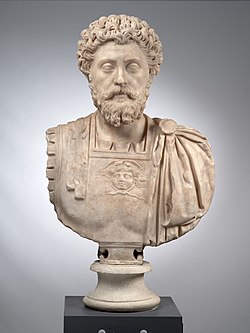
There is a limit to the time assigned you, and if you don't use it to free yourself it will be gone and never return.