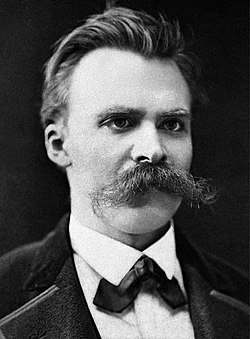
Echoes
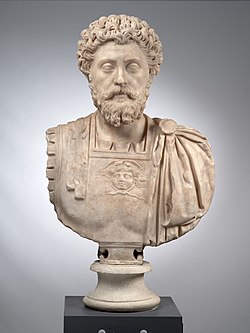
Marcus Aurelius
173 AD
“Everything we hear is an opinion, not a fact. Everything we see is a perspective, not the truth.”
❧
Against that positivism which stops before phenomena, saying "there are only facts," I should say: no, it is precisely facts that do not exist, only interpretations...
And those who were seen dancing were thought to be insane by those who could not hear the music.

Every faculty in one man is the measure by which he judges of the like faculty in another. I judge of your sight by my sight, of your ear by my ear, of your reason by my reason, of your resentment by my resentment, of your love by my love. I neither have, nor can have, any other way of judging about them.

To different minds, the same world is a hell, and a heaven.
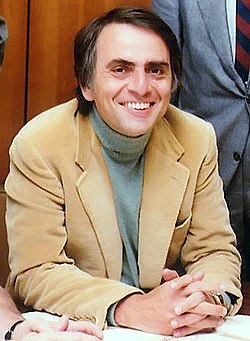
The way to find out about our place in the universe is by examining the universe and by examining ourselves—without preconceptions, with as unbiased a mind as we can muster. We cannot begin with an entirely clean slate, since we arrive at this problem with predispositions of hereditary and environmental origin; but, after understanding such built-in biases, is it not possible to pry insights from nature?

I have endowed everyone with a temperament of his own, given everyone an idiom of his own; so that what is praise for him is blame for thee, what is honey for him is poison for thee, what is light for him is fire for thee, what is rose for him is thorn for thee, what is good for him is evil for thee, what is beautiful for him is ugly for thee. In the people of Hindustan the idiom of Hindustan is praiseworthy; in the people of Sind, the idiom of Sind is praiseworthy. I do not see the outward and the speech; I see the inward and the state [of feeling]. For the heart is the substance and speech an accident. So, the accident is subservient, the substance is the [real] object. The religion of love stands apart from all religions. For lovers the [only] religion and creed is God.

We cling to our own point of view, as though everything depended on it. Yet our opinions have no permanence; like autumn and winter, they gradually pass away.

It is not truth that makes man great, but man that makes truth great.
External things are not the problem. It's your assessment of them. Which you can erase right now.

My experience is what I agree to attend to.

It means being conscious and aware enough to choose what you pay attention to and to choose how you construct meaning from experience.
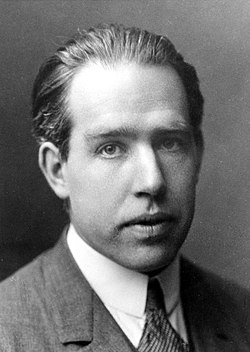
The opposite of a correct statement is a false statement. But the opposite of a profound truth may well be another profound truth.
The fault is in the one who blames. Spirit sees nothing to criticize.

Do not go by revelation; Do not go by tradition; Do not go by hearsay; Do not go on the authority of sacred texts; Do not go on the grounds of pure logic; Do not go by a view that seems rational; Do not go by reflecting on mere appearances; Do not go along with a considered view because you agree with it; Do not go along on the grounds that the person is competent; Do not go along because "the recluse is our teacher." Kalamas, when you yourselves know: These things are unwholesome, these things are blameworthy; these things are censured by the wise; and when undertaken and observed, these things lead to harm and ill, abandon them... Kalamas, when you know for yourselves: These are wholesome; these things are not blameworthy; these things are praised by the wise; undertaken and observed, these things lead to benefit and happiness, having undertaken them, abide in them.

Nor less I deem that there are Powers / Which of themselves our minds impress; / That we can feed this mind of ours / In a wise passiveness.

It is not things that disturb us, but our judgments about things. For example, death is nothing terrible, for if it were, it would have appeared so to Socrates; but the judgment that death is terrible — that is the terrible thing.

If your daily life seems poor, do not blame it; blame yourself, tell yourself that you are not poet enough to call forth its riches.
To believe your own thought, to believe that what is true for you in your private heart is true for all men — that is genius.

The only true voyage of discovery, the only fountain of Eternal Youth, would be not to visit strange lands but to possess other eyes, to behold the universe through the eyes of another, of a hundred others, to behold the hundred universes that each of them beholds, that each of them is.
In a word, neither death, nor exile, nor pain, nor anything of this kind is the real cause of our doing or not doing any action, but our inward opinions and principles.
The truth may be puzzling. It may take some work to grapple with. It may be counterintuitive. It may contradict deeply held prejudices. It may not be consonant with what we desperately want to be true. But our preferences do not determine what's true. We have a method, and that method helps us to reach not absolute truth, only asymptotic approaches to the truth — never there, just closer and closer, always finding vast new oceans of undiscovered possibilities. Cleverly designed experiments are the key.
Everyone sees the unseen in proportion to the clarity of his heart, and that depends upon how much he has polished it. Whoever has polished it more sees more — more unseen forms become manifest to him.
Men are disturbed, not by things, but by the principles and notions which they form concerning things.

Your vision will become clear only when you can look into your own heart. Without, everything seems discordant; only within does it coalesce into unity. Who looks outside dreams; who looks inside awakes.