
Echoes
Theodore Roosevelt
1897
“It is both foolish and wicked to teach the average man who is not well off that some wrong or injustice has been done him, and that he should hope for redress elsewhere than in his own industry, honesty and intelligence.”
❧
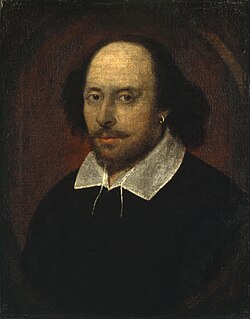
Men at some time are masters of their fates:The fault, dear Brutus, is not in our stars,But in ourselves, that we are underlings.
It seems to me that the simple acceptance of this fundamental fact of American life, this acknowledgment that the law of work is the fundamental law of our being, will help us to start aright in facing not a few of the problems that confront us from without and from within. As regards internal affairs, it should teach us the prime need of remembering that, after all has been said and done, the chief factor in any man's success or failure must be his own character—that is, the sum of his common sense, his courage, his virile energy and capacity. Nothing can take the place of this individual factor.

If your daily life seems poor, do not blame it; blame yourself, tell yourself that you are not poet enough to call forth its riches.

No one saves us but ourselves, No one can and no one may. We ourselves must walk the path Buddhas merely teach the way. By ourselves is evil done, By ourselves is pain endured, By ourselves we cease from wrong, By ourselves become we pure.
Be a lamp unto yourself, be a refuge to yourself. Take yourself to no external refuge. Hold fast to the Truth as a lamp; hold fast to the Truth as a refuge.

Every man is, no doubt, by nature, first and principally recommended to his own care; and as he is fitter to take care of himself than of any other person, it is fit and right that it should be so.
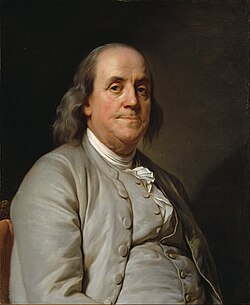
I am for doing good to the poor, but I differ in opinion of the means. I think the best way of doing good to the poor, is not making them easy in poverty, but leading or driving them out of it. In my youth I travelled much, and I observed in different countries, that the more public provisions were made for the poor, the less they provided for themselves, and of course became poorer. And, on the contrary, the less was done for them, the more they did for themselves, and became richer. There is no country in the world where so many provisions are established for them; so many hospitals to receive them when they are sick or lame, founded and maintained by voluntary charities; so many alms-houses for the aged of both sexes, together with a solemn general law made by the rich to subject their estates to a heavy tax for the support of the poor. Under all these obligations, are our poor modest, humble, and thankful; and do they use their best endeavours to maintain themselves, and lighten our shoulders of this burthen? On the contrary, I affirm that there is no country in the world in which the poor are more idle, dissolute, drunken, and insolent. The day you passed that act, you took away from before their eyes the greatest of all inducements to industry, frugality, and sobriety, by giving them a dependence on somewhat else than a careful accumulation during youth and health, for support in age or sickness. In short, you offered a premium for the encouragement of idleness, and you should not now wonder that it has had its effect in the increase of poverty.

The gods help them that help themselves.

Not I, not any one else can travel that road for you. You must travel it for yourself.
Everything can be taken from a man but one thing: the last of the human freedoms — to choose one's attitude in any given set of circumstances, to choose one's own way.
No one can construct for you the bridge upon which precisely you must cross the stream of life.
A mere life of ease is not in the end a very satisfactory life, and, above all, it is a life which ultimately unfits those who follow it for serious work in the world. In the last analysis a healthy state can exist only when the men and women who make it up lead clean, vigorous, healthy lives; when the children are so trained that they shall endeavor, not to shirk difficulties, but to overcome them; not to seek ease, but to know how to wrest triumph from toil and risk.
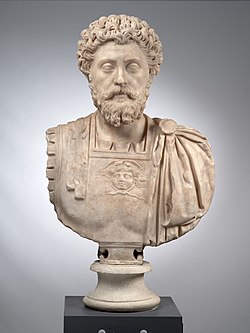
But true good fortune is what you make for yourself. Good fortune: good character, good intentions, and good actions.

Every man is the architect of his own fortune.

Things are not so painful and difficult of themselves, but our weakness or cowardice makes them so.
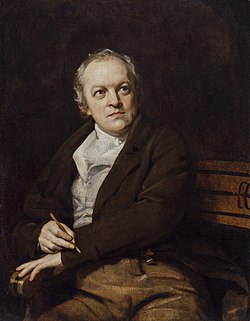
I must create a system, or be enslaved by another man's; I will not Reason and Compare: my business is to Create.

Though the whole world should praise him, he would not be stimulated to greater endeavour, and though the whole world should condemn him, he would not be depressed. So fixed was he in the difference between the internal judgement of himself and the external judgement of others.

A man contains all that is needful to his government within himself. He is made a law unto himself. All real good or evil that can befal [sic] him must be from himself. He only can do himself any good or any harm. Nothing can be given to him or can taken from him but always there is a compensation.. There is a correspondence between the human soul and everything that exists in the world; more properly, everything that is known to man. Instead of studying things without the principles of them, all may be penetrated unto with him. Every act puts the agent in a new position. The purpose of life seems to be to acquaint a man with himself. He is not to live the future as described to him but to live the real future to the real present. The highest revelation is that God is in every man.
The willfully idle man, like the willfully barren woman, has no place in a sane, healthy, and vigorous community. Moreover, the gross and hideous selfishness for which each stands defeats even its own miserable aims. Exactly as infinitely the happiest woman is she who has borne and brought up many healthy children, so infinitely the happiest man is he who has toiled hard and successfully in his life-work. The work may be done in a thousand different ways —with the brain or the hands, in the study, the field, or the workshop—if it is honest work, honestly done and well worth doing, that is all we have a right to ask. Every father and mother here, if they are wise, will bring up their children not to shirk difficulties, but to meet them and overcome them; not to strive after a life of ignoble ease, but to strive to do their duty, first to themselves and their families, and then to the whole state; and this duty must inevitably take the shape of work in some form or other.
I wish to preach, not the doctrine of ignoble ease, but the doctrine of the strenuous life, the life of toil and effort, of labor and strife; to preach that highest form of success which comes, not to the man who desires mere easy peace, but to the man who does not shrink from danger, from hardship, or from bitter toil, and who out of these wins the splendid ultimate triumph.
He who remembers the evils he has undergone, and those that have threatened him, and the slight causes that have changed him from one state to another, prepares himself in that way for future changes and for recognizing his condition. The life of Caesar has no more to show us than our own; an emperor's or an ordinary man's, it is still a life subject to all human accidents.
Ultimately, man should not ask what the meaning of his life is, but rather must recognize that it is he who is asked. In a word, each man is questioned by life; and he can only answer to life by answering for his own life; to life he can only respond by being responsible.
We cannot avoid meeting great issues. All that we can determine for ourselves is whether we shall meet them well or ill.
External things are not the problem. It's your assessment of them. Which you can erase right now.