
Echoes

Theodore Roosevelt
1898
“Don't let anyone impose on you. Don't be quarrelsome, but stand up for your rights. If you've got to fight, fight hard and well. To my mind, a coward is the only thing meaner than a liar.”
❧

You have enemies? Good. That means you've stood up for something, sometime in your life.

We must know what we think and speak out, even at the risk of unpopularity. In the final analysis, a democratic government represents the sum total of the courage and the integrity of its individuals. It cannot be better than they are. … In the long run there is no more exhilarating experience than to determine one's position, state it bravely and then act boldly.

When you have decided that a thing ought to be done and are doing it, never avoid being seen doing it, though many shall form an unfavorable opinion about it. For if it is not right, avoid doing the thing; but if it is right, why are you afraid of those who shall find fault wrongly?
Let us speak courteously, deal fairly, and keep ourselves armed and ready.

It would be better for me... that multitudes of men should disagree with me rather than that I, being one, should be out of harmony with myself.

It is the part of cowardice, not of courage, to go and crouch in a hole under a massive tomb, to avoid the blows of fortune.
Never give in — never, never, never, never, in nothing great or small, large or petty, never give in except to convictions of honour and good sense. Never yield to force; never yield to the apparently overwhelming might of the enemy.

To be popular is easy; to be right when right is unpopular, is noble... I repudiate with scorn the immoral doctrine, 'Our country, right or wrong'.
If we stand idly by, if we seek merely swollen, slothful ease and ignoble peace, if we shrink from the hard contests where men must win at hazard of their lives and at the risk of all they hold dear, then the bolder and stronger peoples will pass us by, and will win for themselves the domination of the world. Let us therefore boldly face the life of strife, resolute to do our duty well and manfully; resolute to uphold righteousness by deed and by word; resolute to be both honest and brave, to serve high ideals, yet to use practical methods. Above all, let us shrink from no strife, moral or physical, within or without the nation, provided we are certain that the strife is justified, for it is only through strife, through hard and dangerous endeavor, that we shall ultimately win the goal of true national greatness.

It is better by noble boldness to run the risk of being subject to half of the evils we anticipate than to remain in cowardly listlessness for fear of what might happen.

What dost thou fear? Strike, man, strike!

Above all, don't lie to yourself. The man who lies to himself and listens to his own lie comes to a point that he cannot distinguish the truth within him, or around him, and so loses all respect for himself and for others.
Do what you feel in your heart to be right — for you'll be criticized anyway. You'll be "damned if you do, and damned if you don't."

The most any one can do is to confess as candidly as he can the grounds for the faith that is in him, and leave his example to work on others as it may.

If you can keep your head when all about you Are losing theirs and blaming it on you, If you can trust yourself when all men doubt you, But make allowance for their doubting too; If you can wait and not be tired by waiting, Or being lied about, don't deal in lies, Or being hated, don't give way to hating, And yet don't look too good, nor talk too wise: If you can dream—and not make dreams your master; If you can think—and not make thoughts your aim; If you can meet with Triumph and Disaster And treat those two impostors just the same; If you can bear to hear the truth you've spoken Twisted by knaves to make a trap for fools, Or watch the things you gave your life to, broken, And stoop and build 'em up with worn-out tools: If you can make one heap of all your winnings And risk it on one turn of pitch-and-toss, And lose, and start again at your beginnings And never breathe a word about your loss; If you can force your heart and nerve and sinew To serve your turn long after they are gone, And so hold on when there is nothing in you Except the Will which says to them: 'Hold on!' If you can talk with crowds and keep your virtue, Or walk with Kings—nor lose the common touch, If neither foes nor loving friends can hurt you, If all men count with you, but none too much; If you can fill the unforgiving minute With sixty seconds' worth of distance run, Yours is the Earth and everything that's in it, And—which is more—you'll be a Man, my son!
Right here let me make as vigorous a plea as I know how in favor of saying nothing that we do not mean, and of acting without hesitation up to whatever we say. A good many of you are probably acquainted with the old proverb: "Speak softly and carry a big stick—you will go far." If a man continually blusters, if he lacks civility, a big stick will not save him from trouble; and neither will speaking softly avail, if back of the softness there does not lie strength, power.
We must ever bear in mind that the great end in view is righteousness, justice as between man and man, nation and nation, the chance to lead our lives on a somewhat higher level, with a broader spirit of brotherly goodwill one for another. Peace is generally good in itself, but it is never the highest good unless it comes as the handmaid of righteousness; and it becomes a very evil thing if it serves merely as a mask for cowardice and sloth, or as an instrument to further the ends of despotism or anarchy. We despise and abhor the bully, the brawler, the oppressor, whether in private or public life, but we despise no less the coward and the voluptuary. No man is worth calling a man who will not fight rather than submit to infamy or see those that are dear to him suffer wrong. No nation deserves to exist if it permits itself to lose the stern and virile virtues; and this without regard to whether the loss is due to the growth of a heartless and all-absorbing commercialism, to prolonged indulgence in luxury and soft, effortless ease, or to the deification of a warped and twisted sentimentality.

The man of virtue makes the difficulty to be overcome his first business, and success only a subsequent consideration.
It seems to me that the simple acceptance of this fundamental fact of American life, this acknowledgment that the law of work is the fundamental law of our being, will help us to start aright in facing not a few of the problems that confront us from without and from within. As regards internal affairs, it should teach us the prime need of remembering that, after all has been said and done, the chief factor in any man's success or failure must be his own character—that is, the sum of his common sense, his courage, his virile energy and capacity. Nothing can take the place of this individual factor.

For if he who resolveth bravely oftentimes falleth short, how shall it be with him who resolveth rarely or feebly?
You gain strength, courage, and confidence by every experience in which you really stop to look fear in the face. You are able to say to yourself, "I have lived through this horror. I can take the next thing that comes along." … You must do the thing you think you cannot do.

For nonconformity the world whips you with its displeasure. And therefore a man must know how to estimate a sour face.
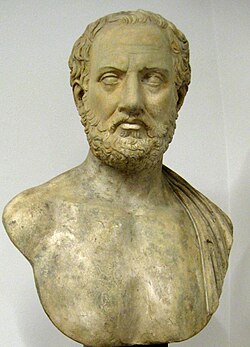
The bravest are surely those who have the clearest vision of what is before them, glory and danger alike, and yet notwithstanding go out to meet it.

Though the whole world should praise him, he would not be stimulated to greater endeavour, and though the whole world should condemn him, he would not be depressed. So fixed was he in the difference between the internal judgement of himself and the external judgement of others.