
Echoes

Theodore Roosevelt
1902
“The first requisite of a good citizen in this Republic of ours is that he shall be able and willing to pull his weight; that he shall not be a mere passenger, but shall do his share in the work that each generation of us finds ready to hand; and, furthermore, that in doing his work he shall show, not only the capacity for sturdy self-help, but also self-respecting regard for the rights of others.”
❧
We must see that there is civic honesty, civic cleanliness, civic good sense in our home administration of city, State, and nation. We must strive for honesty in office, for honesty toward the creditors of the nation and of the individual; for the widest freedom of individual initiative where possible, and for the wisest control of individual initiative where it is hostile to the welfare of the many. But because we set our own household in order we are not thereby excused from playing our part in the great affairs of the world. A man's first duty is to his own home, but he is not thereby excused from doing his duty to the State; for if he fails in this second duty it is under the penalty of ceasing to be a freeman. In the same way, while a nation's first duty is within its own borders, it is not thereby absolved from facing its duties in the world as a whole; and if it refuses to do so, it merely forfeits its right to struggle for a place among the peoples that shape the destiny of mankind.
We must know what we think and speak out, even at the risk of unpopularity. In the final analysis, a democratic government represents the sum total of the courage and the integrity of its individuals. It cannot be better than they are. … In the long run there is no more exhilarating experience than to determine one's position, state it bravely and then act boldly.

Americans of all ages, all stations of life, and all types of disposition are forever forming associations... In democratic countries knowledge of how to combine is the mother of all other forms of knowledge; on its progress depends that of all the others.

The fate of the country does not depend on how you vote at the polls — the worst man is as strong as the best at that game; it does not depend on what kind of paper you drop into the ballot-box once a year, but on what kind of man you drop from your chamber into the street every morning.

When bad men combine, the good must associate; else they will fall one by one, an unpitied sacrifice in a contemptible struggle. It is not enough in a situation of trust in the commonwealth, that a man means well to his country; it is not enough that in his single person he never did an evil act, but always voted according to his conscience, and even harangued against every design which he apprehended to be prejudicial to the interests of his country. This innoxious and ineffectual character, that seems formed upon a plan of apology and disculpation, falls miserably short of the mark of publick duty. That duty demands and requires, that what is right should not only be made known, but made prevalent; that what is evil should not only be detected, but defeated. When the publick man omits to put himself in a situation of doing his duty with effect, it is an omission that frustrates the purposes of his trust almost as much as if he had formally betrayed it.

When the happiness or misery of others depends in any respect upon our conduct, we dare not, as self–love might suggest to us, prefer the interest of one to that of many. The man within immediately calls to us, that we value ourselves too much and other people too little, and that, by doing so, we render ourselves the proper object of the contempt and indignation of our brethren. Neither is this sentiment confined to men of extraordinary magnanimity and virtue. It is deeply impressed upon every tolerably good soldier, who feels that he would become the scorn of his companions, if he could be supposed capable of shrinking from danger, or of hesitating, either to expose or to throw away his life, when the good of the service required it.
The willfully idle man, like the willfully barren woman, has no place in a sane, healthy, and vigorous community. Moreover, the gross and hideous selfishness for which each stands defeats even its own miserable aims. Exactly as infinitely the happiest woman is she who has borne and brought up many healthy children, so infinitely the happiest man is he who has toiled hard and successfully in his life-work. The work may be done in a thousand different ways —with the brain or the hands, in the study, the field, or the workshop—if it is honest work, honestly done and well worth doing, that is all we have a right to ask. Every father and mother here, if they are wise, will bring up their children not to shirk difficulties, but to meet them and overcome them; not to strive after a life of ignoble ease, but to strive to do their duty, first to themselves and their families, and then to the whole state; and this duty must inevitably take the shape of work in some form or other.
The people as a whole can be benefited morally and materially by a system which shall permit of ample reward for exceptional efficiency, but which shall nevertheless secure to the average man, who does his work faithfully and well, the reward to which he is entitled. Remember that I speak only of the man who does his work faithfully and well. The man who shirks his work, who is lazy or vicious, or even merely incompetent, deserves scant consideration; we may be sorry for his family, but it is folly to waste sympathy on the man himself; and it is also folly for sentimentalists to try to shift the burden of blame from such a man himself to “society” and it is an outrage to give him the reward given to his hard-working, upright, and efficient brother. Still less should we waste sympathy on the criminal; there are altogether too many honest men who need it; and one chief point in dealing with the criminal should be to make him understand that he will be in personal peril if he becomes a lawbreaker. I realize entirely that in the last analysis, with the nation as with the individual, it is private character that counts for most. It is because of this realization that I gladly lay myself open to the charge that I preach too much, and dwell too much upon moral commonplaces; for though I believe with all my heart in the nationalization of this Nation—in the collective use on behalf of the American people of the governmental powers which can be derived only from the American people as a whole—yet I believe even more in the practical application by the individual of those great fundamental moralities.
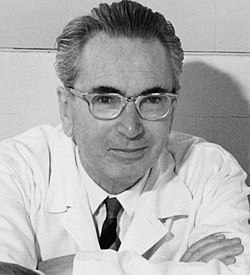
Ultimately, man should not ask what the meaning of his life is, but rather must recognize that it is he who is asked. In a word, each man is questioned by life; and he can only answer to life by answering for his own life; to life he can only respond by being responsible.
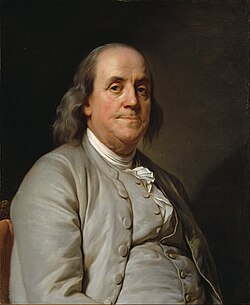
A republic, if you can keep it.
Our country—this great republic—means nothing unless it means the triumph of a real democracy, the triumph of popular government, and, in the long run, of an economic system under which each man shall be guaranteed the opportunity to show the best that there is in him.

We but mirror the world. All the tendencies present in the outer world are to be found in the world of our body. If we could change ourselves, the tendencies in the world would also change.
A life of slothful ease, a life of that peace which springs merely from lack either of desire or of power to strive after great things, is as little worthy of a nation as of an individual. [...] If you are rich and are worth your salt, you will teach your sons that though they may have leisure, it is not to be spent in idleness; for wisely used leisure merely means that those who possess it, being free from the necessity of working for their livelihood, are all the more bound to carry on some kind of non-remunerative work in science, in letters, in art, in exploration, in historical research—work of the type we most need in this country, the successful carrying out of which reflects most honor upon the nation. We do not admire the man of timid peace. We admire the man who embodies victorious effort; the man who never wrongs his neighbor, who is prompt to help a friend, but who has those virile qualities necessary to win in the stern strife of actual life. It is hard to fail, but it is worse never to have tried to succeed. In this life we get nothing save by effort. Freedom from effort in the present merely means that there has been stored up effort in the past. A man can be freed from the necessity of work only by the fact that he or his fathers before him have worked to good purpose. If the freedom thus purchased is used aright, and the man still does actual work, though of a different kind, whether as a writer or a general, whether in the field of politics or in the field of exploration and adventure, he shows he deserves his good fortune. But if he treats this period of freedom from the need of actual labor as a period, not of preparation, but of mere enjoyment, even though perhaps not of vicious enjoyment, he shows that he is simply a cumberer of the earth's surface, and he surely unfits himself to hold his own with his fellows if the need to do so should again arise.

Be thou never without something to do; be reading, or writing, or praying, or meditating, or doing something that is useful to the community.
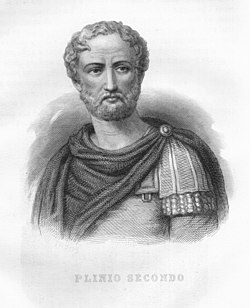
True glory consists in doing what deserves to be written, in writing what deserves to be read, and in so living as to make the world happier for our living in it.

Every individual matters. Every individual has a role to play. Every individual makes a difference.

Democracy is based upon the conviction that there are extraordinary possibilities in ordinary people.

Political questions are far too serious to be left to the politicians.
We cannot, if we would, play the part of China, and be content to rot by inches in ignoble ease within our borders, taking no interest in what goes on beyond them, sunk in a scrambling commercialism; heedless of the higher life, the life of aspiration, of toil and risk, busying ourselves only with the wants of our bodies for the day, until suddenly we should find, beyond a shadow of question, what China has already found, that in this world the nation that has trained itself to a career of unwarlike and isolated ease is bound, in the end, to go down before other nations which have not lost the manly and adventurous qualities. If we are to be a really great people, we must strive in good faith to play a great part in the world.
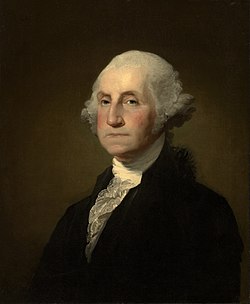
Of all the dispositions and habits, which lead to political prosperity, Religion and Morality are indispensable supports. In vain would that man claim the tribute of Patriotism, who should labor to subvert these great pillars of human happiness, these firmest props of the duties of Men and Citizens. The mere Politician, equally with the pious man, ought to respect and to cherish them. A volume could not trace all their connexions with private and public felicity.
Every post is honorable in which a man can serve his country.
In democratic ages men rarely sacrifice themselves for another, but they show a general compassion for all the human race. One never sees them inflict pointless suffering, and they are glad to relieve the sorrows of others when they can do so without much trouble to themselves. They are not disinterested, but they are gentle.
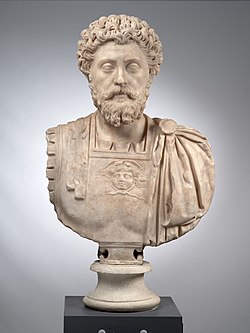
In the morning when thou risest unwillingly, let this thought be present — I am rising to the work of a human being.
It is substantially true, that virtue or morality is a necessary spring of popular government. The rule, indeed, extends with more or less force to every species of free government.