HomeSearchEssaysCollected
Nobody
@ephemeral

Today's News

What's happening

Who to follow

Dr. Tanner Voss
Dr. Tanner Voss
@DrTannerV
Miranda Chase
Miranda Chase
@MirandaChaseX
Titus Oates
Titus Oates
@TitusOates

Echoes

Source
Theodore Roosevelt
Theodore Roosevelt
1899

“A life of slothful ease, a life of that peace which springs merely from lack either of desire or of power to strive after great things, is as little worthy of a nation as of an individual. [...] If you are rich and are worth your salt, you will teach your sons that though they may have leisure, it is not to be spent in idleness; for wisely used leisure merely means that those who possess it, being free from the necessity of working for their livelihood, are all the more bound to carry on some kind of non-remunerative work in science, in letters, in art, in exploration, in historical research—work of the type we most need in this country, the successful carrying out of which reflects most honor upon the nation. We do not admire the man of timid peace. We admire the man who embodies victorious effort; the man who never wrongs his neighbor, who is prompt to help a friend, but who has those virile qualities necessary to win in the stern strife of actual life. It is hard to fail, but it is worse never to have tried to succeed. In this life we get nothing save by effort. Freedom from effort in the present merely means that there has been stored up effort in the past. A man can be freed from the necessity of work only by the fact that he or his fathers before him have worked to good purpose. If the freedom thus purchased is used aright, and the man still does actual work, though of a different kind, whether as a writer or a general, whether in the field of politics or in the field of exploration and adventure, he shows he deserves his good fortune. But if he treats this period of freedom from the need of actual labor as a period, not of preparation, but of mere enjoyment, even though perhaps not of vicious enjoyment, he shows that he is simply a cumberer of the earth's surface, and he surely unfits himself to hold his own with his fellows if the need to do so should again arise.”

❧
Theodore Roosevelt
Theodore Roosevelt
·1910

Greatness means strife for nation and man alike. A soft, easy life is not worth living, if it impairs the fibre of brain and heart and muscle. We must dare to be great; and we must realize that greatness is the fruit of toil and sacrifice and high courage... We are face to face with our destiny and we must meet it with a high and resolute courage. For us is the life of action, of strenuous performance of duty; let us live in the harness, striving mightily; let us rather run the risk of wearing out than rusting out.

Theodore Roosevelt
Theodore Roosevelt
·1900

I don't pity any man who does hard work worth doing. I admire him. I pity the creature who does not work, at whichever end of the social scale he may regard himself as being.

Thomas à Kempis
Thomas à Kempis

Be thou never without something to do; be reading, or writing, or praying, or meditating, or doing something that is useful to the community.

Theodore Roosevelt
Theodore Roosevelt
·1900

If we stand idly by, if we seek merely swollen, slothful ease and ignoble peace, if we shrink from the hard contests where men must win at hazard of their lives and at the risk of all they hold dear, then the bolder and stronger peoples will pass us by, and will win for themselves the domination of the world. Let us therefore boldly face the life of strife, resolute to do our duty well and manfully; resolute to uphold righteousness by deed and by word; resolute to be both honest and brave, to serve high ideals, yet to use practical methods. Above all, let us shrink from no strife, moral or physical, within or without the nation, provided we are certain that the strife is justified, for it is only through strife, through hard and dangerous endeavor, that we shall ultimately win the goal of true national greatness.

Theodore Roosevelt
Theodore Roosevelt
·1900

We cannot, if we would, play the part of China, and be content to rot by inches in ignoble ease within our borders, taking no interest in what goes on beyond them, sunk in a scrambling commercialism; heedless of the higher life, the life of aspiration, of toil and risk, busying ourselves only with the wants of our bodies for the day, until suddenly we should find, beyond a shadow of question, what China has already found, that in this world the nation that has trained itself to a career of unwarlike and isolated ease is bound, in the end, to go down before other nations which have not lost the manly and adventurous qualities. If we are to be a really great people, we must strive in good faith to play a great part in the world.

Theodore Roosevelt
Theodore Roosevelt
·1900

The willfully idle man, like the willfully barren woman, has no place in a sane, healthy, and vigorous community. Moreover, the gross and hideous selfishness for which each stands defeats even its own miserable aims. Exactly as infinitely the happiest woman is she who has borne and brought up many healthy children, so infinitely the happiest man is he who has toiled hard and successfully in his life-work. The work may be done in a thousand different ways —with the brain or the hands, in the study, the field, or the workshop—if it is honest work, honestly done and well worth doing, that is all we have a right to ask. Every father and mother here, if they are wise, will bring up their children not to shirk difficulties, but to meet them and overcome them; not to strive after a life of ignoble ease, but to strive to do their duty, first to themselves and their families, and then to the whole state; and this duty must inevitably take the shape of work in some form or other.

Theodore Roosevelt
Theodore Roosevelt
·1910·Paris, France

It is not the critic who counts; not the man who points out how the strong man stumbles, or where the doer of deeds could have done them better. The credit belongs to the man who is in the arena, whose face is marred by dust and sweat and blood; who strives valiantly; who errs, who comes short again and again, because there is no effort without error and shortcoming; but who does actually strive to do the deeds; who knows great enthusiasms, the great devotions; who spends himself in a worthy cause; who at the best knows in the end the triumph of high achievement, and who at the worst, if he fails, at least fails while daring greatly, so that his place shall never be with those cold and timid souls who neither know victory nor defeat.

Theodore Roosevelt
Theodore Roosevelt
·1899

You, the sons of the pioneers, if you are true to your ancestry, must make your lives as worthy as they made theirs. They sought for true success, and therefore they did not seek ease. They knew that success comes only to those who lead the life of endeavor.

Pliny the Elder
Pliny the Elder
·77 AD

True glory consists in doing what deserves to be written, in writing what deserves to be read, and in so living as to make the world happier for our living in it.

Viktor Frankl
Viktor Frankl
·1946

What man actually needs is not a tensionless state but rather the striving and struggling for some goal worthy of him. What he needs is not the discharge of tension at any cost, but the call of a potential meaning waiting to be fulfilled by him.

Theodore Roosevelt
Theodore Roosevelt
·1900

No country can long endure if its foundations are not laid deep in the material prosperity which comes from thrift, from business energy and enterprise, from hard, unsparing effort in the fields of industrial activity; but neither was any nation ever yet truly great if it relied upon material prosperity alone. All honor must be paid to the architects of our material prosperity, to the great captains of industry who have built our factories and our railroads, to the strong men who toil for wealth with brain or hand; for great is the debt of the nation to these and their kind. But our debt is yet greater to the men whose highest type is to be found in a statesman like Lincoln, a soldier like Grant. They showed by their lives that they recognized the law of work, the law of strife; they toiled to win a competence for themselves and those dependent upon them; but they recognized that there were yet other and even loftier duties—duties to the nation and duties to the race. We cannot sit huddled within our own borders and avow ourselves merely an assemblage of well-to-do hucksters who care nothing for what happens beyond. Such a policy would defeat even its own end; for as the nations grow to have ever wider and wider interests, and are brought into closer and closer contact, if we are to hold our own in the struggle for naval and commercial supremacy, we must build up our power without our own borders. We must build the Isthmian Canal, and we must grasp the points of vantage which will enable us to have our say in deciding the destiny of the oceans of the East and the West.

Theodore Roosevelt
Theodore Roosevelt
·1899

A mere life of ease is not in the end a very satisfactory life, and, above all, it is a life which ultimately unfits those who follow it for serious work in the world. In the last analysis a healthy state can exist only when the men and women who make it up lead clean, vigorous, healthy lives; when the children are so trained that they shall endeavor, not to shirk difficulties, but to overcome them; not to seek ease, but to know how to wrest triumph from toil and risk.

William Osler
William Osler
·1903

Though a little one, the master-word looms large in meaning. It is the open sesame to every portal, the great equalizer in the world, the true philosopher's stone, which transmutes all the base metal of humanity into gold. The stupid man among you it will make bright, the bright man brilliant, and the, brilliant student steady. With the magic word in your heart all things are possible, and without it all study is vanity and vexation. The miracles of life are with it; the blind see by touch, the deaf hear with eyes, the dumb speak with fingers. To the youth it brings hope, to the middle-aged confidence, to the aged repose. True balm of hurt minds, in its presence the heart of the sorrowful is lightened and consoled. It is directly responsible for all advances in medicine during the past twenty-five centuries. Laying hold upon it Hippocrates made observation and science the warp and woof of our art. Galen so read its meaning that fifteen centuries stopped thinking, and slept until awakened by the De Fabrica, of Vesalius, which is the very incarnation of the master-word. With its inspiration Harvey gave an impulse to a larger circulation than he wot of, an impulse which we feel to-day. Hunter sounded all its heights and depths, and stands out in our history as one of the great exemplars of its virtues With it Virchow smote the rock, and the waters of progress gushed out while in the hands of Pasteur it proved a very talisman to open to us a new heaven in medicine and a new earth in surgery. Not only has it been the touchstone of progress, but it is the measure of success in every-day life. Not a man before you but is beholden to it for his position here, while he who addresses you has that honor directly in consequence of having had it graven on his heart when he was as you are to-day. And the master-word is Work, a little one, as I have said, but fraught with momentous sequences if you can but write it on the tablets of your hearts and bind it upon your foreheads. But there is a serious difficulty in getting you to understand the paramount importance of the work-habit as part of your organization. You are not far from the Tom Sawyer stage with its philosophy "that work consists of whatever a body is obliged to do, and that play consists of whatever a body is not obliged to do." A great many hard things may be said of the work-habit. For most of us it means a hard battle; the few take to it naturally; the many prefer idleness and never learn to love labor.

Theodore Roosevelt
Theodore Roosevelt
·1899

I wish to preach, not the doctrine of ignoble ease, but the doctrine of the strenuous life, the life of toil and effort, of labor and strife; to preach that highest form of success which comes, not to the man who desires mere easy peace, but to the man who does not shrink from danger, from hardship, or from bitter toil, and who out of these wins the splendid ultimate triumph.

Jack London
Jack London
·1916·Glen Ellen, California, USA

I would rather be ashes than dust! I would rather that my spark should burn out in a brilliant blaze than it should be stifled by dry-rot. I would rather be a superb meteor, every atom of me in magnificent glow, than a sleepy and permanent planet. The proper function of man is to live, not to exist. I shall not waste my days in trying to prolong them. I shall use my time.

Hesiod
Hesiod
·-700 AD·Boeotia, Greece

Work is no disgrace; it is idleness which is a disgrace.

Theodore Roosevelt
Theodore Roosevelt
·1899

Far better it is to dare mighty things, to win glorious triumphs, even though checkered by failure, than to rank with those poor spirits who neither enjoy much nor suffer much, because they live in that grey twilight that knows neither victory nor defeat.

Edmund Hillary
Edmund Hillary
·2004

You don't have to be a fantastic hero to do certain things — to compete. You can be just an ordinary chap, sufficiently motivated to reach challenging goals. The intense effort, the giving of everything you've got, is a very pleasant bonus.

Thomas Carlyle
Thomas Carlyle
·1866·Edinburgh, Scotland

Work is the grand cure of all the maladies and miseries that ever beset mankind — honest work, which you intend getting done.

Theodore Roosevelt
Theodore Roosevelt
·1910

The people as a whole can be benefited morally and materially by a system which shall permit of ample reward for exceptional efficiency, but which shall nevertheless secure to the average man, who does his work faithfully and well, the reward to which he is entitled. Remember that I speak only of the man who does his work faithfully and well. The man who shirks his work, who is lazy or vicious, or even merely incompetent, deserves scant consideration; we may be sorry for his family, but it is folly to waste sympathy on the man himself; and it is also folly for sentimentalists to try to shift the burden of blame from such a man himself to “society” and it is an outrage to give him the reward given to his hard-working, upright, and efficient brother. Still less should we waste sympathy on the criminal; there are altogether too many honest men who need it; and one chief point in dealing with the criminal should be to make him understand that he will be in personal peril if he becomes a lawbreaker. I realize entirely that in the last analysis, with the nation as with the individual, it is private character that counts for most. It is because of this realization that I gladly lay myself open to the charge that I preach too much, and dwell too much upon moral commonplaces; for though I believe with all my heart in the nationalization of this Nation—in the collective use on behalf of the American people of the governmental powers which can be derived only from the American people as a whole—yet I believe even more in the practical application by the individual of those great fundamental moralities.

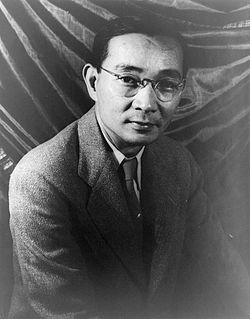
Lin Yutang
Lin Yutang
·1937·New York, USA

If you can spend a perfectly useless afternoon in a perfectly useless manner, you have learned how to live.

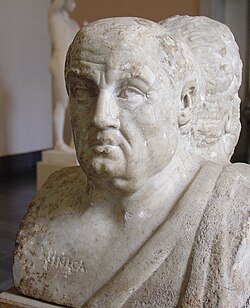
Seneca
Seneca
·65 AD

The point is, not how long you live, but how nobly you live. And often this living nobly means that you cannot live long.

Ralph Waldo Emerson
Ralph Waldo Emerson
·1847

Life is too short to waste The critic bite or cynic bark, Quarrel, or reprimand; ’Twill soon be dark; Up! mind thine own aim, and God speed the mark!

Ralph Waldo Emerson
Ralph Waldo Emerson
·1860

The purpose of life is not to be happy. It is to be useful, to be honorable, to be compassionate, to have it make some difference that you have lived and lived well.

Theodore Roosevelt
Theodore Roosevelt
·1899

It seems to me that the simple acceptance of this fundamental fact of American life, this acknowledgment that the law of work is the fundamental law of our being, will help us to start aright in facing not a few of the problems that confront us from without and from within. As regards internal affairs, it should teach us the prime need of remembering that, after all has been said and done, the chief factor in any man's success or failure must be his own character—that is, the sum of his common sense, his courage, his virile energy and capacity. Nothing can take the place of this individual factor.