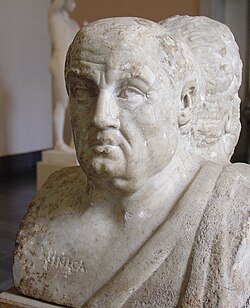
Most men ebb and flow in wretchedness between the fear of death and the hardships of life; they are unwilling to live, and yet they do not know how to die.
“I may become a poor man; I shall then be one among many. I may be exiled; I shall then regard myself as born in the place to which I shall be sent. They may put me in chains. What then? Am I free from bonds now? Behold this clogging burden of a body, to which nature has fettered me! “I shall die,” you say; you mean to say “I shall cease to run the risk of sickness; I shall cease to run the risk of imprisonment; I shall cease to run the risk of death.””
Most men ebb and flow in wretchedness between the fear of death and the hardships of life; they are unwilling to live, and yet they do not know how to die.

Do we call this the land of the free? What is it to be free from King George and continue the slaves of King Prejudice? What is it to be born free and not to live free? What is the value of any political freedom, but as a means to moral freedom? Is it a freedom to be slaves, or a freedom to be free, of which we boast? We are a nation of politicians, concerned about the outmost defences only of freedom. It is our children's children who may perchance be really free.

Forget the years, forget distinctions. Leap into the boundless and make it your home!

At the bottom of the fall we were able to stand again on dry land. The rope could not be recovered. We had flung down the adze from the top of the fall and also the logbook and the cooker wrapped in one of our blouses. That was all, except our wet clothes, that we brought out of the Antarctic, which we had entered a year and a half before with well-found ship, full equipment, and high hopes. That was all of tangible things; but in memories we were rich. We had pierced the veneer of outside things. We had "suffered, starved and triumphed, groveled down yet grasped at glory, grown bigger in the bigness of the whole. We had seen God in His splendours, heard the text that Nature renders." We had reached the naked soul of man.

But do not ask me where I am going, As I travel in this limitless world, Where every step I take is my home.

A man can be himself only so long as he is alone; and if he does not love solitude, he will not love freedom; for it is only when he is alone that he is really free.

The whole work of man really seems to consist in nothing but proving to himself every minute that he is a man and not a piano-key!

Liberty is never out of bounds or off limits; it spreads wherever it can capture the imagination of men.

It appears to me impossible that I should cease to exist, or that this active, restless spirit, equally alive to joy and sorrow, should only be organised dust — ready to fly abroad the moment the spring snaps, or the spark goes out which kept it together. Surely something resides in this heart that is not perishable, and life is more than a dream.
There is no reason why poverty should call us away from philosophy—no, nor even actual want. For when hastening after wisdom, we must endure even hunger. Men have endured hunger when their towns were besieged, and what other reward for their endurance did they obtain than that they did not fall under the conqueror’s power? How much greater is the promise of the prize of everlasting liberty, and the assurance that we need fear neither God nor man! Even though we starve, we must reach that goal.

All is not frustrated, though thou find thyself very often afflicted or grievously tempted. Thou art man, not God; thou art flesh, not an angel.
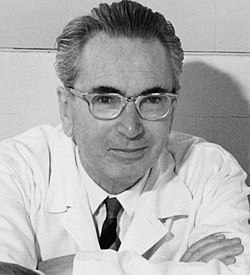
The way in which a man accepts his fate and all the suffering it entails, the way in which he takes up his cross, gives him ample opportunity — even under the most difficult circumstances — to add a deeper meaning to his life. It may remain brave, dignified and unselfish. Or in the bitter fight for self-preservation he may forget his human dignity and become no more than an animal. Here lies the chance for a man either to make use of or to forgo the opportunities of attaining the moral values that a difficult situation may afford him. And this decides whether he is worthy of his sufferings or not.

When I consider the short duration of my life, swallowed up in the eternity before and after, the small space which I fill, or even can see, engulfed in the infinite immensity of spaces whereof I know nothing, and which know nothing of me, I am terrified, and wonder that I am here rather than there, for there is no reason why here rather than there, or now rather than then. Who has set me here? By whose order and design have this place and time been destined for me?—Memoria hospitis unius diei prætereuntis. It is not well to be too much at liberty. It is not well to have all we want. How many kingdoms know nothing of us! The eternal silence of these infinite spaces alarms me.
If there is a meaning in life at all, then there must be a meaning in suffering. Suffering is an ineradicable part of life, even as fate and death.

Man is born free, and everywhere he is in chains.

The cause of freedom is not the cause of a race or a sect or a party or a class — it is the cause of humankind, the very birthright of humanity.

Why do you stay in prison when the door is so wide open?

Liberty must at all hazards be supported. We have a right to it, derived from our Maker. But if we had not, our fathers have earned and bought it for us, at the expense of their ease, their estates, their pleasure, and their blood.
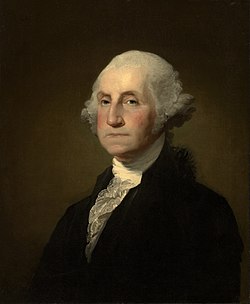
The time is now near at hand which must probably determine whether Americans are to be freemen or slaves; whether they are to have any property they can call their own; whether their houses and farms are to be pillaged and destroyed, and themselves consigned to a state of wretchedness from which no human efforts will deliver them. The fate of unborn millions will now depend, under God, on the courage and conduct of this army. Our cruel and unrelenting enemy leaves us only the choice of brave resistance, or the most abject submission. We have, therefore, to resolve to conquer or die.

My soul, my soul, where are you? Do you hear me? I speak, I call you—are you there? I have returned, here I am again. I have shaken the dust of all the lands from my feet, and I have come to you again, I am with you. After long years of long wandering, I have come to you anew. Shall I tell you everything I have seen, experienced, and drunk in? Or do you not want to hear about all the noise of life and the world? But one thing you must know, the one thing I have learned is that one must live this life. This life is the way, the long sought-after way to the unfathomable, which we call "divine". There is no other way. All other ways are false paths.
Money is coined liberty, and so it is ten times dearer to the man who is deprived of freedom. If money is jingling in his pocket, he is half consoled, even though he cannot spend it. But money can always and everywhere be spent, and, moreover, forbidden fruit is sweetest of all.

Every one is familiar with the phenomenon of feeling more or less alive on different days. Every one knows on any given day that there are energies slumbering in him which the incitements of that day do not call forth, but which he might display if these were greater. Most of us feel as if we lived habitually with a sort of cloud weighing on us, below our highest notch of clearness in discernment, sureness in reasoning, or firmness in deciding. Compared with what we ought to be, we are only half-awake. Our fires are damped, our drafts are checked. We are making use of only a small part of our possible mental and physical resources.
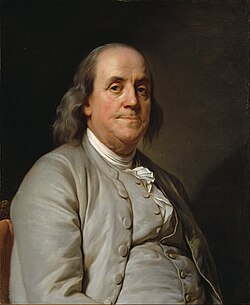
God grant, that not only the Love of Liberty, but a thorough Knowledge of the Rights of Man, may pervade all the Nations of the Earth, so that a Philosopher may set his Foot anywhere on its Surface, and say, 'This is my Country.'

It is the failing of a certain literature to believe that life is tragic because it is wretched. Life can be magnificent and overwhelming — that is its whole tragedy. Without beauty, love, or danger it would be almost easy to live. And M. Sartre's hero does not perhaps give us the real meaning of his anguish when he insists on those aspects of man he finds repugnant, instead of basing his reasons for despair on certain of man's signs of greatness. The realization that life is absurd cannot be an end, but only a beginning. This is a truth nearly all great minds have taken as their starting point. It is not this discovery that is interesting, but the consequences and rules of action drawn from it.
If there is a sin against life, it consists perhaps not so much in despairing of life as in hoping for another life and in eluding the implacable grandeur of this life.