
Cherish that which is within you, and shut off that which is without; for much knowledge is a curse.

“Knowing others is intelligence; knowing yourself is true wisdom. Mastering others is strength; mastering yourself is true power.”
Cherish that which is within you, and shut off that which is without; for much knowledge is a curse.

One can have no smaller or greater mastery than mastery of oneself.

The wise man should restrain his senses like the crane and accomplish his purpose with due knowledge of his place, time and ability.
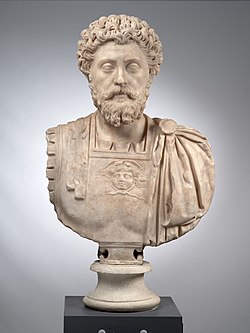
You have power over your mind — not outside events. Realize this, and you will find strength.

The world is nothing, the man is all; in yourself is the law of all nature, and you know not yet how a globule of sap ascends; in yourself slumbers the whole of Reason; it is for you to know all, it is for you to dare all.
Mastering others is strength. Mastering yourself is true power.

To know thyself is the beginning of wisdom.
Though the whole world should praise him, he would not be stimulated to greater endeavour, and though the whole world should condemn him, he would not be depressed. So fixed was he in the difference between the internal judgement of himself and the external judgement of others.
Knowing others is intelligence; knowing yourself is true wisdom.
He needs no library, for he has not done thinking; no church, for he is himself a prophet; no statute book, for he hath the Lawgiver; no money, for he is value itself; no road, for he is at home where he is.

The lion who breaks the enemy's ranks is a minor hero compared to the lion who overcomes himself.

Be a lamp unto yourself, be a refuge to yourself. Take yourself to no external refuge. Hold fast to the Truth as a lamp; hold fast to the Truth as a refuge.
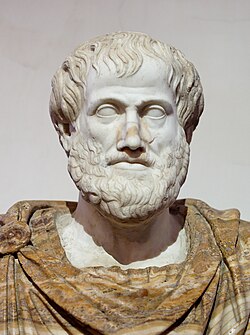
Knowing yourself is the beginning of all wisdom.

To account nothing of one’s self, and to think always kindly and highly of others, this is great and perfect wisdom.
A man contains all that is needful to his government within himself. He is made a law unto himself. All real good or evil that can befal [sic] him must be from himself. He only can do himself any good or any harm. Nothing can be given to him or can taken from him but always there is a compensation.. There is a correspondence between the human soul and everything that exists in the world; more properly, everything that is known to man. Instead of studying things without the principles of them, all may be penetrated unto with him. Every act puts the agent in a new position. The purpose of life seems to be to acquaint a man with himself. He is not to live the future as described to him but to live the real future to the real present. The highest revelation is that God is in every man.

Your vision will become clear only when you can look into your own heart. Without, everything seems discordant; only within does it coalesce into unity. Who looks outside dreams; who looks inside awakes.

There are two sentences inscribed upon the Delphic oracle, hugely accommodated to the usages of man's life: "Know thyself," and "Nothing too much;" and upon these all other precepts depend.

The man who is aware of himself is henceforward independent; and he is never bored, and life is only too short, and he is steeped through and through with a profound yet temperate happiness.
Wise men don't need to prove their point; men who need to prove their point aren't wise. The Master has no possessions. The more he does for others, the happier he is. The more he gives to others, the wealthier he is. The Tao nourishes by not forcing. By not dominating, the Master leads.
Do not go by revelation; Do not go by tradition; Do not go by hearsay; Do not go on the authority of sacred texts; Do not go on the grounds of pure logic; Do not go by a view that seems rational; Do not go by reflecting on mere appearances; Do not go along with a considered view because you agree with it; Do not go along on the grounds that the person is competent; Do not go along because "the recluse is our teacher." Kalamas, when you yourselves know: These things are unwholesome, these things are blameworthy; these things are censured by the wise; and when undertaken and observed, these things lead to harm and ill, abandon them... Kalamas, when you know for yourselves: These are wholesome; these things are not blameworthy; these things are praised by the wise; undertaken and observed, these things lead to benefit and happiness, having undertaken them, abide in them.

O God, give us the serenity to accept what cannot be changed, the courage to change what should be changed, and the wisdom to distinguish the one from the other.
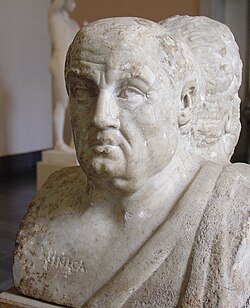
No one can lead a happy life, or even one that is bearable, without the pursuit of wisdom, and the perfection of wisdom is what makes the happy life. Yet even the beginnings of wisdom make life bearable. But this conviction must be firmly grasped and not merely adopted in words, if we wish to draw any strength from what we know.

Do not seek to follow in the footsteps of the wise; seek what they sought.

My Soul gave me good counsel, teaching me never to delight in praise or to be distressed by reproach. Before my Soul taught me, I doubted the value of my accomplishments until the passing days sent someone who would extol or disparage them. But now I know that trees blossom in the spring and give their fruits in the summer without any desire for accolades. And they scatter their leaves abroad in the fall and denude themselves in the winter without fear of reproof.
The five colors blind the eye. The five tones deafen the ear. The five flavors dull the taste. Racing and hunting madden the mind. Precious things lead one astray. Therefore the sage is guided by what he feels and not by what he sees. He lets go of that and chooses this.