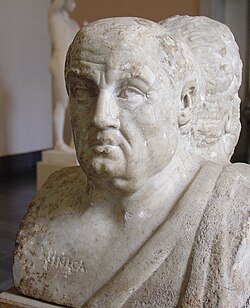
I have never wished to cater to the crowd; for what I know, they do not approve, and what they approve, I do not know.

“I like a church, I like a cowl, I love a prophet of the soul, And on my heart monastic aisles Fall like sweet strains or pensive smiles; Yet not for all his faith can see, Would I that cowled churchman be. Why should the vest on him allure, Which I could not on me endure?”
I have never wished to cater to the crowd; for what I know, they do not approve, and what they approve, I do not know.
You will hear every day the maxims of a low prudence. You will hear, that the first duty is to get land and money, place and name. "What is this Truth you seek? What is this Beauty?" men will ask, with derision. If, nevertheless, God have called any of you to explore truth and beauty, be bold, be firm, be true. When you shall say, "As others do, so will I. I renounce, I am sorry for it, my early visions; I must eat the good of the land, and let learning and romantic expectations go, until a more convenient season." — then dies the man in you; then once more perish the buds of art, and poetry, and science, as they have died already in a thousand thousand men. The hour of that choice is the crisis of your history; and see that you hold yourself fast by the intellect. ... Bend to the persuasion which is flowing to you from every object in Nature, to be its tongue to the heart of man, and to show the besotted world how passing fair is wisdom.

I have endowed everyone with a temperament of his own, given everyone an idiom of his own; so that what is praise for him is blame for thee, what is honey for him is poison for thee, what is light for him is fire for thee, what is rose for him is thorn for thee, what is good for him is evil for thee, what is beautiful for him is ugly for thee. In the people of Hindustan the idiom of Hindustan is praiseworthy; in the people of Sind, the idiom of Sind is praiseworthy. I do not see the outward and the speech; I see the inward and the state [of feeling]. For the heart is the substance and speech an accident. So, the accident is subservient, the substance is the [real] object. The religion of love stands apart from all religions. For lovers the [only] religion and creed is God.

Attach yourself to what is spiritually superior, regardless of what other people think or do. Hold to your true aspirations no matter what is going on around you.

I went to the woods because I wished to live deliberately, to front only the essential facts of life, and see if I could not learn what it had to teach, and not, when I came to die, discover that I had not lived. I did not wish to live what was not life, living is so dear; nor did I wish to practise resignation, unless it was quite necessary. I wanted to live deep and suck out all the marrow of life, to live so sturdily and Spartan-like as to put to rout all that was not life, to cut a broad swath and shave close, to drive life into a corner, and reduce it to its lowest terms, and, if it proved to be mean, why then to get the whole and genuine meanness of it, and publish its meanness to the world; or if it were sublime, to know it by experience, and be able to give a true account of it in my next excursion. For most men, it appears to me, are in a strange uncertainty about it, whether it is of the devil or of God, and have somewhat hastily concluded that it is the chief end of man here to "glorify God and enjoy him forever."
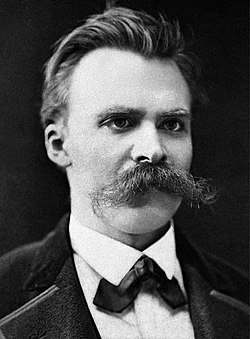
Here the ways of men part: if you wish to strive for peace of soul and pleasure, then believe; if you wish to be a devotee of truth, then inquire.

Great truths do not take hold of the hearts of the masses...And now, as all the world is in error, I, though I know the true path,—how shall I guide? If I know that I cannot succeed and yet try to force success, this would be but another source of error. Better, then, to desist and strive no more. But if I strive not, who will?
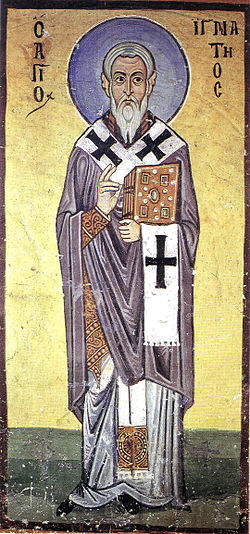
I am the wheat of God, and let me be ground by the teeth of the wild beasts, that I may be found the pure bread of Christ.

No need to hurry. No need to sparkle. No need to be anybody but oneself.

It would be better for me... that multitudes of men should disagree with me rather than that I, being one, should be out of harmony with myself.

You know I am not born to tread in the beaten track — the peculiar bent of my nature pushes me on.

My soul, my soul, where are you? Do you hear me? I speak, I call you—are you there? I have returned, here I am again. I have shaken the dust of all the lands from my feet, and I have come to you again, I am with you. After long years of long wandering, I have come to you anew. Shall I tell you everything I have seen, experienced, and drunk in? Or do you not want to hear about all the noise of life and the world? But one thing you must know, the one thing I have learned is that one must live this life. This life is the way, the long sought-after way to the unfathomable, which we call "divine". There is no other way. All other ways are false paths.
For nonconformity the world whips you with its displeasure. And therefore a man must know how to estimate a sour face.

It is himself he is approaching, no other; and he should begin by turning resolutely away from all devices that are popularly believed to indicate style — all mannerisms, tricks, adornments.

Religion, therefore, as I now ask you arbitrarily to take it, shall mean for us the feelings, acts, and experiences of individual men in their solitude, so far as they apprehend themselves to stand in relation to whatever they may consider the divine. Since the relation may be either moral, physical, or ritual, it is evident that out of religion in the sense in which we take it, theologies, philosophies, and ecclesiastical organizations may secondarily grow.

My Soul gave me good counsel, teaching me never to delight in praise or to be distressed by reproach. Before my Soul taught me, I doubted the value of my accomplishments until the passing days sent someone who would extol or disparage them. But now I know that trees blossom in the spring and give their fruits in the summer without any desire for accolades. And they scatter their leaves abroad in the fall and denude themselves in the winter without fear of reproof.
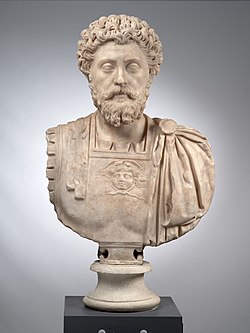
I have often wondered how it is that every man loves himself more than all the rest of men, but yet sets less value on his own opinion of himself than on the opinion of others.

After a long time the great and awful Name was forgotten and the people, men, women and children, only recognized an image of wood or stone and the temple of wood or stone which they had been brought up from infancy to serve by bowing down.
It never ceases to amaze me: we all love ourselves more than other people, but care more about their opinions than our own.

Your time is limited, so don't waste it living someone else's life. Don't be trapped by dogma — which is living with the results of other people's thinking. Don't let the noise of others' opinions drown out your own inner voice. And most important, have the courage to follow your heart and intuition. They somehow already know what you truly want to become. Everything else is secondary.
Whoso would be a man must be a nonconformist. He who would gather immortal palms must not be hindered by the name of goodness, but must explore if it be goodness.

Re-examine all you have been told. Dismiss whatever insults your own soul.

Do not follow in the footsteps of the old masters, but seek what they sought — and find it in the mountains, the rivers, and the open sky.
The effect of life in society is to complicate and confuse our existence, making us forget who we really are by causing us to become preoccupied with what we are not.
I will not be "famous," "great." I will go on adventuring, changing, opening my mind and my eyes, refusing to be stamped and stereotyped. The thing is to free one's self: to let it find its dimensions, not be impeded.