
Echoes
Mahatma Gandhi
1925
“There is no principle worth the name if it is not wholly good. I swear by non-violence because I know that it alone conduces to the highest good of mankind, not merely in the next world, but in this also. I object to violence because, when it appears to do good, the good is only temporary, the evil it does is permanent.”
❧

We must ever bear in mind that the great end in view is righteousness, justice as between man and man, nation and nation, the chance to lead our lives on a somewhat higher level, with a broader spirit of brotherly goodwill one for another. Peace is generally good in itself, but it is never the highest good unless it comes as the handmaid of righteousness; and it becomes a very evil thing if it serves merely as a mask for cowardice and sloth, or as an instrument to further the ends of despotism or anarchy. We despise and abhor the bully, the brawler, the oppressor, whether in private or public life, but we despise no less the coward and the voluptuary. No man is worth calling a man who will not fight rather than submit to infamy or see those that are dear to him suffer wrong. No nation deserves to exist if it permits itself to lose the stern and virile virtues; and this without regard to whether the loss is due to the growth of a heartless and all-absorbing commercialism, to prolonged indulgence in luxury and soft, effortless ease, or to the deification of a warped and twisted sentimentality.
There are many causes that I am prepared to die for but no causes that I am prepared to kill for.

Power and violence are opposites; where the one rules absolutely, the other is absent. Violence appears where power is in jeopardy, but left to its own course it ends in power's disappearance.
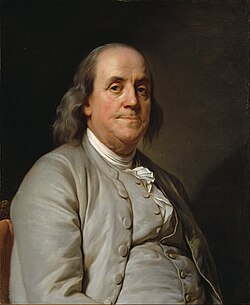
There never was a good war or a bad peace.

The ancients who wished to illustrate illustrious virtue throughout the Kingdom, first ordered well their own states. Wishing to order well their states, they first regulated their families. Wishing to regulate their families, they first cultivated their persons. Wishing to cultivate their persons, they first rectified their hearts. Wishing to rectify their hearts, they first sought to be sincere in their thoughts. Wishing to be sincere in their thoughts, they first extended to the utmost their knowledge. Such extension of knowledge lay in the investigation of things. Things being investigated, knowledge became complete. Their knowledge being complete, their thoughts were sincere. Their thoughts being sincere, their hearts were then rectified. Their hearts being rectified, their persons were cultivated. Their persons being cultivated, their families were regulated. Their families being regulated, their states were rightly governed. Their states being rightly governed, the whole kingdom was made tranquil and happy. From the Son of Heaven down to the mass of the people, all must consider the cultivation of the person the root of everything besides.
The only real, dignified, human doctrine is the greatest good of all, and this can only be achieved by uttermost self-sacrifice.
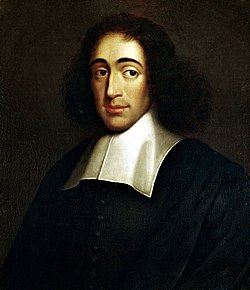
Peace is not mere absence of war, but is a virtue that springs from force of character.

The best laws cannot make a constitution work in spite of morals; morals can turn the worst laws to advantage. That is a commonplace truth, but one to which my studies are always bringing me back. It is the central point in my conception. I see it at the end of all my reflections.
Do after the good and leave the evil, and it shall bring you to good fame and renown.

We have to face the fact that either all of us are going to die together or we are going to learn to live together and if we are to live together we have to talk.

Do you see, then, how much disgrace rolls in the mud, while virtue shines with light? In this, it is clear that rewards never fail the good, nor do punishments ever lack for the wicked.

There are some men who expose themselves to damnation so foolishly by avarice, by brutality, by debauches, by violence, by excesses, by blasphemies! ...it is always a great folly for a man to expose himself to damnation... He must despise desire and its kingdom, and aspire to that kingdom of love in which all the subjects breathe nothing but love, and desire nothing but the benefits of love.

When bad men combine, the good must associate; else they will fall one by one, an unpitied sacrifice in a contemptible struggle. It is not enough in a situation of trust in the commonwealth, that a man means well to his country; it is not enough that in his single person he never did an evil act, but always voted according to his conscience, and even harangued against every design which he apprehended to be prejudicial to the interests of his country. This innoxious and ineffectual character, that seems formed upon a plan of apology and disculpation, falls miserably short of the mark of publick duty. That duty demands and requires, that what is right should not only be made known, but made prevalent; that what is evil should not only be detected, but defeated. When the publick man omits to put himself in a situation of doing his duty with effect, it is an omission that frustrates the purposes of his trust almost as much as if he had formally betrayed it.
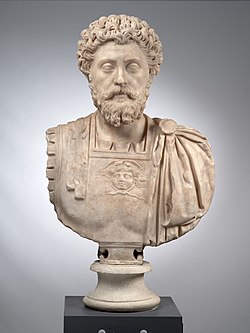
From my mother, piety and beneficence, and abstinence, not only from evil deeds, but even from evil thoughts; and further, simplicity in my way of living, far removed from the habits of the rich.

The purpose of life is not to be happy. It is to be useful, to be honorable, to be compassionate, to have it make some difference that you have lived and lived well.
In our complex industrial civilization of today the peace of righteousness and justice, the only kind of peace worth having, is at least as necessary in the industrial world as it is among nations. There is at least as much need to curb the cruel greed and arrogance of part of the world of capital, to curb the cruel greed and violence of part of the world of labor, as to check a cruel and unhealthy militarism in international relationships.
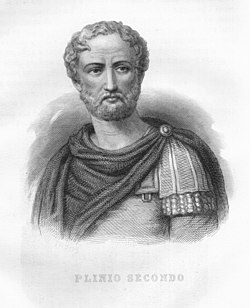
True glory consists in doing what deserves to be written, in writing what deserves to be read, and in so living as to make the world happier for our living in it.

Such, in my opinion, is the true Gospel concerning Wealth, obedience to which is destined some day to solve the problem of the Rich and the Poor, and to bring "Peace on earth, among men Good Will."

Of a surety, at the Day of Judgment it will be demanded of us, not what we have read, but what we have done; not how well we have spoken, but how holily we have lived.

The needs of a human being are sacred. Their satisfaction cannot be subordinated either to reasons of state, or to any consideration of money, nationality, race, or colour, or to the moral or other value attributed to the human being in question, or to any consideration whatsoever. There is no legitimate limit to the satisfaction of the needs of a human being except as imposed by necessity and by the needs of other human beings. The limit is only legitimate if the needs of all human beings receive an equal degree of attention.
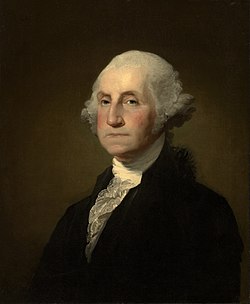
It is substantially true, that virtue or morality is a necessary spring of popular government. The rule, indeed, extends with more or less force to every species of free government.
Prize that which is best in the universe; and this is that which useth everything and ordereth everything.
When one cultivates to the utmost the principles of his nature, and exercises them on the principle of reciprocity, he is not far from the path. What you do not like when done to yourself, do not do to others.
There are good men and bad men of all nationalities, creeds and colors; and if this world of ours is ever to become what we hope some day it may become, it must be by the general recognition that the man's heart and soul, the man's worth and actions, determine his standing.