
He is truly great that is great in charity. He is truly great that is little in himself, and maketh no account of any height of honor. And he is truly learned that doeth the will of God, and forsaketh his own will.

“If we want to improve the world we cannot do it with scientific knowledge but with ideals. Confucius, Buddha, Jesus and Gandhi have done more for humanity than science has done. We must begin with the heart of man—with his conscience—and the values of conscience can only be manifested by selfless service to mankind. In this respect, I feel that the Churches have much guilt. She has always allied herself with those who rule, who have political power, and more often than not, at the expense of peace and humanity as a whole.”
He is truly great that is great in charity. He is truly great that is little in himself, and maketh no account of any height of honor. And he is truly learned that doeth the will of God, and forsaketh his own will.

If pretended revelations have caused wars where they were opposed, and slavery where they were received, the pretended wise inventions of politicians have done the same. But the slavery has been much heavier, the wars far more bloody, and both more universal by many degrees. Show me any mischief produced by the madness or wickedness of theologians, and I will show you an hundred resulting from the ambition and villany of conquerors and statesmen. Show me an absurdity in religion, and I will undertake to show you an hundred for one in political laws and institutions. If you say, that natural religion is a sufficient guide without the foreign aid of revelation, on what principle should political laws become necessary? Is not the same reason available in theology and in politics? If the laws of nature are the laws of God, is it consistent with the Divine wisdom to prescribe rules to us, and leave the enforcement of them to the folly of human institutions? Will you follow truth but to a certain point?

Western civilization, it seems to me, stands by two great heritages. One is the scientific spirit of adventure — the adventure into the unknown, an unknown which must be recognized as being unknown in order to be explored; the demand that the unanswerable mysteries of the universe remain unanswered; the attitude that all is uncertain; to summarize it — the humility of the intellect. The other great heritage is Christian ethics — the basis of action on love, the brotherhood of all men, the value of the individual — the humility of the spirit. These two heritages are logically, thoroughly consistent. But logic is not all; one needs one's heart to follow an idea. If people are going back to religion, what are they going back to? Is the modern church a place to give comfort to a man who doubts God — more, one who disbelieves in God? Is the modern church a place to give comfort and encouragement to the value of such doubts? So far, have we not drawn strength and comfort to maintain the one or the other of these consistent heritages in a way which attacks the values of the other? Is this unavoidable? How can we draw inspiration to support these two pillars of western civilization so that they may stand together in full vigor, mutually unafraid? Is this not the central problem of our time?

We must ever bear in mind that the great end in view is righteousness, justice as between man and man, nation and nation, the chance to lead our lives on a somewhat higher level, with a broader spirit of brotherly goodwill one for another. Peace is generally good in itself, but it is never the highest good unless it comes as the handmaid of righteousness; and it becomes a very evil thing if it serves merely as a mask for cowardice and sloth, or as an instrument to further the ends of despotism or anarchy. We despise and abhor the bully, the brawler, the oppressor, whether in private or public life, but we despise no less the coward and the voluptuary. No man is worth calling a man who will not fight rather than submit to infamy or see those that are dear to him suffer wrong. No nation deserves to exist if it permits itself to lose the stern and virile virtues; and this without regard to whether the loss is due to the growth of a heartless and all-absorbing commercialism, to prolonged indulgence in luxury and soft, effortless ease, or to the deification of a warped and twisted sentimentality.

I am against bigness and greatness in all their forms, and with the invisible molecular moral forces that work from individual to individual, stealing in through the crannies of the world like so many soft rootlets, or like the capillary oozing of water, and yet rending the hardest monuments of man's pride, if you give them time. The bigger the unit you deal with, the hollower, the more brutal, the more mendacious is the life displayed. So I am against all big organizations as such, national ones first and foremost; against all big successes and big results; and in favor of the eternal forces of truth which always work in the individual and immediately unsuccessful way, under-dogs always, till history comes, after they are long dead, and puts them on top. — You need take no notice of these ebullitions of spleen, which are probably quite unintelligible to anyone but myself.

Science has provided the swiftest communication between individuals; it has provided a record of ideas and has enabled man to manipulate and to make extracts from that record so that knowledge evolves and endures throughout the life of a race rather than that of an individual.

Those who would administer wisely must, indeed, be wise, for one of the serious obstacles to the improvement of our race is indiscriminate charity.
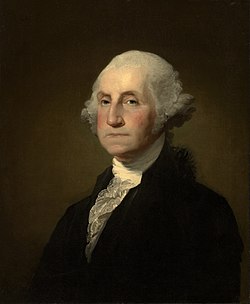
Of all the dispositions and habits, which lead to political prosperity, Religion and Morality are indispensable supports. In vain would that man claim the tribute of Patriotism, who should labor to subvert these great pillars of human happiness, these firmest props of the duties of Men and Citizens. The mere Politician, equally with the pious man, ought to respect and to cherish them. A volume could not trace all their connexions with private and public felicity.

The best laws cannot make a constitution work in spite of morals; morals can turn the worst laws to advantage. That is a commonplace truth, but one to which my studies are always bringing me back. It is the central point in my conception. I see it at the end of all my reflections.
No country can long endure if its foundations are not laid deep in the material prosperity which comes from thrift, from business energy and enterprise, from hard, unsparing effort in the fields of industrial activity; but neither was any nation ever yet truly great if it relied upon material prosperity alone. All honor must be paid to the architects of our material prosperity, to the great captains of industry who have built our factories and our railroads, to the strong men who toil for wealth with brain or hand; for great is the debt of the nation to these and their kind. But our debt is yet greater to the men whose highest type is to be found in a statesman like Lincoln, a soldier like Grant. They showed by their lives that they recognized the law of work, the law of strife; they toiled to win a competence for themselves and those dependent upon them; but they recognized that there were yet other and even loftier duties—duties to the nation and duties to the race. We cannot sit huddled within our own borders and avow ourselves merely an assemblage of well-to-do hucksters who care nothing for what happens beyond. Such a policy would defeat even its own end; for as the nations grow to have ever wider and wider interests, and are brought into closer and closer contact, if we are to hold our own in the struggle for naval and commercial supremacy, we must build up our power without our own borders. We must build the Isthmian Canal, and we must grasp the points of vantage which will enable us to have our say in deciding the destiny of the oceans of the East and the West.

When the happiness or misery of others depends in any respect upon our conduct, we dare not, as self–love might suggest to us, prefer the interest of one to that of many. The man within immediately calls to us, that we value ourselves too much and other people too little, and that, by doing so, we render ourselves the proper object of the contempt and indignation of our brethren. Neither is this sentiment confined to men of extraordinary magnanimity and virtue. It is deeply impressed upon every tolerably good soldier, who feels that he would become the scorn of his companions, if he could be supposed capable of shrinking from danger, or of hesitating, either to expose or to throw away his life, when the good of the service required it.
If we lose the virile, manly qualities, and sink into a nation of mere hucksters, putting gain over national honor, and subordinating everything to mere ease of life, then we shall indeed reach a condition worse than that of the ancient civilizations in the years of their decay.

Statesmen, my dear Sir, may plan and speculate for Liberty, but it is Religion and Morality alone, which can establish the Principles upon which Freedom can securely stand. The only foundation of a free Constitution is pure Virtue, and if this cannot be inspired into our People in a greater Measure than they have it now, They may change their Rulers and the forms of Government, but they will not obtain a lasting Liberty. They will only exchange Tyrants and Tyrannies.
There are good men and bad men of all nationalities, creeds and colors; and if this world of ours is ever to become what we hope some day it may become, it must be by the general recognition that the man's heart and soul, the man's worth and actions, determine his standing.
It is a partnership in all science; a partnership in all art; a partnership in every virtue and in all perfection. As the ends of such a partnership cannot be obtained in many generations, it becomes a partnership not only between those who are living, but between those who are living, those who are dead, and those who are to be born.

A man must have faith in himself to be of any use in the world. There may be very little on which to base it — no matter, but faith in one's powers, in one's mission is essential to success. Confidence once won, the rest follows naturally; and with strong faith in himself a man becomes a local center for its radiation. St. Francis, St. Theresa, Ignatius Loyola, Florence Nightingale, the originator of every cult or sect or profession has possessed this infective faith. And in the ordinary everyday work of the doctor confidence, assurance (in the proper sense of the word) is an asset without which it is very difficult to succeed.

Your thought advocates Judaism, Brahmanism, Buddhism, Christianity, and Islam. In my thought there is only one universal religion, whose varied paths are but the fingers of the loving hand of the Supreme Being. In your thought there are the rich, the poor, and the beggared. My thought holds that there are no riches but life; that we are all beggars, and no benefactor exists save life herself.

Just practice good, do good for others, without thinking of making yourself known so that you may gain reward. Really bring benefit to others, gaining nothing for yourself. This is the primary requisite for breaking free of attachments to the Self.

We but mirror the world. All the tendencies present in the outer world are to be found in the world of our body. If we could change ourselves, the tendencies in the world would also change.
The fashion of this world passeth away and I would fain occupy myself with the things that are abiding.

Do not go by revelation; Do not go by tradition; Do not go by hearsay; Do not go on the authority of sacred texts; Do not go on the grounds of pure logic; Do not go by a view that seems rational; Do not go by reflecting on mere appearances; Do not go along with a considered view because you agree with it; Do not go along on the grounds that the person is competent; Do not go along because "the recluse is our teacher." Kalamas, when you yourselves know: These things are unwholesome, these things are blameworthy; these things are censured by the wise; and when undertaken and observed, these things lead to harm and ill, abandon them... Kalamas, when you know for yourselves: These are wholesome; these things are not blameworthy; these things are praised by the wise; undertaken and observed, these things lead to benefit and happiness, having undertaken them, abide in them.

Wealth and honor are what every man desires. But if they have been obtained in violation of moral principles, they must not be kept.
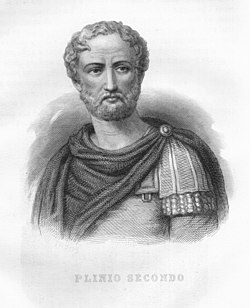
True glory consists in doing what deserves to be written, in writing what deserves to be read, and in so living as to make the world happier for our living in it.
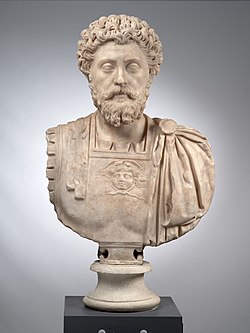
Prize that which is best in the universe; and this is that which useth everything and ordereth everything.

Attach yourself to what is spiritually superior, regardless of what other people think or do. Hold to your true aspirations no matter what is going on around you.