
Echoes

Albert Camus
1937
“Knowing that certain nights whose sweetness lingers will keep returning to the earth and sea after we are gone, yes, this helps us to die.”
❧

One is constantly reminded of the infinite lavishness and fertility of Nature — inexhaustible abundance amid what seems enormous waste. And yet when we look into any of her operations that lie within reach of our minds, we learn that no particle of her material is wasted or worn out. It is eternally flowing from use to use, beauty to yet higher beauty; and we soon cease to lament waste and death, and rather rejoice and exult in the imperishable, unspeakable wealth of the universe, and faithfully watch and wait the reappearance of everything that melts and fades and dies about us, feeling sure that its next appearance will be better and more beautiful than the last.

That though the radiance which was once so bright be now for ever taken from my sight, though nothing can bring back the hour of splendour in the grass, of glory in the flower; we will grieve not, rather find strength in what remains behind.

My life is like a stroll upon the beach, As near the ocean's edge as I can go.

To every thing there is a season, and a time to every purpose under the heaven: A time to be born, and a time to die; a time to plant, and a time to pluck up that which is planted; A time to kill, and a time to heal; a time to break down, and a time to build up; A time to weep, and a time to laugh; a time to mourn, and a time to dance.
Sometimes, in a summer morning, having taken my accustomed bath, I sat in my sunny doorway from sunrise till noon, rapt in a revery, amidst the pines and hickories and sumachs, in undisturbed solitude and stillness, while the birds sang around or flitted noiseless through the house, until by the sun falling in at my west window, or the noise of some traveller's wagon on the distant highway, I was reminded of the lapse of time.
The sun shines not on us but in us. The rivers flow not past, but through us, thrilling, tingling, vibrating every fiber and cell of the substance of our bodies, making them glide and sing. The trees wave and the flowers bloom in our bodies as well as our souls, and every bird song, wind song, and tremendous storm song of the rocks in the heart of the mountains is our song, our very own, and sings our love.

It appears to me impossible that I should cease to exist, or that this active, restless spirit, equally alive to joy and sorrow, should only be organised dust — ready to fly abroad the moment the spring snaps, or the spark goes out which kept it together. Surely something resides in this heart that is not perishable, and life is more than a dream.

After you have exhausted what there is in business, politics, conviviality, and so on — have found that none of these finally satisfy, or permanently wear — what remains? Nature remains.
Another glorious Sierra day in which one seems to be dissolved and absorbed and sent pulsing onward we know not where. Life seems neither long nor short, and we take no more heed to save time or make haste than do the trees and stars. This is true freedom, a good practical sort of immortality.

I was utterly alone with the sun and the earth. Lying down on the grass, I spoke in my soul to the earth, the sun, the air, and the distant sea far beyond sight. I thought of the earth's firmness — I felt it bear me up; through the grassy couch there came an influence as if I could feel the great earth speaking to me.

The same stream of life that runs through my veins night and day runs through the world and dances in rhythmic measures. It is the same life that shoots in joy through the dust of the earth in numberless blades of grass and breaks into tumultuous waves of leaves and flowers.
Come, let us go snow-viewing till we are buried.
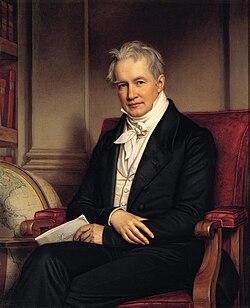
The blue of the sky compensates for the brevity of life.

The woods are lovely, dark and deep, / But I have promises to keep, / And miles to go before I sleep, / And miles to go before I sleep.

The scenes of life are like the pictures in a magic lantern: we see them, one after another, with vivid distinctness; but as soon as one vanishes, it is utterly forgotten; and then the next appears, completely different from what went before — though at bottom it is always the same story.
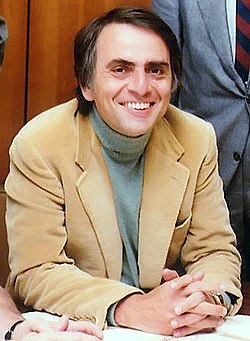
I would love to believe that when I die I will live again, that some thinking, feeling, remembering part of me will continue. But much as I want to believe that, and despite the ancient and worldwide cultural traditions that assert an afterlife, I know of nothing to suggest that it is more than wishful thinking. The world is so exquisite with so much love and moral depth, that there is no reason to deceive ourselves with pretty stories for which there's little good evidence. Far better it seems to me, in our vulnerability, is to look death in the eye and to be grateful every day for the brief but magnificent opportunity that life provides.

What once sprung from the earth sinks back into the earth.

Never say of anything, 'I have lost it'; but, 'I have returned it.' Is your child dead? It is returned. Is your wife dead? She is returned. Is your estate taken away? Well, and is not that likewise returned?
There is a love of wild Nature in everybody, an ancient mother-love ever showing itself whether recognized or no, and however covered by cares and duties.

Happy is the man who hath the hour of his death always before his eyes, and daily prepareth himself to die.
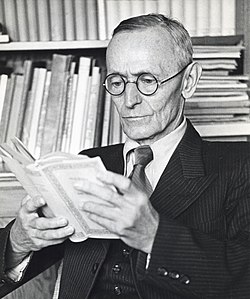
Trees are sanctuaries. Whoever knows how to speak to them, whoever knows how to listen to them, can learn the truth. They do not preach learning and precepts, they preach, undeterred by particulars, the ancient law of life.
The smallest sprout shows there is really no death, / And if ever there was it led forward life, and does not wait at the end to arrest it, / And ceas'd the moment life appear'd.

We are such stuff As dreams are made on; and our little life Is rounded with a sleep.
Live in each season as it passes; breathe the air, drink the drink, taste the fruit, and resign yourself to the influence of the earth.