Echoes

Albert Camus
1940
“To have time was at once the most magnificent and the most dangerous of experiments. Idleness is fatal only to the mediocre.”
❧
If you can spend a perfectly useless afternoon in a perfectly useless manner, you have learned how to live.
There is a limit to the time assigned you, and if you don't use it to free yourself it will be gone and never return.
Assert your right to your own time, and gather together and save the time which up till lately has been either taken from you or filched away or has simply passed by unused.

A life of slothful ease, a life of that peace which springs merely from lack either of desire or of power to strive after great things, is as little worthy of a nation as of an individual. [...] If you are rich and are worth your salt, you will teach your sons that though they may have leisure, it is not to be spent in idleness; for wisely used leisure merely means that those who possess it, being free from the necessity of working for their livelihood, are all the more bound to carry on some kind of non-remunerative work in science, in letters, in art, in exploration, in historical research—work of the type we most need in this country, the successful carrying out of which reflects most honor upon the nation. We do not admire the man of timid peace. We admire the man who embodies victorious effort; the man who never wrongs his neighbor, who is prompt to help a friend, but who has those virile qualities necessary to win in the stern strife of actual life. It is hard to fail, but it is worse never to have tried to succeed. In this life we get nothing save by effort. Freedom from effort in the present merely means that there has been stored up effort in the past. A man can be freed from the necessity of work only by the fact that he or his fathers before him have worked to good purpose. If the freedom thus purchased is used aright, and the man still does actual work, though of a different kind, whether as a writer or a general, whether in the field of politics or in the field of exploration and adventure, he shows he deserves his good fortune. But if he treats this period of freedom from the need of actual labor as a period, not of preparation, but of mere enjoyment, even though perhaps not of vicious enjoyment, he shows that he is simply a cumberer of the earth's surface, and he surely unfits himself to hold his own with his fellows if the need to do so should again arise.

Be thou never without something to do; be reading, or writing, or praying, or meditating, or doing something that is useful to the community.

Forget the years, forget distinctions. Leap into the boundless and make it your home!

Most people live, whether physically, intellectually or morally, in a very restricted circle of their potential being. They make use of a very small portion of their possible consciousness, and of their soul's resources in general, much like a man who, out of his whole bodily organism, should get into a habit of using and moving only his little finger. Great emergencies and crises show us how much greater our vital resources are than we had supposed.

To-morrow's action! Can that hoary wisdom, Borne down with years, still doat upon tomorrow! That fatal mistress of the young, the lazy, The coward, and the fool, condemn'd to lose A useless life in waiting for to-morrow, To gaze with longing eyes upon to-morrow, Till interposing death destroys the prospect Strange! that this general fraud from day to day Should fill the world with wretches undetected. The soldier, labouring through a winter's march, Still sees to-morrow drest in robes of triumph; Still to the lover's long-expecting arms To-morrow brings the visionary bride. But thou, too old to hear another cheat, Learn, that the present hour alone is man's.

If your daily life seems poor, do not blame it; blame yourself, tell yourself that you are not poet enough to call forth its riches.
Poverty is a bitter thing; but it is not as bitter as the existence of restless vacuity and physical, moral, and intellectual flabbiness, to which those doom themselves who elect to spend all their years in that vainest of all vain pursuits—the pursuit of mere pleasure as a sufficient end in itself.
People are frugal in guarding their personal property; but as soon as it comes to squandering time they are most wasteful of the one thing in which it is right to be stingy.

I find it wholesome to be alone the greater part of the time. To be in company, even with the best, is soon wearisome and dissipating. I love to be alone. I never found the companion that was so companionable as solitude. We are for the most part more lonely when we go abroad among men than when we stay in our chambers. A man thinking or working is always alone, let him be where he will... The really diligent student... is as solitary as a dervish in the desert. The farmer can work alone in the field or the woods all day, hoeing or chopping, and not feel lonesome.

You must sleep sometime between lunch and dinner, and no halfway measures. Take off your clothes and get into bed. That's what I always do. Don't think you will be doing less work because you sleep during the day. That's a foolish notion held by people who have no imagination. You will be able to accomplish more. You get two days in one — well, at least one and a half, I'm sure.
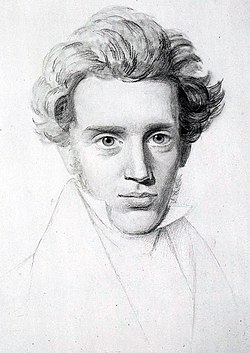
Boredom is the root of all evil — the despairing refusal to be oneself.
Most of us feel as if we lived habitually with a sort of cloud weighing on us, below our highest notch of clearness in discernment, sureness in reasoning, or firmness in deciding. Compared with what we ought to be, we are only half awake. Our fires are damped, our drafts are checked.
Every one is familiar with the phenomenon of feeling more or less alive on different days. Every one knows on any given day that there are energies slumbering in him which the incitements of that day do not call forth, but which he might display if these were greater. Most of us feel as if we lived habitually with a sort of cloud weighing on us, below our highest notch of clearness in discernment, sureness in reasoning, or firmness in deciding. Compared with what we ought to be, we are only half-awake. Our fires are damped, our drafts are checked. We are making use of only a small part of our possible mental and physical resources.
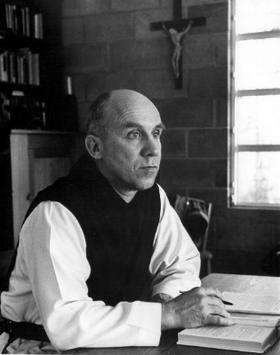
Not all of us are called to be hermits, but all of us need enough silence and solitude to enable the deeper voice of our own self to be heard.

A man can be himself only so long as he is alone; and if he does not love solitude, he will not love freedom; for it is only when he is alone that he is really free.

...why did we wait for any thing? — why not seize the pleasure at once? — How often is happiness destroyed by preparation, foolish preparation!

The great source of both the misery and disorders of human life, seems to arise from over-rating the difference between one permanent situation and another. Avarice over-rates the difference between poverty and riches: ambition, that between a private and a public station: vain-glory, that between obscurity and extensive reputation. The person under the influence of any of those extravagant passions, is not only miserable in his actual situation, but is often disposed to disturb the peace of society, in order to arrive at that which he so foolishly admires. The slightest observation, however, might satisfy him, that, in all the ordinary situations of human life, a well-disposed mind may be equally calm, equally cheerful, and equally contented. Some of those situations may, no doubt, deserve to be preferred to others: but none of them can deserve to be pursued with that passionate ardour which drives us to violate the rules either of prudence or of justice; or to corrupt the future tranquillity of our minds, either by shame from the remembrance of our own folly, or by remorse from the horror of our own injustice.

Wherever your life ends, it is all there. The utility of living consists not in the length of days, but in the use of time; a man may have lived long, and yet lived but a little. Make use of time while it is present with you. It depends upon your will, and not upon the number of days, to have a sufficient length of life. Is it possible you can imagine never to arrive at the place towards which you are continually going? and yet there is no journey but hath its end. And, if company will make it more pleasant or more easy to you, does not all the world go the self-same way?

As a well-spent day brings happy sleep, so life well used brings happy death.

The Tao is like a bellows: it is empty yet infinitely capable. The more you use it, the more it produces; the more you talk of it, the less you understand.

He that hath wife and children hath given hostages to fortune; for they are impediments to great enterprises, either of virtue or mischief.