
Now I see the secret of the making of the best persons. It is to grow in the open air and to eat and sleep with the earth.

“We have only started on our development of our country — we have not as yet, with all our talk of wonderful progress, done more than scratch the surface. The progress has been wonderful enough — but when we compare what we have done with what there is to do, then our past accomplishments are as nothing. When we consider that more power is used merely in ploughing the soil than is used in all the industrial establishments of the country put together, an inkling comes of how much opportunity there is ahead. And now, with so many countries of the world in ferment and with so much unrest everywhere, is an excellent time to suggest something of the things that may be done — in the light of what has been done. When one speaks of increasing power, machinery, and industry there comes up a picture of a cold, metallic sort of world in which great factories will drive away the trees, the flowers, the birds, and the green fields. And that then we shall have a world composed of metal machines and human machines. With all of that I do not agree. I think that unless we know more about machines and their use, unless we better understand the mechanical portion of life, we cannot have the time to enjoy the trees, and the birds, and the flowers, and the green fields.”
Now I see the secret of the making of the best persons. It is to grow in the open air and to eat and sleep with the earth.

This is only a foretaste of what is to come, and only the shadow of what is going to be. We have to have some experience with the machine before we really know its capabilities. It may take years before we settle down to the new possibilities, but I do not see why it should not enter any one of the fields normally covered by the human intellect, and eventually compete on equal terms.

To explain all nature is too difficult a task for any one man or even for any one age. 'Tis much better to do a little with certainty, & leave the rest for others that come after you, than to explain all things by conjecture without making sure of any thing.

We cannot afford merely to sit down and deplore the evils of city life as inevitable, when cities are constantly growing, both absolutely and relatively. We must set ourselves vigorously about the task of improving them; and this task is now well begun.

In God's wildness lies the hope of the world — the great fresh, unblighted, unredeemed wilderness. The galling harness of civilization drops off, and wounds heal ere we are aware.
After you have exhausted what there is in business, politics, conviviality, and so on — have found that none of these finally satisfy, or permanently wear — what remains? Nature remains.
Thousands of tired, nerve-shaken, over-civilized people are beginning to find out that going to the mountains is going home; that wildness is a necessity; and that mountain parks and reservations are useful not only as fountains of timber and irrigating rivers, but as fountains of life.

Human subtlety...will never devise an invention more beautiful, more simple or more direct than does nature, because in her inventions nothing is lacking, and nothing is superfluous.

I cannot help fearing that men may reach a point where they look on every new theory as a danger, every innovation as a toilsome trouble, every social advance as a first step toward revolution, and that they may absolutely refuse to move at all.

... I came fortunately upon Darwin’s and Spencer’s works “The Data of Ethics,” “First Principles,” “Social Statics,” “The Descent of Man.” Reaching the pages which explain how man has absorbed such mental foods as were favorable to him, retaining what was salutary, rejecting what was deleterious, I remember that light came as in a flood and all was clear. Not only had I got rid of theology and the supernatural, but I had found the truth of evolution. "All is well since all grows better” became my motto, my true source of comfort. Man was not created with an instinct for his own degradation, but from the lower he had risen to the higher forms. Nor is there any conceivable end to his march to perfection. His face is turned to the light; he stands in the sun and looks upward.
A mere life of ease is not in the end a very satisfactory life, and, above all, it is a life which ultimately unfits those who follow it for serious work in the world. In the last analysis a healthy state can exist only when the men and women who make it up lead clean, vigorous, healthy lives; when the children are so trained that they shall endeavor, not to shirk difficulties, but to overcome them; not to seek ease, but to know how to wrest triumph from toil and risk.

The natural effort of every individual to better his own condition, when suffered to exert itself with freedom and security is so powerful a principle that it is alone, and without any assistance, not only capable of carrying on the society to wealth and prosperity, but of surmounting a hundred impertinent obstructions with which the folly of human laws too often incumbers its operations; though the effect of these obstructions is always more or less either to encroach upon its freedom, or to diminish its security.
We cannot, if we would, play the part of China, and be content to rot by inches in ignoble ease within our borders, taking no interest in what goes on beyond them, sunk in a scrambling commercialism; heedless of the higher life, the life of aspiration, of toil and risk, busying ourselves only with the wants of our bodies for the day, until suddenly we should find, beyond a shadow of question, what China has already found, that in this world the nation that has trained itself to a career of unwarlike and isolated ease is bound, in the end, to go down before other nations which have not lost the manly and adventurous qualities. If we are to be a really great people, we must strive in good faith to play a great part in the world.
No country can long endure if its foundations are not laid deep in the material prosperity which comes from thrift, from business energy and enterprise, from hard, unsparing effort in the fields of industrial activity; but neither was any nation ever yet truly great if it relied upon material prosperity alone. All honor must be paid to the architects of our material prosperity, to the great captains of industry who have built our factories and our railroads, to the strong men who toil for wealth with brain or hand; for great is the debt of the nation to these and their kind. But our debt is yet greater to the men whose highest type is to be found in a statesman like Lincoln, a soldier like Grant. They showed by their lives that they recognized the law of work, the law of strife; they toiled to win a competence for themselves and those dependent upon them; but they recognized that there were yet other and even loftier duties—duties to the nation and duties to the race. We cannot sit huddled within our own borders and avow ourselves merely an assemblage of well-to-do hucksters who care nothing for what happens beyond. Such a policy would defeat even its own end; for as the nations grow to have ever wider and wider interests, and are brought into closer and closer contact, if we are to hold our own in the struggle for naval and commercial supremacy, we must build up our power without our own borders. We must build the Isthmian Canal, and we must grasp the points of vantage which will enable us to have our say in deciding the destiny of the oceans of the East and the West.

Ere many generations pass, our machinery will be driven by a power obtainable at any point of the universe. This idea is not novel. Men have been led to it long ago by instinct or reason; it has been expressed in many ways, and in many places, in the history of old and new. We find it in the delightful myth of Antaeus, who derives power from the earth; we find it among the subtle speculations of one of your splendid mathematicians and in many hints and statements of thinkers of the present time. Throughout space there is energy. Is this energy static or kinetic! If static our hopes are in vain; if kinetic — and this we know it is, for certain — then it is a mere question of time when men will succeed in attaching their machinery to the very wheelwork of nature.
Of all the frictional resistances, the one that most retards human movement is ignorance, what Buddha called 'the greatest evil in the world.' The friction which results from ignorance ... can be reduced only by the spread of knowledge and the unification of the heterogeneous elements of humanity. No effort could be better spent.

Though a little one, the master-word looms large in meaning. It is the open sesame to every portal, the great equalizer in the world, the true philosopher's stone, which transmutes all the base metal of humanity into gold. The stupid man among you it will make bright, the bright man brilliant, and the, brilliant student steady. With the magic word in your heart all things are possible, and without it all study is vanity and vexation. The miracles of life are with it; the blind see by touch, the deaf hear with eyes, the dumb speak with fingers. To the youth it brings hope, to the middle-aged confidence, to the aged repose. True balm of hurt minds, in its presence the heart of the sorrowful is lightened and consoled. It is directly responsible for all advances in medicine during the past twenty-five centuries. Laying hold upon it Hippocrates made observation and science the warp and woof of our art. Galen so read its meaning that fifteen centuries stopped thinking, and slept until awakened by the De Fabrica, of Vesalius, which is the very incarnation of the master-word. With its inspiration Harvey gave an impulse to a larger circulation than he wot of, an impulse which we feel to-day. Hunter sounded all its heights and depths, and stands out in our history as one of the great exemplars of its virtues With it Virchow smote the rock, and the waters of progress gushed out while in the hands of Pasteur it proved a very talisman to open to us a new heaven in medicine and a new earth in surgery. Not only has it been the touchstone of progress, but it is the measure of success in every-day life. Not a man before you but is beholden to it for his position here, while he who addresses you has that honor directly in consequence of having had it graven on his heart when he was as you are to-day. And the master-word is Work, a little one, as I have said, but fraught with momentous sequences if you can but write it on the tablets of your hearts and bind it upon your foreheads. But there is a serious difficulty in getting you to understand the paramount importance of the work-habit as part of your organization. You are not far from the Tom Sawyer stage with its philosophy "that work consists of whatever a body is obliged to do, and that play consists of whatever a body is not obliged to do." A great many hard things may be said of the work-habit. For most of us it means a hard battle; the few take to it naturally; the many prefer idleness and never learn to love labor.

Invest in the millennium. Plant sequoias. Say that your main crop is the forest that you did not plant, that you will not live to harvest.

The woods are lovely, dark and deep, / But I have promises to keep, / And miles to go before I sleep, / And miles to go before I sleep.
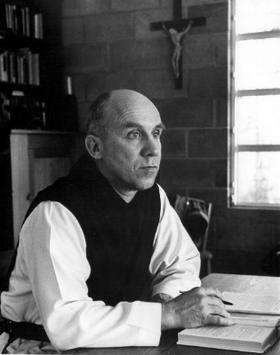
We are so obsessed with doing that we have no time and no imagination left for being. As a result, men are valued not for what they are but for what they do or what they have.

Come forth into the light of things, let Nature be your teacher.

Live in each season as it passes; breathe the air, drink the drink, taste the fruit, and resign yourself to the influence of the earth.
In our complex industrial civilization of today the peace of righteousness and justice, the only kind of peace worth having, is at least as necessary in the industrial world as it is among nations. There is at least as much need to curb the cruel greed and arrogance of part of the world of capital, to curb the cruel greed and violence of part of the world of labor, as to check a cruel and unhealthy militarism in international relationships.
The willfully idle man, like the willfully barren woman, has no place in a sane, healthy, and vigorous community. Moreover, the gross and hideous selfishness for which each stands defeats even its own miserable aims. Exactly as infinitely the happiest woman is she who has borne and brought up many healthy children, so infinitely the happiest man is he who has toiled hard and successfully in his life-work. The work may be done in a thousand different ways —with the brain or the hands, in the study, the field, or the workshop—if it is honest work, honestly done and well worth doing, that is all we have a right to ask. Every father and mother here, if they are wise, will bring up their children not to shirk difficulties, but to meet them and overcome them; not to strive after a life of ignoble ease, but to strive to do their duty, first to themselves and their families, and then to the whole state; and this duty must inevitably take the shape of work in some form or other.
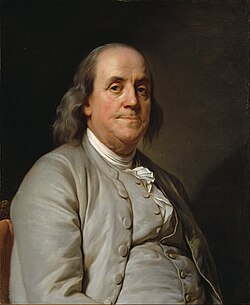
Without continual growth and progress, such words as improvement and success have no meaning.