
Men are at variance with the one thing with which they are in the most unbroken communion, the reason that administers the whole universe.

“I cannot sufficiently admire the eminence of those men's wits, that have received and held it to be true, and with the sprightliness of their judgments offered such violence to their own senses, as that they have been able to prefer that which their reason dictated to them, to that which sensible experiments represented most manifestly to the contrary. ...I cannot find any bounds for my admiration, how that reason was able in Aristarchus and Copernicus, to commit such a rape on their senses, as in despite thereof to make herself mistress of their credulity.”
Men are at variance with the one thing with which they are in the most unbroken communion, the reason that administers the whole universe.
And those who were seen dancing were thought to be insane by those who could not hear the music.

It is only with the heart that one can see rightly; what is essential is invisible to the eye.

There is no area in our minds reserved for superstition, such as the Greeks had in their mythology; and superstition, under cover of an abstract vocabulary, has revenged itself by invading the entire realm of thought. Our science is like a store filled with the most subtle intellectual devices for solving the most complex problems, and yet we are almost incapable of applying the elementary principles of rational thought. In every sphere, we seem to have lost the very elements of intelligence: the ideas of limit, measure, degree, proportion, relation, comparison, contingency, interdependence, interrelation of means and ends. To keep to the social level, our political universe is peopled exclusively by myths and monsters; all it contains is absolutes and abstract entities. This is illustrated by all the words of our political and social vocabulary: nation, security, capitalism, communism, fascism, order, authority, property, democracy. We never use them in phrases such as: There is democracy to the extent that... or: There is capitalism in so far as... The use of expressions like "to the extent that" is beyond our intellectual capacity. Each of these words seems to represent for us an absolute reality, unaffected by conditions, or an absolute objective, independent of methods of action, or an absolute evil; and at the same time we make all these words mean, successively or simultaneously, anything whatsoever. Our lives are lived, in actual fact, among changing, varying realities, subject to the casual play of external necessities, and modifying themselves according to specific conditions within specific limits; and yet we act and strive and sacrifice ourselves and others by reference to fixed and isolated abstractions which cannot possibly be related either to one another or to any concrete facts. In this so-called age of technicians, the only battles we know how to fight are battles against windmills.
I do not feel obliged to believe that the same God who has endowed us with senses, reason, and intellect has intended us to forgo their use and by some other means to give us knowledge which we can attain by them.

Is it so bad, then, to be misunderstood? Pythagoras was misunderstood, and Socrates, and Jesus, and Luther, and Copernicus, and Galileo, and Newton, and every pure and wise spirit that ever took flesh. To be great is to be misunderstood.
Bold ideas, unjustified anticipations, and speculative thought, are our only means for interpreting nature: our only organon, our only instrument, for grasping her.
Everything we hear is an opinion, not a fact. Everything we see is a perspective, not the truth.
The truth may be puzzling. It may take some work to grapple with. It may be counterintuitive. It may contradict deeply held prejudices. It may not be consonant with what we desperately want to be true. But our preferences do not determine what's true. We have a method, and that method helps us to reach not absolute truth, only asymptotic approaches to the truth — never there, just closer and closer, always finding vast new oceans of undiscovered possibilities. Cleverly designed experiments are the key.

The mere formulation of a problem is far more often essential than its solution, which may be merely a matter of mathematical or experimental skill. To raise new questions, new possibilities, to regard old problems from a new angle requires creative imagination and makes real advances in science

Read not to contradict and confute; nor to believe and take for granted; nor to find talk and discourse; but to weigh and consider.

You cannot stay on the summit forever; you have to come down again. So why bother in the first place? Just this: what is above knows what is below, but what is below does not know what is above. One climbs, one sees. One descends, one sees no longer, but one has seen. There is an art of conducting oneself in the lower regions by the memory of what one saw higher up. When one can no longer see, one can at least still know.

Do not go by revelation; Do not go by tradition; Do not go by hearsay; Do not go on the authority of sacred texts; Do not go on the grounds of pure logic; Do not go by a view that seems rational; Do not go by reflecting on mere appearances; Do not go along with a considered view because you agree with it; Do not go along on the grounds that the person is competent; Do not go along because "the recluse is our teacher." Kalamas, when you yourselves know: These things are unwholesome, these things are blameworthy; these things are censured by the wise; and when undertaken and observed, these things lead to harm and ill, abandon them... Kalamas, when you know for yourselves: These are wholesome; these things are not blameworthy; these things are praised by the wise; undertaken and observed, these things lead to benefit and happiness, having undertaken them, abide in them.
The way to find out about our place in the universe is by examining the universe and by examining ourselves—without preconceptions, with as unbiased a mind as we can muster. We cannot begin with an entirely clean slate, since we arrive at this problem with predispositions of hereditary and environmental origin; but, after understanding such built-in biases, is it not possible to pry insights from nature?

He whose intellect overcomes his desire is higher than the angels; he whose desire overcomes his intellect is less than an animal.

The five colors blind the eye. The five tones deafen the ear. The five flavors dull the taste. Racing and hunting madden the mind. Precious things lead one astray. Therefore the sage is guided by what he feels and not by what he sees. He lets go of that and chooses this.
Reason is like an officer when the King appears; The officer then loses his power and hides himself. Reason is the shadow cast by God; God is the sun.

It is not a dream, it is a simple feat of scientific electrical engineering, only expensive — blind, faint-hearted, doubting world! . . . Humanity is not yet sufficiently advanced to be willingly led by the discover's keen searching sense. But who knows? Perhaps it is better in this present world of ours that a revolutionary idea or invention instead of being helped and patted, be hampered and ill-treated in its adolescence — by want of means, by selfish interest, pedantry, stupidity and ignorance; that it be attacked and stifled; that it pass through bitter trials and tribulations, through the heartless strife of commercial existence. So do we get our light. So all that was great in the past was ridiculed, condemned, combated, suppressed — only to emerge all the more powerfully, all the more triumphantly from the struggle.
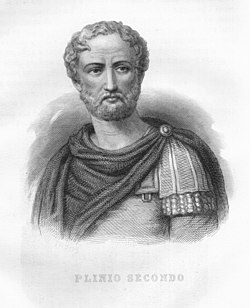
How many things, too, are looked upon as quite impossible until they have been actually effected?

Western civilization, it seems to me, stands by two great heritages. One is the scientific spirit of adventure — the adventure into the unknown, an unknown which must be recognized as being unknown in order to be explored; the demand that the unanswerable mysteries of the universe remain unanswered; the attitude that all is uncertain; to summarize it — the humility of the intellect. The other great heritage is Christian ethics — the basis of action on love, the brotherhood of all men, the value of the individual — the humility of the spirit. These two heritages are logically, thoroughly consistent. But logic is not all; one needs one's heart to follow an idea. If people are going back to religion, what are they going back to? Is the modern church a place to give comfort to a man who doubts God — more, one who disbelieves in God? Is the modern church a place to give comfort and encouragement to the value of such doubts? So far, have we not drawn strength and comfort to maintain the one or the other of these consistent heritages in a way which attacks the values of the other? Is this unavoidable? How can we draw inspiration to support these two pillars of western civilization so that they may stand together in full vigor, mutually unafraid? Is this not the central problem of our time?

Nor less I deem that there are Powers / Which of themselves our minds impress; / That we can feed this mind of ours / In a wise passiveness.
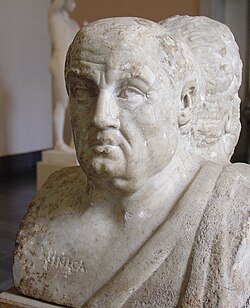
If you wish to have leisure for your mind, either be a poor man, or resemble a poor man. Study cannot be helpful unless you take pains to live simply; and living simply is voluntary poverty.
A foolish consistency is the hobgoblin of little minds, adored by little statesmen and philosophers and divines. With consistency a great soul has simply nothing to do.

To explain all nature is too difficult a task for any one man or even for any one age. 'Tis much better to do a little with certainty, & leave the rest for others that come after you, than to explain all things by conjecture without making sure of any thing.
Against that positivism which stops before phenomena, saying "there are only facts," I should say: no, it is precisely facts that do not exist, only interpretations...