
Failure is only the opportunity to more intelligently begin again. There is no disgrace in honest failure; there is disgrace in fearing to fail.
“Let them fail; let everybody fail! I made my fortune when I had nothing to start with, by myself and my own ideas. Let other people do the same thing. If I lose everything in the collapse of our financial structure, I will start in at the beginning and build it up again.”
Failure is only the opportunity to more intelligently begin again. There is no disgrace in honest failure; there is disgrace in fearing to fail.

My great concern is not whether you have failed, but whether you are content with your failure.

Our greatest weakness lies in giving up. The most certain way to succeed is always to try just one more time.
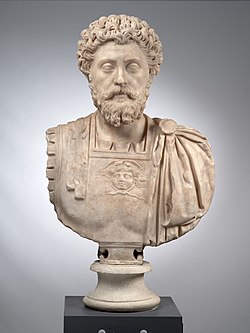
So remember this principle when something threatens to cause you pain: the thing itself was no misfortune at all; to endure it and prevail is great good fortune.

You gain strength, courage, and confidence by every experience in which you really stop to look fear in the face. You are able to say to yourself, "I have lived through this horror. I can take the next thing that comes along." … You must do the thing you think you cannot do.

Our greatest glory is not in never falling, but in rising every time we fall.

Sure I am of this, that you have only to endure to conquer. You have only to persevere to save yourselves, and to save all those who rely upon you. You have only to go right on, and at the end of the road, be it short or long, victory and honor will be found.

Far better it is to dare mighty things, to win glorious triumphs, even though checkered by failure, than to rank with those poor spirits who neither enjoy much nor suffer much, because they live in that grey twilight that knows neither victory nor defeat.
The man of virtue makes the difficulty to be overcome his first business, and success only a subsequent consideration.
It is both foolish and wicked to teach the average man who is not well off that some wrong or injustice has been done him, and that he should hope for redress elsewhere than in his own industry, honesty and intelligence.
I never did anything worth doing by accident, nor did any of my inventions come indirectly through accident, except the phonograph. No, when I have, fully decided that a result is worth getting, I go about it, and make trial after trial, until it comes.

My abilities have not been outstanding, but I have had sufficient strength and determination to meet my challenges and have usually managed to succeed with them.
I wish to preach, not the doctrine of ignoble ease, but the doctrine of the strenuous life, the life of toil and effort, of labor and strife; to preach that highest form of success which comes, not to the man who desires mere easy peace, but to the man who does not shrink from danger, from hardship, or from bitter toil, and who out of these wins the splendid ultimate triumph.

It is not a dream, it is a simple feat of scientific electrical engineering, only expensive — blind, faint-hearted, doubting world! . . . Humanity is not yet sufficiently advanced to be willingly led by the discover's keen searching sense. But who knows? Perhaps it is better in this present world of ours that a revolutionary idea or invention instead of being helped and patted, be hampered and ill-treated in its adolescence — by want of means, by selfish interest, pedantry, stupidity and ignorance; that it be attacked and stifled; that it pass through bitter trials and tribulations, through the heartless strife of commercial existence. So do we get our light. So all that was great in the past was ridiculed, condemned, combated, suppressed — only to emerge all the more powerfully, all the more triumphantly from the struggle.
Never give in — never, never, never, never, in nothing great or small, large or petty, never give in except to convictions of honour and good sense. Never yield to force; never yield to the apparently overwhelming might of the enemy.

To dare is to lose one's footing momentarily. Not to dare is to lose oneself.
It is not the critic who counts; not the man who points out how the strong man stumbles, or where the doer of deeds could have done them better. The credit belongs to the man who is in the arena, whose face is marred by dust and sweat and blood; who strives valiantly; who errs, who comes short again and again, because there is no effort without error and shortcoming; but who does actually strive to do the deeds; who knows great enthusiasms, the great devotions; who spends himself in a worthy cause; who at the best knows in the end the triumph of high achievement, and who at the worst, if he fails, at least fails while daring greatly, so that his place shall never be with those cold and timid souls who neither know victory nor defeat.
It seems to me that the simple acceptance of this fundamental fact of American life, this acknowledgment that the law of work is the fundamental law of our being, will help us to start aright in facing not a few of the problems that confront us from without and from within. As regards internal affairs, it should teach us the prime need of remembering that, after all has been said and done, the chief factor in any man's success or failure must be his own character—that is, the sum of his common sense, his courage, his virile energy and capacity. Nothing can take the place of this individual factor.

Things are not so painful and difficult of themselves, but our weakness or cowardice makes them so.
A mere life of ease is not in the end a very satisfactory life, and, above all, it is a life which ultimately unfits those who follow it for serious work in the world. In the last analysis a healthy state can exist only when the men and women who make it up lead clean, vigorous, healthy lives; when the children are so trained that they shall endeavor, not to shirk difficulties, but to overcome them; not to seek ease, but to know how to wrest triumph from toil and risk.
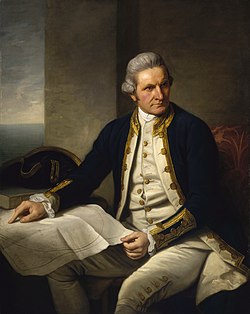
In prosecuting these discoveries, the dangers we are exposed to are obvious, but I rejoice that we are chosen to confront them.
I am not concerned that I have no place; I am concerned how I may fit myself for one. I am not concerned that I am not known; I seek to be worthy to be known.
There are some defeats more triumphant than victories.
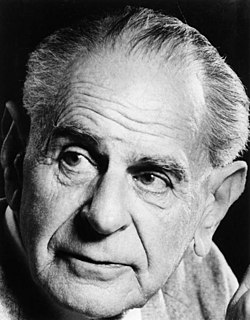
All life is problem-solving.
He who remembers the evils he has undergone, and those that have threatened him, and the slight causes that have changed him from one state to another, prepares himself in that way for future changes and for recognizing his condition. The life of Caesar has no more to show us than our own; an emperor's or an ordinary man's, it is still a life subject to all human accidents.