HomeSearchEssaysCollected
Nobody
@ephemeral

Today's News

What's happening

Who to follow

Luna Starling
Luna Starling
@LunaStarling444
Titus Oates
Titus Oates
@TitusOates
Aldric Voss
Aldric Voss
@AldricVoss

Echoes

Source
Voltaire
Voltaire
1770

“The reasonable worship of a just God who punishes and rewards, would undoubtedly contribute to the happiness of men; but when that salutary knowledge of a just God is disfigured by absurd lies and dangerous superstitions, then the remedy turns to poison.”

❧
Thomas à Kempis
Thomas à Kempis

My Son, beware thou dispute not of high matters and of the hidden judgments of God; why this man is thus left, and that man is taken into so great favour; why also this man is so greatly afflicted, and that so highly exalted. These things pass all man’s power of judging, neither may any reasoning or disputation have power to search out the divine judgments. When therefore the enemy suggesteth these things to thee, or when any curious people ask such questions, answer with that word of the Prophet, Just art Thou, O Lord, and true is Thy judgment, and with this, The judgments of the Lord are true, and righteous altogether. My judgments are to be feared, not to be disputed on, because they are incomprehensible to human understanding.

Blaise Pascal
Blaise Pascal

There are some men who expose themselves to damnation so foolishly by avarice, by brutality, by debauches, by violence, by excesses, by blasphemies! ...it is always a great folly for a man to expose himself to damnation... He must despise desire and its kingdom, and aspire to that kingdom of love in which all the subjects breathe nothing but love, and desire nothing but the benefits of love.

Hypatia
Hypatia
·415 AD·Alexandria

To teach superstitions as truth is a most terrible thing.

Siddhartha Gautama
Siddhartha Gautama

Faith is the best wealth for a man in this world. Righteousness when well practised brings happiness. Truth is the sweetest of flavours. They say the life of one living by wisdom is the best.

Mary Wollstonecraft
Mary Wollstonecraft
·1790

It may be confidently asserted that no man chooses evil because it is evil; he only mistakes it for happiness, the good he seeks. And the desire of rectifying these mistakes, is the noble ambition of an enlightened understanding, the impulse of feelings that Philosophy invigorates.

Maimonides
Maimonides
·1190

After a long time the great and awful Name was forgotten and the people, men, women and children, only recognized an image of wood or stone and the temple of wood or stone which they had been brought up from infancy to serve by bowing down.

Mahatma Gandhi
Mahatma Gandhi
·1909

In reality there are as many religions as there are individuals.... Religions are different roads converging to the same point. What does it matter that we take different roads, so long as we reach the same goal. Wherein is the cause for quarreling?

Siddhartha Gautama
Siddhartha Gautama

Do not go by revelation; Do not go by tradition; Do not go by hearsay; Do not go on the authority of sacred texts; Do not go on the grounds of pure logic; Do not go by a view that seems rational; Do not go by reflecting on mere appearances; Do not go along with a considered view because you agree with it; Do not go along on the grounds that the person is competent; Do not go along because "the recluse is our teacher." Kalamas, when you yourselves know: These things are unwholesome, these things are blameworthy; these things are censured by the wise; and when undertaken and observed, these things lead to harm and ill, abandon them... Kalamas, when you know for yourselves: These are wholesome; these things are not blameworthy; these things are praised by the wise; undertaken and observed, these things lead to benefit and happiness, having undertaken them, abide in them.

Maimonides
Maimonides

By following entirely the guidance of lust, in the manner of fools, man loses his intellectual energy, injures his body, and perishes before his natural time; sighs and cares multiply; there is an increase of envy, hatred, and warfare, for the purpose of taking what another possesses. The cause of all this is the circumstance that the ignorant considers physical enjoyment as an object to be sought for its own sake. God in His wisdom has therefore given us such commandments as would counteract that object, and prevent us altogether from directing our attention to it, and has debarred us from everything that leads only to excessive desire and to lust. This is an important thing included in the objects of our Law.

Socrates
Socrates
·399 BC

There is only one good, knowledge, and one evil, ignorance.

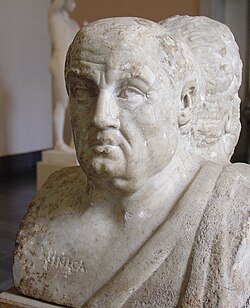
Seneca
Seneca
·65 AD

No one can lead a happy life, or even one that is bearable, without the pursuit of wisdom, and the perfection of wisdom is what makes the happy life. Yet even the beginnings of wisdom make life bearable. But this conviction must be firmly grasped and not merely adopted in words, if we wish to draw any strength from what we know.

Maimonides
Maimonides

It is man's duty to love and to fear God, even without hope of reward or fear of punishment.

Maimonides
Maimonides

I rely on two precedents: first, to similar cases our Sages applied the verse, "It is time to do something in honour of the Lord: for they have made void thy law"... Secondly, they have said, "Let all thy acts be guided by pure intentions." ...Lastly, when I have a difficult subject before me—when I find the road narrow, and can see no other way of teaching a well established truth except by pleasing one intelligent man and displeasing ten thousand fools—I prefer to address myself to the one man, and to take no notice whatever of the condemnation of the multitude; I prefer to extricate that intelligent man from his embarrassment and show him the cause of his perplexity, so that he may attain perfection and be at peace.

William James
William James
·1902

But such a straight identification of religion with any and every form of happiness leaves the essential peculiarity of religious happiness out. The more commonplace happinesses which we get are 'reliefs,' occasioned by our momentary escapes from evils either experienced or threatened. But in its most characteristic embodiments, religious happiness is no mere feeling of escape. It cares no longer to escape. It consents to the evil outwardly as a form of sacrifice — inwardly it knows it to be permanently overcome. ... In the Louvre there is a picture, by Guido Reni, of St. Michael with his foot on Satan's neck. The richness of the picture is in large part due to the fiend's figure being there. The richness of its allegorical meaning also is due to his being there — that is, the world is all the richer for having a devil in it, so long as we keep our foot upon his neck.

Maimonides
Maimonides

To give a full explanation of the mystic passages of the Bible is contrary to the law and to reason; besides, my knowledge of them is based on reasoning, not on divine inspiration [and is therefore not infallible]. ...It is... possible that my view is wrong, and that I misunderstand passages referred to. ...Those, however, for whom this treatise has been composed, will, on reflecting on it and thoroughly examining each chapter, obtain a clear insight into all that has been clear and intelligible to me. This is the utmost that can be done in treating this subject so to be useful to all without fully explaining it.

Adam Smith
Adam Smith
·1759

The great source of both the misery and disorders of human life, seems to arise from over-rating the difference between one permanent situation and another. Avarice over-rates the difference between poverty and riches: ambition, that between a private and a public station: vain-glory, that between obscurity and extensive reputation. The person under the influence of any of those extravagant passions, is not only miserable in his actual situation, but is often disposed to disturb the peace of society, in order to arrive at that which he so foolishly admires. The slightest observation, however, might satisfy him, that, in all the ordinary situations of human life, a well-disposed mind may be equally calm, equally cheerful, and equally contented. Some of those situations may, no doubt, deserve to be preferred to others: but none of them can deserve to be pursued with that passionate ardour which drives us to violate the rules either of prudence or of justice; or to corrupt the future tranquillity of our minds, either by shame from the remembrance of our own folly, or by remorse from the horror of our own injustice.

Galileo Galilei
Galileo Galilei
·1615

I do not feel obliged to believe that the same God who has endowed us with senses, reason, and intellect has intended us to forgo their use and by some other means to give us knowledge which we can attain by them.

Edmund Burke
Edmund Burke
·1756

If pretended revelations have caused wars where they were opposed, and slavery where they were received, the pretended wise inventions of politicians have done the same. But the slavery has been much heavier, the wars far more bloody, and both more universal by many degrees. Show me any mischief produced by the madness or wickedness of theologians, and I will show you an hundred resulting from the ambition and villany of conquerors and statesmen. Show me an absurdity in religion, and I will undertake to show you an hundred for one in political laws and institutions. If you say, that natural religion is a sufficient guide without the foreign aid of revelation, on what principle should political laws become necessary? Is not the same reason available in theology and in politics? If the laws of nature are the laws of God, is it consistent with the Divine wisdom to prescribe rules to us, and leave the enforcement of them to the folly of human institutions? Will you follow truth but to a certain point?

Zhuangzi
Zhuangzi
·300 BC

Cherish that which is within you, and shut off that which is without; for much knowledge is a curse.

Richard Feynman
Richard Feynman
·1988

God was always invented to explain mystery. God is always invented to explain those things that you do not understand. Now, when you finally discover how something works, you get some laws which you're taking away from God; you don't need him anymore. But you need him for the other mysteries. So therefore you leave him to create the universe because we haven't figured that out yet; you need him for understanding those things which you don't believe the laws will explain, such as consciousness, or why you only live to a certain length of time — life and death — stuff like that. God is always associated with those things that you do not understand. Therefore I don't think that the laws can be considered to be like God because they have been figured out.

Simone Weil
Simone Weil
·1943

There is a reality outside the world, that is to say, outside space and time, outside man's mental universe, outside any sphere whatsoever that is accessible to human faculties. Corresponding to this reality, at the centre of the human heart, is the longing for an absolute good, a longing which is always there and is never appeased by any object in this world. Another terrestrial manifestation of this reality lies in the absurd and insoluble contradictions which are always the terminus of human thought when it moves exclusively in this world. Just as the reality of this world is the sole foundation of facts, so that other reality is the sole foundation of good. That reality is the unique source of all the good that can exist in this world: that is to say, all beauty, all truth, all justice, all legitimacy, all order, and all human behaviour that is mindful of obligations. Those minds whose attention and love are turned towards that reality are the sole intermediary through which good can descend from there and come among men. Although it is beyond the reach of any human faculties, man has the power of turning his attention and love towards it. Nothing can ever justify the assumption that any man, whoever he may be, has been deprived of this power. It is a power which is only real in this world in so far as it is exercised. The sole condition for exercising it is consent. This act of consent may be expressed, or it may not be, even tacitly; it may not be clearly conscious, although it has really taken place in the soul. Very often it is verbally expressed although it has not in fact taken place. But whether expressed or not, the one condition suffices: that it shall in fact have taken place. To anyone who does actually consent to directing his attention and love beyond the world, towards the reality that exists outside the reach of all human faculties, it is given to succeed in doing so. In that case, sooner or later, there descends upon him a part of the good, which shines through him upon all that surrounds him.

Ada Lovelace
Ada Lovelace
·1852

Perhaps you have felt already, from the tone of my letter, that I am more than ever now the bride of science. Religion to me is science, and science is religion. In that deeply-felt truth lies the secret of my intense devotion to the reading of God's natural works. It is reading Him. His will — His intelligence; and this again is learning to obey and to follow (to the best of our power) that will! For he who reads, who interprets the Divinity with a true and simple heart, then obeys and submits in acts and feelings as by an impupulse and instinct. He can't help doing so. At least, it appears so to me.

Andrew Carnegie
Andrew Carnegie

Such, in my opinion, is the true Gospel concerning Wealth, obedience to which is destined some day to solve the problem of the Rich and the Poor, and to bring "Peace on earth, among men Good Will."

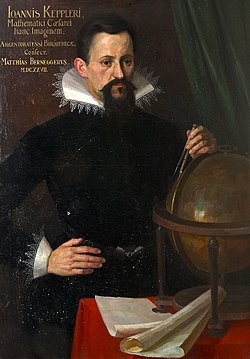
Johannes Kepler
Johannes Kepler
·1619·Linz, Austria

Geometry is one and eternal, shining in the mind of God. That share in it accorded to humans is one of the reasons that humanity is the image of God. Where there is matter, there is geometry.

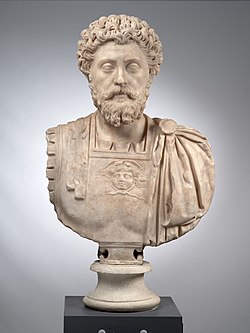
Marcus Aurelius
Marcus Aurelius
·180 AD

You see how few things you have to do to live a satisfying and reverent life? If you can manage this, that's all even the gods can ask of you.