
There is danger from all men. The only maxim of a free government ought to be to trust no man living with power to endanger the public liberty.
“But a Constitution of Government once changed from Freedom, can never be restored. Liberty, once lost, is lost forever.”
There is danger from all men. The only maxim of a free government ought to be to trust no man living with power to endanger the public liberty.
Statesmen, my dear Sir, may plan and speculate for Liberty, but it is Religion and Morality alone, which can establish the Principles upon which Freedom can securely stand. The only foundation of a free Constitution is pure Virtue, and if this cannot be inspired into our People in a greater Measure than they have it now, They may change their Rulers and the forms of Government, but they will not obtain a lasting Liberty. They will only exchange Tyrants and Tyrannies.
Liberty must at all hazards be supported. We have a right to it, derived from our Maker. But if we had not, our fathers have earned and bought it for us, at the expense of their ease, their estates, their pleasure, and their blood.

Liberty is never out of bounds or off limits; it spreads wherever it can capture the imagination of men.

The principle of free governments adheres to the American soil. It is bedded in it, immovable as its mountains.
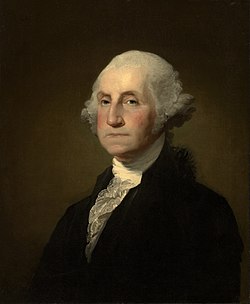
The time is now near at hand which must probably determine whether Americans are to be freemen or slaves; whether they are to have any property they can call their own; whether their houses and farms are to be pillaged and destroyed, and themselves consigned to a state of wretchedness from which no human efforts will deliver them. The fate of unborn millions will now depend, under God, on the courage and conduct of this army. Our cruel and unrelenting enemy leaves us only the choice of brave resistance, or the most abject submission. We have, therefore, to resolve to conquer or die.
Property must be secured, or liberty cannot exist. But if unlimited or unbalanced power of disposing property, be put into the hands of those who have no property, France will find, as we have found, the lamb committed to the custody of the wolf. In such a case, all the pathetic exhortations and addresses of the national assembly to the people, to respect property, will be regarded no more than the warbles of the songsters of the forest. The great art of law-giving consists in balancing the poor against the rich in the legislature, and in constituting the legislative a perfect balance against the executive power, at the same time that no individual or party can become its rival. The essence of a free government consists in an effectual control of rivalries. The executive and the legislative powers are natural rivals; and if each has not an effectual control over the other, the weaker will ever be the lamb in the paws of the wolf. The nation which will not adopt an equilibrium of power must adopt a despotism. There is no other alternative. Rivalries must be controlled, or they will throw all things into confusion; and there is nothing but despotism or a balance of power which can control them.

We must know what we think and speak out, even at the risk of unpopularity. In the final analysis, a democratic government represents the sum total of the courage and the integrity of its individuals. It cannot be better than they are. … In the long run there is no more exhilarating experience than to determine one's position, state it bravely and then act boldly.
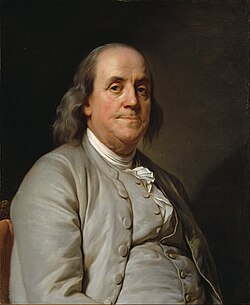
Freedom of speech is a principal pillar of a free government; when this support is taken away, the constitution of a free society is dissolved, and tyranny is erected on its ruins. Republics and limited monarchies derive their strength and vigor from a popular examination into the action of the magistrates.

Our country—this great republic—means nothing unless it means the triumph of a real democracy, the triumph of popular government, and, in the long run, of an economic system under which each man shall be guaranteed the opportunity to show the best that there is in him.
If we lose the virile, manly qualities, and sink into a nation of mere hucksters, putting gain over national honor, and subordinating everything to mere ease of life, then we shall indeed reach a condition worse than that of the ancient civilizations in the years of their decay.

I should have loved freedom, I believe, at all times, but in the time in which we live I am ready to worship it.

Many forms of Government have been tried and will be tried in this world of sin and woe. No one pretends that democracy is perfect or all-wise. Indeed, it has been said that democracy is the worst form of government except all those other forms that have been tried from time to time; but there is the broad feeling in our country that the people should rule, continuously rule, and that public opinion, expressed by all constitutional means, should shape, guide, and control the actions of Ministers who are their servants and not their masters.
Even despots accept the excellence of liberty. The simple truth is that they wish to keep it for themselves and promote the idea that no one else is at all worthy of it. Thus, our opinion of liberty does not reveal our differences but the relative value which we place on our fellow man. We can state with conviction, therefore, that a man's support for absolute government is in direct proportion to the contempt he feels for his country.
Nip the shoots of arbitrary power in the bud, is the only maxim which can ever preserve the liberties of any people.

Do we call this the land of the free? What is it to be free from King George and continue the slaves of King Prejudice? What is it to be born free and not to live free? What is the value of any political freedom, but as a means to moral freedom? Is it a freedom to be slaves, or a freedom to be free, of which we boast? We are a nation of politicians, concerned about the outmost defences only of freedom. It is our children's children who may perchance be really free.
The regime which is destroyed by a revolution is almost always an improvement on its immediate predecessor, and experience teaches that the most critical moment for bad governments is the one which witnesses their first steps toward reform.
Liberty, when it begins to take root, is a plant of rapid growth.
I think that democratic communities have a natural taste for freedom: left to themselves, they will seek it, cherish it, and view any privation of it with regret. But for equality, their passion is ardent, insatiable, incessant, invincible: they call for equality in freedom; and if they cannot obtain that, they still call for equality in slavery.

But what is liberty without wisdom, and without virtue? It is the greatest of all possible evils; for it is folly, vice, and madness, without tuition or restraint.
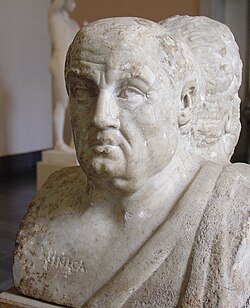
I may become a poor man; I shall then be one among many. I may be exiled; I shall then regard myself as born in the place to which I shall be sent. They may put me in chains. What then? Am I free from bonds now? Behold this clogging burden of a body, to which nature has fettered me! “I shall die,” you say; you mean to say “I shall cease to run the risk of sickness; I shall cease to run the risk of imprisonment; I shall cease to run the risk of death.”
It is substantially true, that virtue or morality is a necessary spring of popular government. The rule, indeed, extends with more or less force to every species of free government.

The natural effort of every individual to better his own condition, when suffered to exert itself with freedom and security is so powerful a principle that it is alone, and without any assistance, not only capable of carrying on the society to wealth and prosperity, but of surmounting a hundred impertinent obstructions with which the folly of human laws too often incumbers its operations; though the effect of these obstructions is always more or less either to encroach upon its freedom, or to diminish its security.
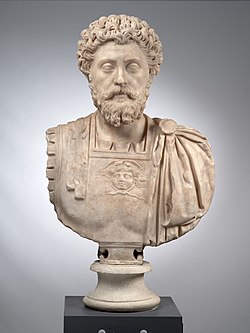
There is a limit to the time assigned you, and if you don't use it to free yourself it will be gone and never return.

Man is born free, and everywhere he is in chains.