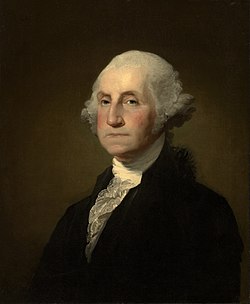
It is substantially true, that virtue or morality is a necessary spring of popular government. The rule, indeed, extends with more or less force to every species of free government.

“Statesmen, my dear Sir, may plan and speculate for Liberty, but it is Religion and Morality alone, which can establish the Principles upon which Freedom can securely stand. The only foundation of a free Constitution is pure Virtue, and if this cannot be inspired into our People in a greater Measure than they have it now, They may change their Rulers and the forms of Government, but they will not obtain a lasting Liberty. They will only exchange Tyrants and Tyrannies.”
It is substantially true, that virtue or morality is a necessary spring of popular government. The rule, indeed, extends with more or less force to every species of free government.
Of all the dispositions and habits, which lead to political prosperity, Religion and Morality are indispensable supports. In vain would that man claim the tribute of Patriotism, who should labor to subvert these great pillars of human happiness, these firmest props of the duties of Men and Citizens. The mere Politician, equally with the pious man, ought to respect and to cherish them. A volume could not trace all their connexions with private and public felicity.

The best laws cannot make a constitution work in spite of morals; morals can turn the worst laws to advantage. That is a commonplace truth, but one to which my studies are always bringing me back. It is the central point in my conception. I see it at the end of all my reflections.

But what is liberty without wisdom, and without virtue? It is the greatest of all possible evils; for it is folly, vice, and madness, without tuition or restraint.
But a Constitution of Government once changed from Freedom, can never be restored. Liberty, once lost, is lost forever.
Let us with caution indulge the supposition, that morality can be maintained without religion. Whatever may be conceded to the influence of refined education on minds of peculiar structure, reason and experience both forbid us to expect, that national morality can prevail in exclusion of religious principle.

We must know what we think and speak out, even at the risk of unpopularity. In the final analysis, a democratic government represents the sum total of the courage and the integrity of its individuals. It cannot be better than they are. … In the long run there is no more exhilarating experience than to determine one's position, state it bravely and then act boldly.

Our country—this great republic—means nothing unless it means the triumph of a real democracy, the triumph of popular government, and, in the long run, of an economic system under which each man shall be guaranteed the opportunity to show the best that there is in him.

The ancients who wished to illustrate illustrious virtue throughout the Kingdom, first ordered well their own states. Wishing to order well their states, they first regulated their families. Wishing to regulate their families, they first cultivated their persons. Wishing to cultivate their persons, they first rectified their hearts. Wishing to rectify their hearts, they first sought to be sincere in their thoughts. Wishing to be sincere in their thoughts, they first extended to the utmost their knowledge. Such extension of knowledge lay in the investigation of things. Things being investigated, knowledge became complete. Their knowledge being complete, their thoughts were sincere. Their thoughts being sincere, their hearts were then rectified. Their hearts being rectified, their persons were cultivated. Their persons being cultivated, their families were regulated. Their families being regulated, their states were rightly governed. Their states being rightly governed, the whole kingdom was made tranquil and happy. From the Son of Heaven down to the mass of the people, all must consider the cultivation of the person the root of everything besides.
Liberty must at all hazards be supported. We have a right to it, derived from our Maker. But if we had not, our fathers have earned and bought it for us, at the expense of their ease, their estates, their pleasure, and their blood.
Property must be secured, or liberty cannot exist. But if unlimited or unbalanced power of disposing property, be put into the hands of those who have no property, France will find, as we have found, the lamb committed to the custody of the wolf. In such a case, all the pathetic exhortations and addresses of the national assembly to the people, to respect property, will be regarded no more than the warbles of the songsters of the forest. The great art of law-giving consists in balancing the poor against the rich in the legislature, and in constituting the legislative a perfect balance against the executive power, at the same time that no individual or party can become its rival. The essence of a free government consists in an effectual control of rivalries. The executive and the legislative powers are natural rivals; and if each has not an effectual control over the other, the weaker will ever be the lamb in the paws of the wolf. The nation which will not adopt an equilibrium of power must adopt a despotism. There is no other alternative. Rivalries must be controlled, or they will throw all things into confusion; and there is nothing but despotism or a balance of power which can control them.
Even despots accept the excellence of liberty. The simple truth is that they wish to keep it for themselves and promote the idea that no one else is at all worthy of it. Thus, our opinion of liberty does not reveal our differences but the relative value which we place on our fellow man. We can state with conviction, therefore, that a man's support for absolute government is in direct proportion to the contempt he feels for his country.

The law will never make men free; it is men who have got to make the law free.

The natural effort of every individual to better his own condition, when suffered to exert itself with freedom and security is so powerful a principle that it is alone, and without any assistance, not only capable of carrying on the society to wealth and prosperity, but of surmounting a hundred impertinent obstructions with which the folly of human laws too often incumbers its operations; though the effect of these obstructions is always more or less either to encroach upon its freedom, or to diminish its security.
There is danger from all men. The only maxim of a free government ought to be to trust no man living with power to endanger the public liberty.

No man is free who is not master of himself.
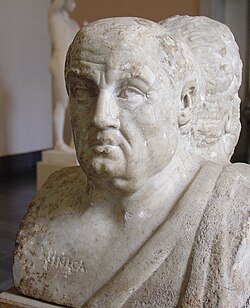
No man is free who is not master of himself.
Do we call this the land of the free? What is it to be free from King George and continue the slaves of King Prejudice? What is it to be born free and not to live free? What is the value of any political freedom, but as a means to moral freedom? Is it a freedom to be slaves, or a freedom to be free, of which we boast? We are a nation of politicians, concerned about the outmost defences only of freedom. It is our children's children who may perchance be really free.
I must study politics and war, that my sons may have liberty to study mathematics and philosophy. My sons ought to study mathematics and philosophy, geography, natural history, naval architecture, navigation, commerce, and agriculture, in order to give their children a right to study painting, poetry, music, architecture, statuary, tapestry, and porcelain.
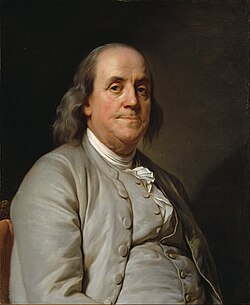
Freedom of speech is a principal pillar of a free government; when this support is taken away, the constitution of a free society is dissolved, and tyranny is erected on its ruins. Republics and limited monarchies derive their strength and vigor from a popular examination into the action of the magistrates.

Liberty is never out of bounds or off limits; it spreads wherever it can capture the imagination of men.
If we lose the virile, manly qualities, and sink into a nation of mere hucksters, putting gain over national honor, and subordinating everything to mere ease of life, then we shall indeed reach a condition worse than that of the ancient civilizations in the years of their decay.

Men never do good unless necessity drives them to it; but when they are free to choose and can do just as they please, confusion and disorder become rampant.
We must see that there is civic honesty, civic cleanliness, civic good sense in our home administration of city, State, and nation. We must strive for honesty in office, for honesty toward the creditors of the nation and of the individual; for the widest freedom of individual initiative where possible, and for the wisest control of individual initiative where it is hostile to the welfare of the many. But because we set our own household in order we are not thereby excused from playing our part in the great affairs of the world. A man's first duty is to his own home, but he is not thereby excused from doing his duty to the State; for if he fails in this second duty it is under the penalty of ceasing to be a freeman. In the same way, while a nation's first duty is within its own borders, it is not thereby absolved from facing its duties in the world as a whole; and if it refuses to do so, it merely forfeits its right to struggle for a place among the peoples that shape the destiny of mankind.

'But,' I [Dmitri Karamazov] asked, 'how will man be after that? Without God and the future life? It means everything is permitted now, one can do anything?' 'Didn't you know?' he said. And he laughed. 'Everything is permitted to the intelligent man,' he said.