
Echoes
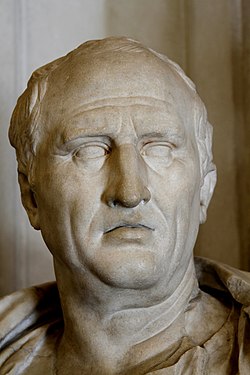
Cicero
50 BC
“Let the welfare of the people be the supreme law.”
❧

The only real, dignified, human doctrine is the greatest good of all, and this can only be achieved by uttermost self-sacrifice.

I believe that material wealth is an exceedingly valuable servant, and a particularly abhorrent master, in our National life. I think one end of government should be to achieve prosperity; but it should follow this end chiefly to serve an even higher and more important end - that of promoting the character and welfare of the average man. In the long run, and inevitably, the actual control of the government will be determined by the chief end which the government subserves. If the end and aim of government action is merely to accumulate general material prosperity, treating such prosperity as an end in itself and not as a means, then it is inevitable that material wealth and the masters of that wealth will dominate and control the course of national action. If, on the other hand, the achievement of material wealth is treated, not as an end of government, but as a thing of great value, it is true—so valuable as to be indispensable—but of value only in connection with the achievement of other ends, then we are free to seek through our government, and through the supervision of our individual activities, the realization of a true democracy. Then we are free to seek not only the heaping up of material wealth, but a wise and generous distribution of such wealth so as to diminish grinding poverty, and, so far as may be, to equalize social and economic no less than political opportunity.

The law will never make men free; it is men who have got to make the law free.

The needs of a human being are sacred. Their satisfaction cannot be subordinated either to reasons of state, or to any consideration of money, nationality, race, or colour, or to the moral or other value attributed to the human being in question, or to any consideration whatsoever. There is no legitimate limit to the satisfaction of the needs of a human being except as imposed by necessity and by the needs of other human beings. The limit is only legitimate if the needs of all human beings receive an equal degree of attention.

It is better and more satisfactory to acquit a thousand guilty persons than to put a single innocent one to death.

Political questions are far too serious to be left to the politicians.
We of the great modern democracies must strive unceasingly to make our several countries lands in which a poor man who works hard can live comfortably and honestly, and in which a rich man cannot live dishonestly nor in slothful avoidance of duty; and yet we must judge rich man and poor man alike by a standard which rests on conduct and not on caste, and we must frown with the same stern severity on the mean and vicious envy which hates and would plunder a man because he is well off and on the brutal and selfish arrogance which looks down on and exploits the man with whom life has gone hard.
Our country—this great republic—means nothing unless it means the triumph of a real democracy, the triumph of popular government, and, in the long run, of an economic system under which each man shall be guaranteed the opportunity to show the best that there is in him.

Every man is, no doubt, by nature, first and principally recommended to his own care; and as he is fitter to take care of himself than of any other person, it is fit and right that it should be so.

In judging policies we should consider the results that have been achieved through them rather than the means by which they have been executed.
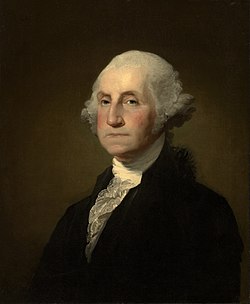
Let us raise a standard to which the wise and honest can repair.

The best laws cannot make a constitution work in spite of morals; morals can turn the worst laws to advantage. That is a commonplace truth, but one to which my studies are always bringing me back. It is the central point in my conception. I see it at the end of all my reflections.
We must see that there is civic honesty, civic cleanliness, civic good sense in our home administration of city, State, and nation. We must strive for honesty in office, for honesty toward the creditors of the nation and of the individual; for the widest freedom of individual initiative where possible, and for the wisest control of individual initiative where it is hostile to the welfare of the many. But because we set our own household in order we are not thereby excused from playing our part in the great affairs of the world. A man's first duty is to his own home, but he is not thereby excused from doing his duty to the State; for if he fails in this second duty it is under the penalty of ceasing to be a freeman. In the same way, while a nation's first duty is within its own borders, it is not thereby absolved from facing its duties in the world as a whole; and if it refuses to do so, it merely forfeits its right to struggle for a place among the peoples that shape the destiny of mankind.
When the happiness or misery of others depends in any respect upon our conduct, we dare not, as self–love might suggest to us, prefer the interest of one to that of many. The man within immediately calls to us, that we value ourselves too much and other people too little, and that, by doing so, we render ourselves the proper object of the contempt and indignation of our brethren. Neither is this sentiment confined to men of extraordinary magnanimity and virtue. It is deeply impressed upon every tolerably good soldier, who feels that he would become the scorn of his companions, if he could be supposed capable of shrinking from danger, or of hesitating, either to expose or to throw away his life, when the good of the service required it.

Nip the shoots of arbitrary power in the bud, is the only maxim which can ever preserve the liberties of any people.

Democracy is based upon the conviction that there are extraordinary possibilities in ordinary people.

When will our consciences grow so tender that we will act to prevent human misery rather than avenge it?
It is substantially true, that virtue or morality is a necessary spring of popular government. The rule, indeed, extends with more or less force to every species of free government.

Many forms of Government have been tried and will be tried in this world of sin and woe. No one pretends that democracy is perfect or all-wise. Indeed, it has been said that democracy is the worst form of government except all those other forms that have been tried from time to time; but there is the broad feeling in our country that the people should rule, continuously rule, and that public opinion, expressed by all constitutional means, should shape, guide, and control the actions of Ministers who are their servants and not their masters.
No society can surely be flourishing and happy, of which the greater part of the members are poor and miserable. It is but equity, besides, that they who feed, cloath and lodge the whole body of the people, should have such a share of the produce of their own labour as to be themselves tolerably well fed, clothed, and lodged.
The first requisite of a good citizen in this Republic of ours is that he shall be able and willing to pull his weight; that he shall not be a mere passenger, but shall do his share in the work that each generation of us finds ready to hand; and, furthermore, that in doing his work he shall show, not only the capacity for sturdy self-help, but also self-respecting regard for the rights of others.

Virtue can only flourish amongst equals.

Thus is the problem of Rich and Poor to be solved. The laws of accumulation will be left free; the laws of distribution free. Individualism will continue, but the millionaire will be but a trustee of the poor; intrusted for a season with a great part of the increased wealth of the community, but administering it for the community far better than it could or would have done for itself. (pp. 663-664)

Whenever a separation is made between liberty and justice, neither, in my opinion, is safe.