
Echoes

William Shakespeare
1592
“Hung be the heavens with black, yield day to night!”
❧

Our fantastic civilization has fallen out of touch with many aspects of nature, and with none more completely than with night. With lights and ever more lights, we drive the holiness and beauty of night back to the forests and the sea; the little villages, the crossroads even, will have none of it. Do they fear that vast serenity, the mystery of infinite space, the austerity of stars? Are modern folk, perhaps, afraid of night?

I do not think we can hope for any better things now. We shall stick it out to the end, but we are getting weaker, of course, and the end cannot be far. It seems a pity, but I do not think I can write more. For God's sake look after our people.
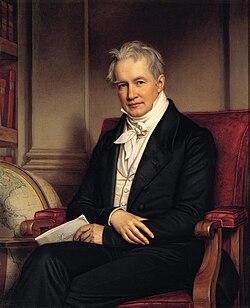
The sun and distant stars appeared to mingle in the perfection of the same natural order, and I felt, in the stillness of the tropical night, how much more alive and near to the heavens was this part of the earth.

In this world / we walk on the roof of hell / gazing at flowers

O light! This is the cry of all the characters of ancient drama brought face to face with their fate. This last resort was ours, too, and I knew it now. In the middle of winter I at last discovered that there was in me an invincible summer.

After the dazzle of day is gone, only the dark, dark night shows to my eyes the stars; after the plain of the surface and the breakers have gone, the depths of the ocean show beautiful forms.

Come, let us go snow-viewing till we are buried.

The world is charged with the grandeur of God. / It will flame out, like shining from shook foil; / it gathers to a greatness, like the ooze of oil / Crushed.
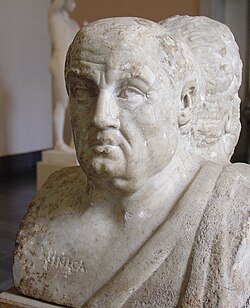
Most men ebb and flow in wretchedness between the fear of death and the hardships of life; they are unwilling to live, and yet they do not know how to die.

I have heard say the executioner was very good, and I have a little neck.

O wretched, miserable life! O unhappy temperament! To think that I, a man of sense, should have allowed myself to be brought to such a state by sensuality! Not to mention the pains in my stomach, my sides, and other parts of my body.

When I consider the short duration of my life, swallowed up in the eternity before and after, the small space which I fill, or even can see, engulfed in the infinite immensity of spaces whereof I know nothing, and which know nothing of me, I am terrified, and wonder that I am here rather than there, for there is no reason why here rather than there, or now rather than then. Who has set me here? By whose order and design have this place and time been destined for me?—Memoria hospitis unius diei prætereuntis. It is not well to be too much at liberty. It is not well to have all we want. How many kingdoms know nothing of us! The eternal silence of these infinite spaces alarms me.
Now is the winter of our discontentMade glorious summer by this sun of York.
Tomorrow, and tomorrow, and tomorrow,Creeps in this petty pace from day to day,To the last syllable of recorded time;And all our yesterdays have lighted foolsThe way to dusty death. Out, out, brief candle!Life's but a walking shadow, a poor playerThat struts and frets his hour upon the stage,And then is heard no more. It is a taleTold by an idiot, full of sound and fury,Signifying nothing.

We are now in the mountains and they are in us, kindling enthusiasm, making every nerve quiver, filling every pore and cell of us.
Give me the splendid silent sun with all his beams full-dazzling, give me juicy autumnal fruit ripe and red from the orchard, give me a field where the unmowed grass grows, give me an arbor, give me the trellis'd grape.

To go in the dark with a light is to know the light. To know the dark, go dark. Go without sight, and find that the dark, too, blooms and sings, and is traveled by dark feet and dark wings.
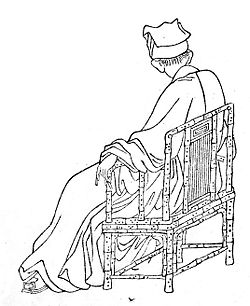
Empty mountain — no one in sight, / yet voices of men are heard. / Sun's reflected light enters the deep wood, / shining once more upon green moss.

Viewed from the distance of the moon, the astonishing thing about the earth, catching the breath, is that it is alive.

That though the radiance which was once so bright be now for ever taken from my sight, though nothing can bring back the hour of splendour in the grass, of glory in the flower; we will grieve not, rather find strength in what remains behind.

O neglectful Nature, wherefore art thou thus partial, becoming to some of thy children a tender and benignant mother, to others a most cruel and ruthless stepmother? I see thy children given into slavery to others without ever receiving any benefit, and in lieu of any reward for the services they have done for them they are repaid by the severest punishments.

Lord: it is time. The huge summer has gone by. Now overlap the sundials with your shadows, and on the meadows let the wind go free. Command the fruits to swell on tree and vine; grant them a few more warm transparent days, urge them on to fulfillment then, and press the final sweetness into the heavy wine.
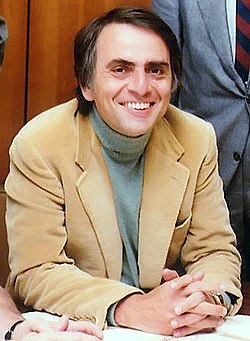
There is a place with four suns in the sky — red, white, blue, and yellow; two of them are so close together that they touch, and star-stuff flows between them. I know of a world with a million moons. I know of a sun the size of the Earth — and made of diamond. There are atomic nuclei a few miles across which rotate thirty times a second. There are tiny grains between the stars, with the size and atomic composition of bacteria. There are stars leaving the Milky Way, and immense gas clouds falling into it. There are turbulent plasmas writhing with X- and gamma-rays and mighty stellar explosions. There are, perhaps, places which are outside our universe. The universe is vast and awesome, and for the first time we are becoming a part of it.

Death is always and under all circumstances a tragedy, for if it is not, then it means that life itself has become one.