Echoes

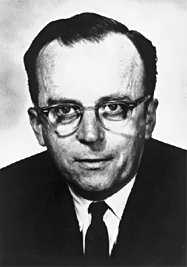
Alan Turing
1949
“This is only a foretaste of what is to come, and only the shadow of what is going to be. We have to have some experience with the machine before we really know its capabilities. It may take years before we settle down to the new possibilities, but I do not see why it should not enter any one of the fields normally covered by the human intellect, and eventually compete on equal terms.”
❧
I believe that at the end of the century the use of words and general educated opinion will have altered so much that one will be able to speak of machines thinking without expecting to be contradicted.

Ere many generations pass, our machinery will be driven by a power obtainable at any point of the universe. This idea is not novel. Men have been led to it long ago by instinct or reason; it has been expressed in many ways, and in many places, in the history of old and new. We find it in the delightful myth of Antaeus, who derives power from the earth; we find it among the subtle speculations of one of your splendid mathematicians and in many hints and statements of thinkers of the present time. Throughout space there is energy. Is this energy static or kinetic! If static our hopes are in vain; if kinetic — and this we know it is, for certain — then it is a mere question of time when men will succeed in attaching their machinery to the very wheelwork of nature.
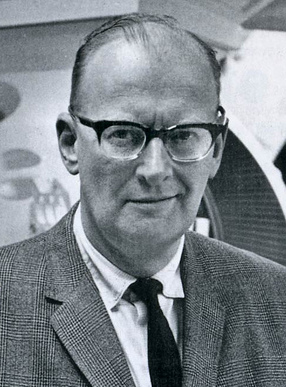
Any sufficiently advanced technology is indistinguishable from magic.
When wireless is perfectly applied the whole earth will be converted into a huge brain, which in fact it is, all things being particles of a real and rhythmic whole. We shall be able to communicate with one another instantly, irrespective of distance. Not only this, but through television and telephony we shall see and hear one another as perfectly as though we were face to face, despite intervening distances of thousands of miles; and the instruments through which we shall be able to do this will be amazingly simple compared with our present telephone. A man will be able to carry one in his vest pocket. We shall be able to witness and hear events—the inauguration of a President, the playing of a World Series game, the havoc of an earthquake or the terror of a battle—just as though we were present.
It is customary... to offer a grain of comfort, in the form of a statement that some peculiarly human characteristic could never be imitated by a machine. ... I cannot offer any such comfort, for I believe that no such bounds can be set.

We have only started on our development of our country — we have not as yet, with all our talk of wonderful progress, done more than scratch the surface. The progress has been wonderful enough — but when we compare what we have done with what there is to do, then our past accomplishments are as nothing. When we consider that more power is used merely in ploughing the soil than is used in all the industrial establishments of the country put together, an inkling comes of how much opportunity there is ahead. And now, with so many countries of the world in ferment and with so much unrest everywhere, is an excellent time to suggest something of the things that may be done — in the light of what has been done. When one speaks of increasing power, machinery, and industry there comes up a picture of a cold, metallic sort of world in which great factories will drive away the trees, the flowers, the birds, and the green fields. And that then we shall have a world composed of metal machines and human machines. With all of that I do not agree. I think that unless we know more about machines and their use, unless we better understand the mechanical portion of life, we cannot have the time to enjoy the trees, and the birds, and the flowers, and the green fields.

I do not fear computers. I fear the lack of them.

The Analytical Engine has no pretensions whatever to originate any thing. It can do whatever we know how to order it to perform. It can follow analysis; but it has no power of anticipating any analytical relations or truths. Its province is to assist us in making available what we are already acquainted with. This it is calculated to effect primarily and chiefly of course, through its executive faculties; but it is likely to exert an indirect and reciprocal influence on science itself in another manner. For, in so distributing and combining the truths and the formulæ of analysis, that they may become most easily and rapidly amenable to the mechanical combinations of the engine, the relations and the nature of many subjects in that science are necessarily thrown into new lights, and more profoundly investigated.
The economic transmission of power without wires is of all-surpassing importance to man. By its means he will gain complete mastery of the air, the sea and the desert. It will enable him to dispense with the necessity of mining, pumping, transporting and burning fuel, and so do away with innumerable causes of sinful waste. By its means, he will obtain at any place and in any desired amount, the energy of remote waterfalls — to drive his machinery, to construct his canals, tunnels and highways, to manufacture the materials of his want, his clothing and food, to heat and light his home — year in, year out, ever and ever, by day and by night. It will make the living glorious sun his obedient, toiling slave. It will bring peace and harmony on earth.

I cannot help fearing that men may reach a point where they look on every new theory as a danger, every innovation as a toilsome trouble, every social advance as a first step toward revolution, and that they may absolutely refuse to move at all.

It isn't all over; everything has not been invented; the human adventure is just beginning.
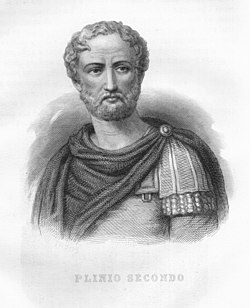
How many things, too, are looked upon as quite impossible until they have been actually effected?

A human being should be able to change a diaper, plan an invasion, butcher a hog, conn a ship, design a building, write a sonnet, balance accounts, build a wall, set a bone, comfort the dying, take orders, give orders, cooperate, act alone, solve equations, analyse a new problem, pitch manure, program a computer, cook a tasty meal, fight efficiently, die gallantly. Specialization is for insects.

... I came fortunately upon Darwin’s and Spencer’s works “The Data of Ethics,” “First Principles,” “Social Statics,” “The Descent of Man.” Reaching the pages which explain how man has absorbed such mental foods as were favorable to him, retaining what was salutary, rejecting what was deleterious, I remember that light came as in a flood and all was clear. Not only had I got rid of theology and the supernatural, but I had found the truth of evolution. "All is well since all grows better” became my motto, my true source of comfort. Man was not created with an instinct for his own degradation, but from the lower he had risen to the higher forms. Nor is there any conceivable end to his march to perfection. His face is turned to the light; he stands in the sun and looks upward.
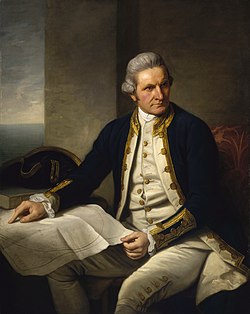
In prosecuting these discoveries, the dangers we are exposed to are obvious, but I rejoice that we are chosen to confront them.
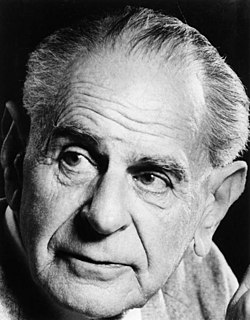
Bold ideas, unjustified anticipations, and speculative thought, are our only means for interpreting nature: our only organon, our only instrument, for grasping her.

I am enough of an artist to draw freely upon my imagination. Imagination is more important than knowledge. Knowledge is limited. Imagination encircles the world.

To explain all nature is too difficult a task for any one man or even for any one age. 'Tis much better to do a little with certainty, & leave the rest for others that come after you, than to explain all things by conjecture without making sure of any thing.
It is not a dream, it is a simple feat of scientific electrical engineering, only expensive — blind, faint-hearted, doubting world! . . . Humanity is not yet sufficiently advanced to be willingly led by the discover's keen searching sense. But who knows? Perhaps it is better in this present world of ours that a revolutionary idea or invention instead of being helped and patted, be hampered and ill-treated in its adolescence — by want of means, by selfish interest, pedantry, stupidity and ignorance; that it be attacked and stifled; that it pass through bitter trials and tribulations, through the heartless strife of commercial existence. So do we get our light. So all that was great in the past was ridiculed, condemned, combated, suppressed — only to emerge all the more powerfully, all the more triumphantly from the struggle.

A rock pile ceases to be a rock pile the moment a single man contemplates it, bearing within him the image of a cathedral.
Of all the frictional resistances, the one that most retards human movement is ignorance, what Buddha called 'the greatest evil in the world.' The friction which results from ignorance ... can be reduced only by the spread of knowledge and the unification of the heterogeneous elements of humanity. No effort could be better spent.

Most people live, whether physically, intellectually or morally, in a very restricted circle of their potential being. They make use of a very small portion of their possible consciousness, and of their soul's resources in general, much like a man who, out of his whole bodily organism, should get into a habit of using and moving only his little finger. Great emergencies and crises show us how much greater our vital resources are than we had supposed.

For this is what America is all about. It is the uncrossed desert and the unclimbed ridge. It is the star that is not reached and the harvest sleeping in the unplowed ground. Is our world gone? We say "Farewell." Is a new world coming? We welcome it — and we will bend it to the hopes of man.

The only true voyage of discovery, the only fountain of Eternal Youth, would be not to visit strange lands but to possess other eyes, to behold the universe through the eyes of another, of a hundred others, to behold the hundred universes that each of them beholds, that each of them is.