
It is better and more satisfactory to acquit a thousand guilty persons than to put a single innocent one to death.

“All human laws are nourished by one divine law.”
It is better and more satisfactory to acquit a thousand guilty persons than to put a single innocent one to death.

Bad laws are the worst sort of tyranny.

The best laws cannot make a constitution work in spite of morals; morals can turn the worst laws to advantage. That is a commonplace truth, but one to which my studies are always bringing me back. It is the central point in my conception. I see it at the end of all my reflections.

The law will never make men free; it is men who have got to make the law free.

The law no passion can disturb. 'Tis void of desire and fear, lust and anger. 'Tis mens sine affectu, written reason, retaining some measure of the divine perfection. It does not enjoin that which pleases a weak, frail man, but, without any regard to persons, commands that which is good and punishes evil in all, whether rich or poor, high or low. 'Tis deaf, inexorable, inflexible. On the one hand it is inexorable to the cries and lamentations of the prisoners; on the other it is deaf, deaf as an adder to the clamors of the populace.

'But,' I [Dmitri Karamazov] asked, 'how will man be after that? Without God and the future life? It means everything is permitted now, one can do anything?' 'Didn't you know?' he said. And he laughed. 'Everything is permitted to the intelligent man,' he said.
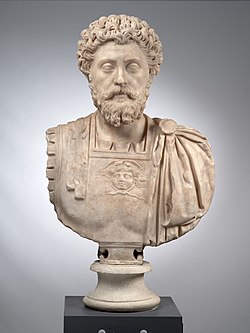
If it is not right do not do it; if it is not true do not say it.

Those who deny freedom to others deserve it not for themselves.
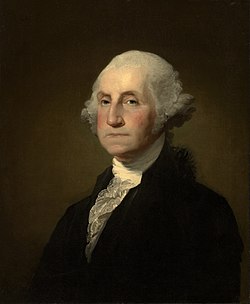
Let us raise a standard to which the wise and honest can repair.

Virtue can only flourish amongst equals.

It is not truth that makes man great, but man that makes truth great.

At the bottom of the heart of every human being, from earliest infancy until the tomb, there is something that goes on indomitably expecting, in the teeth of all experience of crimes committed, suffered, and witnessed, that good and not evil will be done to him. It is this above all that is sacred in every human being. The good is the only source of the sacred. There is nothing sacred except the good and what pertains to it.

I do not feel obliged to believe that the same God who has endowed us with senses, reason, and intellect has intended us to forgo their use and by some other means to give us knowledge which we can attain by them.
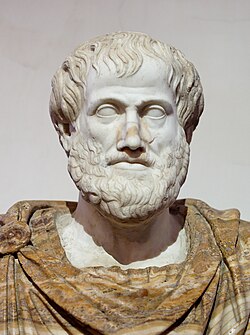
When people are friends, they have no need of justice, but when they are just, they need friendship in addition.

In matters of conscience, the law of majority has no place.
…That this nation, under God, shall have a new birth of freedom.
You are no doubt aware that the Almighty, desiring to lead us to perfection and to improve our state of society, has revealed to us laws which are to regulate our actions. These laws, however, presuppose an advanced state of intellectual culture. We must first form a conception of the Existence of the Creator according to our capabilities; that is, we must have a knowledge of Metaphysics. But this discipline can only be approached after the study of Physics: for the science of Physics borders on Metaphysics, and must even precede it in the course of our studies, as is clear to all who are familiar with these questions.

Do not mistake yourself by believing that your being has something in it more exalted than that of others.
There is a reality outside the world, that is to say, outside space and time, outside man's mental universe, outside any sphere whatsoever that is accessible to human faculties. Corresponding to this reality, at the centre of the human heart, is the longing for an absolute good, a longing which is always there and is never appeased by any object in this world. Another terrestrial manifestation of this reality lies in the absurd and insoluble contradictions which are always the terminus of human thought when it moves exclusively in this world. Just as the reality of this world is the sole foundation of facts, so that other reality is the sole foundation of good. That reality is the unique source of all the good that can exist in this world: that is to say, all beauty, all truth, all justice, all legitimacy, all order, and all human behaviour that is mindful of obligations. Those minds whose attention and love are turned towards that reality are the sole intermediary through which good can descend from there and come among men. Although it is beyond the reach of any human faculties, man has the power of turning his attention and love towards it. Nothing can ever justify the assumption that any man, whoever he may be, has been deprived of this power. It is a power which is only real in this world in so far as it is exercised. The sole condition for exercising it is consent. This act of consent may be expressed, or it may not be, even tacitly; it may not be clearly conscious, although it has really taken place in the soul. Very often it is verbally expressed although it has not in fact taken place. But whether expressed or not, the one condition suffices: that it shall in fact have taken place. To anyone who does actually consent to directing his attention and love beyond the world, towards the reality that exists outside the reach of all human faculties, it is given to succeed in doing so. In that case, sooner or later, there descends upon him a part of the good, which shines through him upon all that surrounds him.
Happiness and moral duty are inseparably connected.

Nature of the world was not created for us by divine will: such great fault is inherent in it.

We hold these truths to be self-evident: that all men are created equal, that they are endowed by their Creator with certain unalienable rights, that among these are life, liberty, and the pursuit of happiness.

Man is born free, and everywhere he is in chains.

Two things fill the mind with ever new and increasing admiration and awe, the more often and steadily we reflect upon them: the starry heavens above me and the moral law within me. I do not merely conjecture them and seek them as though obscured in darkness or in the transcendent region beyond my horizon: I see them before me, and I associate them directly with the consciousness of my own existence.

Mankind are so much the same, in all times and places, that history informs us of nothing new or strange in this particular. Its chief use is only to discover the constant and universal principles of human nature.