
I must hold in balance the sense of the futility of effort and the sense of the necessity to struggle; the conviction of the inevitability of failure and still the determination to 'succeed'.

“Need and struggle are what excite and inspire us; our hour of triumph is what brings the void. Not the Jews of the captivity, but those of the days of Solomon's glory are those from whom the pessimistic utterances in our Bible come.”
I must hold in balance the sense of the futility of effort and the sense of the necessity to struggle; the conviction of the inevitability of failure and still the determination to 'succeed'.

Pain and suffering are always inevitable for a large intelligence and a deep heart. The really great men must, I think, have great sadness on Earth.

At the bottom of the fall we were able to stand again on dry land. The rope could not be recovered. We had flung down the adze from the top of the fall and also the logbook and the cooker wrapped in one of our blouses. That was all, except our wet clothes, that we brought out of the Antarctic, which we had entered a year and a half before with well-found ship, full equipment, and high hopes. That was all of tangible things; but in memories we were rich. We had pierced the veneer of outside things. We had "suffered, starved and triumphed, groveled down yet grasped at glory, grown bigger in the bigness of the whole. We had seen God in His splendours, heard the text that Nature renders." We had reached the naked soul of man.

All is not frustrated, though thou find thyself very often afflicted or grievously tempted. Thou art man, not God; thou art flesh, not an angel.
It is good for us that we sometimes have sorrows and adversities, for they often make a man lay to heart that he is only a stranger and sojourner, and may not put his trust in any worldly thing. It is good that we sometimes endure contradictions, and are hardly and unfairly judged, when we do and mean what is good. For these things help us to be humble, and shield us from vain-glory.

He who remembers the evils he has undergone, and those that have threatened him, and the slight causes that have changed him from one state to another, prepares himself in that way for future changes and for recognizing his condition. The life of Caesar has no more to show us than our own; an emperor's or an ordinary man's, it is still a life subject to all human accidents.
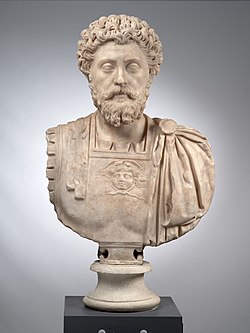
So remember this principle when something threatens to cause you pain: the thing itself was no misfortune at all; to endure it and prevail is great good fortune.

If one advances confidently in the direction of his dreams, and endeavors to live the life which he has imagined, he will meet with a success unexpected in common hours ... In proportion as he simplifies his life, the laws of the universe will appear less complex, and solitude will not be solitude, nor poverty poverty, nor weakness weakness.
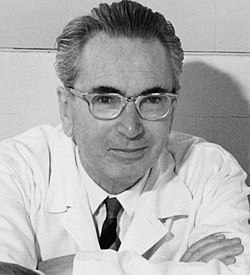
The way in which a man accepts his fate and all the suffering it entails, the way in which he takes up his cross, gives him ample opportunity — even under the most difficult circumstances — to add a deeper meaning to his life. It may remain brave, dignified and unselfish. Or in the bitter fight for self-preservation he may forget his human dignity and become no more than an animal. Here lies the chance for a man either to make use of or to forgo the opportunities of attaining the moral values that a difficult situation may afford him. And this decides whether he is worthy of his sufferings or not.

I wish to preach, not the doctrine of ignoble ease, but the doctrine of the strenuous life, the life of toil and effort, of labor and strife; to preach that highest form of success which comes, not to the man who desires mere easy peace, but to the man who does not shrink from danger, from hardship, or from bitter toil, and who out of these wins the splendid ultimate triumph.

Emotion is the chief source of all becoming-conscious. There can be no transforming of darkness into light and of apathy into movement without emotion.
Every one is familiar with the phenomenon of feeling more or less alive on different days. Every one knows on any given day that there are energies slumbering in him which the incitements of that day do not call forth, but which he might display if these were greater. Most of us feel as if we lived habitually with a sort of cloud weighing on us, below our highest notch of clearness in discernment, sureness in reasoning, or firmness in deciding. Compared with what we ought to be, we are only half-awake. Our fires are damped, our drafts are checked. We are making use of only a small part of our possible mental and physical resources.

I leave Sisyphus at the foot of the mountain! One always finds one's burden again. But Sisyphus teaches the higher fidelity that negates the gods and raises rocks. He too concludes that all is well. This universe henceforth without a master seems to him neither sterile nor futile. Each atom of that stone, each mineral flake of that night filled mountain, in itself forms a world. The struggle itself toward the heights is enough to fill a man's heart. One must imagine Sisyphus happy.

You cannot stay on the summit forever; you have to come down again. So why bother in the first place? Just this: what is above knows what is below, but what is below does not know what is above. One climbs, one sees. One descends, one sees no longer, but one has seen. There is an art of conducting oneself in the lower regions by the memory of what one saw higher up. When one can no longer see, one can at least still know.
There is nothing in the world, I venture to say, that would so effectively help one to survive even the worst conditions, as the knowledge that there is a meaning in one’s life.

In each moment the fire rages, it will burn away a hundred veils. And carry you a thousand steps toward your goal.
What man actually needs is not a tensionless state but rather the striving and struggling for some goal worthy of him. What he needs is not the discharge of tension at any cost, but the call of a potential meaning waiting to be fulfilled by him.
Far better it is to dare mighty things, to win glorious triumphs, even though checkered by failure, than to rank with those poor spirits who neither enjoy much nor suffer much, because they live in that grey twilight that knows neither victory nor defeat.

Hope is necessary in every condition. The miseries of poverty, of sickness, or captivity, would, without this comfort, be insupportable; nor does it appear that the happiest lot of terrestrial existence can set us above the want of this general blessing; or that life, when the gifts of nature and of fortune are accumulated upon it, would not still be wretched, were it not elevated and delighted by the expectation of some new possession, of some enjoyment yet behind, by which the wish shall at last be satisfied, and the heart filled up to its utmost extent.
My Son, patience and humility in adversities are more pleasing to Me than much comfort and devotion in prosperity.

My abilities have not been outstanding, but I have had sufficient strength and determination to meet my challenges and have usually managed to succeed with them.
Poverty is a bitter thing; but it is not as bitter as the existence of restless vacuity and physical, moral, and intellectual flabbiness, to which those doom themselves who elect to spend all their years in that vainest of all vain pursuits—the pursuit of mere pleasure as a sufficient end in itself.
You don't have to be a fantastic hero to do certain things — to compete. You can be just an ordinary chap, sufficiently motivated to reach challenging goals. The intense effort, the giving of everything you've got, is a very pleasant bonus.
A mere life of ease is not in the end a very satisfactory life, and, above all, it is a life which ultimately unfits those who follow it for serious work in the world. In the last analysis a healthy state can exist only when the men and women who make it up lead clean, vigorous, healthy lives; when the children are so trained that they shall endeavor, not to shirk difficulties, but to overcome them; not to seek ease, but to know how to wrest triumph from toil and risk.
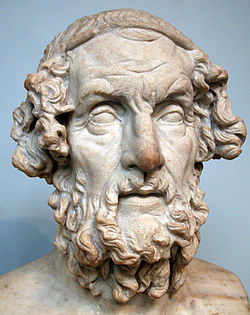
Sing in me, Muse, and through me tell the story / of that man skilled in all ways of contending, / the wanderer, harried for years on end, / after he plundered the stronghold / on the proud height of Troy.