
I know of no country, indeed, where the love of money has taken stronger hold on the affections of men, and where the profounder contempt is expressed for the theory of the permanent equality of property.

“This disposition to admire, and almost to worship, the rich and powerful, and to despise or, at least, neglect persons of poor and mean conditions, though necessary both to establish and to maintain the distinction of ranks and the order of society, is, at the same time, the great and most universal cause of the corruption of our moral sentiments.”
I know of no country, indeed, where the love of money has taken stronger hold on the affections of men, and where the profounder contempt is expressed for the theory of the permanent equality of property.

The moral flabbiness born of the exclusive worship of the bitch-goddess SUCCESS. That — with the squalid cash interpretation put on the word success — is our national disease.
There is in fact a manly and legitimate passion for equality that spurs all men to wish to be strong and esteemed. This passion tends to elevate the lesser to the rank of the greater. But one also finds in the human heart a depraved taste for equality, which impels the weak to want to bring the strong down to their level, and which reduces men to preferring equality in servitude to inequality in freedom.

We of the great modern democracies must strive unceasingly to make our several countries lands in which a poor man who works hard can live comfortably and honestly, and in which a rich man cannot live dishonestly nor in slothful avoidance of duty; and yet we must judge rich man and poor man alike by a standard which rests on conduct and not on caste, and we must frown with the same stern severity on the mean and vicious envy which hates and would plunder a man because he is well off and on the brutal and selfish arrogance which looks down on and exploits the man with whom life has gone hard.

Such, in my opinion, is the true Gospel concerning Wealth, obedience to which is destined some day to solve the problem of the Rich and the Poor, and to bring "Peace on earth, among men Good Will."

The rich in all societies may be thrown into two classes. The first is of those who are powerful as well as rich, and conduct the operations of the vast political machine. The other is of those who employ their riches wholly in the acquisition of pleasure. As to the first sort, their continual care and anxiety, their toilsome days and sleepless nights, are next to proverbial. These circumstances are sufficient almost to level their condition to that of the unhappy majority; but there are other circumstances which place them in a far lower condition. Not only their understandings labour continually, which is the severest labour, but their hearts are torn by the worst, most troublesome, and insatiable of all passions, by avarice, by ambition, by fear and jealousy. No part of the mind has rest. Power gradually extirpates from the mind every humane and gentle virtue. Pity, benevolence, friendship, are things almost unknown in high stations.

Wealth and honor are what every man desires. But if they have been obtained in violation of moral principles, they must not be kept.
The great source of both the misery and disorders of human life, seems to arise from over-rating the difference between one permanent situation and another. Avarice over-rates the difference between poverty and riches: ambition, that between a private and a public station: vain-glory, that between obscurity and extensive reputation. The person under the influence of any of those extravagant passions, is not only miserable in his actual situation, but is often disposed to disturb the peace of society, in order to arrive at that which he so foolishly admires. The slightest observation, however, might satisfy him, that, in all the ordinary situations of human life, a well-disposed mind may be equally calm, equally cheerful, and equally contented. Some of those situations may, no doubt, deserve to be preferred to others: but none of them can deserve to be pursued with that passionate ardour which drives us to violate the rules either of prudence or of justice; or to corrupt the future tranquillity of our minds, either by shame from the remembrance of our own folly, or by remorse from the horror of our own injustice.
Thus is the problem of Rich and Poor to be solved. The laws of accumulation will be left free; the laws of distribution free. Individualism will continue, but the millionaire will be but a trustee of the poor; intrusted for a season with a great part of the increased wealth of the community, but administering it for the community far better than it could or would have done for itself. (pp. 663-664)

All the excesses, all the violence, and all the vanity of great men, come from the fact that they know not what they are: it being difficult for those who regard themselves at heart as equal with all men... For this it is necessary for one to forget himself, and to believe that he has some real excellence above them, in which consists this illusion that I am endeavoring to discover to you.
If we lose the virile, manly qualities, and sink into a nation of mere hucksters, putting gain over national honor, and subordinating everything to mere ease of life, then we shall indeed reach a condition worse than that of the ancient civilizations in the years of their decay.

No man is entirely free from weakness and imperfection in this life. Men of the most exalted genius and active minds are generally most perfect slaves to the love of fame. They sometimes descend to as mean tricks and artifices in pursuit of honor or reputation as the miser descends to in pursuit of gold.

He who loses his money is forsaken by his friends, his wife, his servants, and his relations; yet when he regains his riches those who have forsaken him come back to him. Hence wealth is certainly the best of relations.
The problem of our age is the proper administration of wealth, so that the ties of brotherhood may still bind together the rich and poor in harmonious relationship.
I believe that material wealth is an exceedingly valuable servant, and a particularly abhorrent master, in our National life. I think one end of government should be to achieve prosperity; but it should follow this end chiefly to serve an even higher and more important end - that of promoting the character and welfare of the average man. In the long run, and inevitably, the actual control of the government will be determined by the chief end which the government subserves. If the end and aim of government action is merely to accumulate general material prosperity, treating such prosperity as an end in itself and not as a means, then it is inevitable that material wealth and the masters of that wealth will dominate and control the course of national action. If, on the other hand, the achievement of material wealth is treated, not as an end of government, but as a thing of great value, it is true—so valuable as to be indispensable—but of value only in connection with the achievement of other ends, then we are free to seek through our government, and through the supervision of our individual activities, the realization of a true democracy. Then we are free to seek not only the heaping up of material wealth, but a wise and generous distribution of such wealth so as to diminish grinding poverty, and, so far as may be, to equalize social and economic no less than political opportunity.
If you act externally with men in conformity with your rank, you should recognize, by a more secret but truer thought, that you have nothing naturally superior to them.
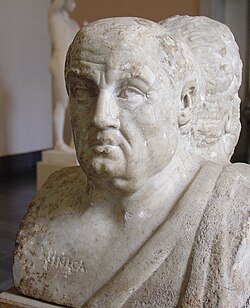
To consort with the crowd is harmful; there is no person who does not make some vice attractive to us, or stamp it upon us, or taint us unconsciously therewith.
If the public thought elevates you above the generality of men, let the other humble you, and hold you in a perfect equality with all mankind, for this is your natural condition.
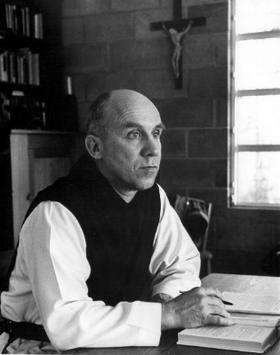
We are so obsessed with doing that we have no time and no imagination left for being. As a result, men are valued not for what they are but for what they do or what they have.
There are some men who expose themselves to damnation so foolishly by avarice, by brutality, by debauches, by violence, by excesses, by blasphemies! ...it is always a great folly for a man to expose himself to damnation... He must despise desire and its kingdom, and aspire to that kingdom of love in which all the subjects breathe nothing but love, and desire nothing but the benefits of love.
The pursuit of wealth generally diverts men of great talents and strong passions from the pursuit of power; and it frequently happens that a man does not undertake to direct the fortunes of the state until he has shown himself incompetent to conduct his own.
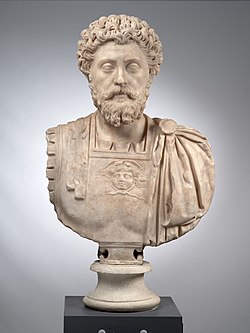
It never ceases to amaze me: we all love ourselves more than other people, but care more about their opinions than our own.

He whose intellect overcomes his desire is higher than the angels; he whose desire overcomes his intellect is less than an animal.

You will hear every day the maxims of a low prudence. You will hear, that the first duty is to get land and money, place and name. "What is this Truth you seek? What is this Beauty?" men will ask, with derision. If, nevertheless, God have called any of you to explore truth and beauty, be bold, be firm, be true. When you shall say, "As others do, so will I. I renounce, I am sorry for it, my early visions; I must eat the good of the land, and let learning and romantic expectations go, until a more convenient season." — then dies the man in you; then once more perish the buds of art, and poetry, and science, as they have died already in a thousand thousand men. The hour of that choice is the crisis of your history; and see that you hold yourself fast by the intellect. ... Bend to the persuasion which is flowing to you from every object in Nature, to be its tongue to the heart of man, and to show the besotted world how passing fair is wisdom.
No society can surely be flourishing and happy, of which the greater part of the members are poor and miserable. It is but equity, besides, that they who feed, cloath and lodge the whole body of the people, should have such a share of the produce of their own labour as to be themselves tolerably well fed, clothed, and lodged.