
The only real, dignified, human doctrine is the greatest good of all, and this can only be achieved by uttermost self-sacrifice.

“When the happiness or misery of others depends in any respect upon our conduct, we dare not, as self–love might suggest to us, prefer the interest of one to that of many. The man within immediately calls to us, that we value ourselves too much and other people too little, and that, by doing so, we render ourselves the proper object of the contempt and indignation of our brethren. Neither is this sentiment confined to men of extraordinary magnanimity and virtue. It is deeply impressed upon every tolerably good soldier, who feels that he would become the scorn of his companions, if he could be supposed capable of shrinking from danger, or of hesitating, either to expose or to throw away his life, when the good of the service required it.”
The only real, dignified, human doctrine is the greatest good of all, and this can only be achieved by uttermost self-sacrifice.
Every man is, no doubt, by nature, first and principally recommended to his own care; and as he is fitter to take care of himself than of any other person, it is fit and right that it should be so.

We must see that there is civic honesty, civic cleanliness, civic good sense in our home administration of city, State, and nation. We must strive for honesty in office, for honesty toward the creditors of the nation and of the individual; for the widest freedom of individual initiative where possible, and for the wisest control of individual initiative where it is hostile to the welfare of the many. But because we set our own household in order we are not thereby excused from playing our part in the great affairs of the world. A man's first duty is to his own home, but he is not thereby excused from doing his duty to the State; for if he fails in this second duty it is under the penalty of ceasing to be a freeman. In the same way, while a nation's first duty is within its own borders, it is not thereby absolved from facing its duties in the world as a whole; and if it refuses to do so, it merely forfeits its right to struggle for a place among the peoples that shape the destiny of mankind.

We must know what we think and speak out, even at the risk of unpopularity. In the final analysis, a democratic government represents the sum total of the courage and the integrity of its individuals. It cannot be better than they are. … In the long run there is no more exhilarating experience than to determine one's position, state it bravely and then act boldly.
The people as a whole can be benefited morally and materially by a system which shall permit of ample reward for exceptional efficiency, but which shall nevertheless secure to the average man, who does his work faithfully and well, the reward to which he is entitled. Remember that I speak only of the man who does his work faithfully and well. The man who shirks his work, who is lazy or vicious, or even merely incompetent, deserves scant consideration; we may be sorry for his family, but it is folly to waste sympathy on the man himself; and it is also folly for sentimentalists to try to shift the burden of blame from such a man himself to “society” and it is an outrage to give him the reward given to his hard-working, upright, and efficient brother. Still less should we waste sympathy on the criminal; there are altogether too many honest men who need it; and one chief point in dealing with the criminal should be to make him understand that he will be in personal peril if he becomes a lawbreaker. I realize entirely that in the last analysis, with the nation as with the individual, it is private character that counts for most. It is because of this realization that I gladly lay myself open to the charge that I preach too much, and dwell too much upon moral commonplaces; for though I believe with all my heart in the nationalization of this Nation—in the collective use on behalf of the American people of the governmental powers which can be derived only from the American people as a whole—yet I believe even more in the practical application by the individual of those great fundamental moralities.

In democratic ages men rarely sacrifice themselves for another, but they show a general compassion for all the human race. One never sees them inflict pointless suffering, and they are glad to relieve the sorrows of others when they can do so without much trouble to themselves. They are not disinterested, but they are gentle.

When bad men combine, the good must associate; else they will fall one by one, an unpitied sacrifice in a contemptible struggle. It is not enough in a situation of trust in the commonwealth, that a man means well to his country; it is not enough that in his single person he never did an evil act, but always voted according to his conscience, and even harangued against every design which he apprehended to be prejudicial to the interests of his country. This innoxious and ineffectual character, that seems formed upon a plan of apology and disculpation, falls miserably short of the mark of publick duty. That duty demands and requires, that what is right should not only be made known, but made prevalent; that what is evil should not only be detected, but defeated. When the publick man omits to put himself in a situation of doing his duty with effect, it is an omission that frustrates the purposes of his trust almost as much as if he had formally betrayed it.
How selfish soever man may be supposed, there are evidently some principles in his nature, which interest him in the fortune of others, and render their happiness necessary to him, though he derives nothing from it except the pleasure of seeing it.

When one cultivates to the utmost the principles of his nature, and exercises them on the principle of reciprocity, he is not far from the path. What you do not like when done to yourself, do not do to others.

Just practice good, do good for others, without thinking of making yourself known so that you may gain reward. Really bring benefit to others, gaining nothing for yourself. This is the primary requisite for breaking free of attachments to the Self.

Thus is the problem of Rich and Poor to be solved. The laws of accumulation will be left free; the laws of distribution free. Individualism will continue, but the millionaire will be but a trustee of the poor; intrusted for a season with a great part of the increased wealth of the community, but administering it for the community far better than it could or would have done for itself. (pp. 663-664)
The first requisite of a good citizen in this Republic of ours is that he shall be able and willing to pull his weight; that he shall not be a mere passenger, but shall do his share in the work that each generation of us finds ready to hand; and, furthermore, that in doing his work he shall show, not only the capacity for sturdy self-help, but also self-respecting regard for the rights of others.

Men never do good unless necessity drives them to it; but when they are free to choose and can do just as they please, confusion and disorder become rampant.

The needs of a human being are sacred. Their satisfaction cannot be subordinated either to reasons of state, or to any consideration of money, nationality, race, or colour, or to the moral or other value attributed to the human being in question, or to any consideration whatsoever. There is no legitimate limit to the satisfaction of the needs of a human being except as imposed by necessity and by the needs of other human beings. The limit is only legitimate if the needs of all human beings receive an equal degree of attention.
To be popular is easy; to be right when right is unpopular, is noble... I repudiate with scorn the immoral doctrine, 'Our country, right or wrong'.
There are good men and bad men of all nationalities, creeds and colors; and if this world of ours is ever to become what we hope some day it may become, it must be by the general recognition that the man's heart and soul, the man's worth and actions, determine his standing.

Every individual matters. Every individual has a role to play. Every individual makes a difference.
But what is liberty without wisdom, and without virtue? It is the greatest of all possible evils; for it is folly, vice, and madness, without tuition or restraint.
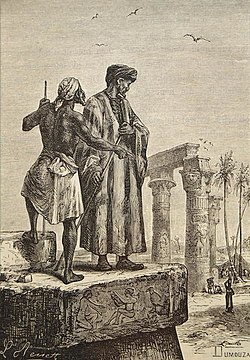
The inhabitants of these islands are the most hospitable people I have ever encountered; they give freely of what they possess, asking nothing in return.
We but mirror the world. All the tendencies present in the outer world are to be found in the world of our body. If we could change ourselves, the tendencies in the world would also change.
If we stand idly by, if we seek merely swollen, slothful ease and ignoble peace, if we shrink from the hard contests where men must win at hazard of their lives and at the risk of all they hold dear, then the bolder and stronger peoples will pass us by, and will win for themselves the domination of the world. Let us therefore boldly face the life of strife, resolute to do our duty well and manfully; resolute to uphold righteousness by deed and by word; resolute to be both honest and brave, to serve high ideals, yet to use practical methods. Above all, let us shrink from no strife, moral or physical, within or without the nation, provided we are certain that the strife is justified, for it is only through strife, through hard and dangerous endeavor, that we shall ultimately win the goal of true national greatness.

We are obligated to be more scrupulous in fulfilling the commandment of charity than any other positive commandment because charity is the sign of a righteous man.
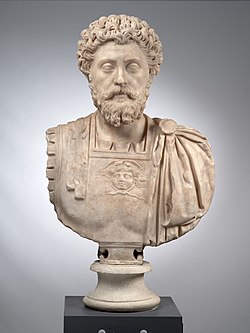
In the morning when thou risest unwillingly, let this thought be present — I am rising to the work of a human being.
We must ever bear in mind that the great end in view is righteousness, justice as between man and man, nation and nation, the chance to lead our lives on a somewhat higher level, with a broader spirit of brotherly goodwill one for another. Peace is generally good in itself, but it is never the highest good unless it comes as the handmaid of righteousness; and it becomes a very evil thing if it serves merely as a mask for cowardice and sloth, or as an instrument to further the ends of despotism or anarchy. We despise and abhor the bully, the brawler, the oppressor, whether in private or public life, but we despise no less the coward and the voluptuary. No man is worth calling a man who will not fight rather than submit to infamy or see those that are dear to him suffer wrong. No nation deserves to exist if it permits itself to lose the stern and virile virtues; and this without regard to whether the loss is due to the growth of a heartless and all-absorbing commercialism, to prolonged indulgence in luxury and soft, effortless ease, or to the deification of a warped and twisted sentimentality.

We are covered by the American banner; let us cling to it, and if required, sacrifice our lives defending it.