
The problem of our age is the proper administration of wealth, so that the ties of brotherhood may still bind together the rich and poor in harmonious relationship.

“No society can surely be flourishing and happy, of which the greater part of the members are poor and miserable. It is but equity, besides, that they who feed, cloath and lodge the whole body of the people, should have such a share of the produce of their own labour as to be themselves tolerably well fed, clothed, and lodged.”
The problem of our age is the proper administration of wealth, so that the ties of brotherhood may still bind together the rich and poor in harmonious relationship.

Practical equality of opportunity for all citizens, when we achieve it, will have two great results. First, every man will have a fair chance to make of himself all that in him lies; to reach the highest point to which his capacities, unassisted by special privilege of his own and unhampered by the special privilege of others, can carry him, and to get for himself and his family substantially what he has earned. Second, equality of opportunity means that the commonwealth will get from every citizen the highest service of which he is capable. No man who carries the burden of the special privileges of another can give to the commonwealth that service to which it is fairly entitled.
We of the great modern democracies must strive unceasingly to make our several countries lands in which a poor man who works hard can live comfortably and honestly, and in which a rich man cannot live dishonestly nor in slothful avoidance of duty; and yet we must judge rich man and poor man alike by a standard which rests on conduct and not on caste, and we must frown with the same stern severity on the mean and vicious envy which hates and would plunder a man because he is well off and on the brutal and selfish arrogance which looks down on and exploits the man with whom life has gone hard.
I believe that material wealth is an exceedingly valuable servant, and a particularly abhorrent master, in our National life. I think one end of government should be to achieve prosperity; but it should follow this end chiefly to serve an even higher and more important end - that of promoting the character and welfare of the average man. In the long run, and inevitably, the actual control of the government will be determined by the chief end which the government subserves. If the end and aim of government action is merely to accumulate general material prosperity, treating such prosperity as an end in itself and not as a means, then it is inevitable that material wealth and the masters of that wealth will dominate and control the course of national action. If, on the other hand, the achievement of material wealth is treated, not as an end of government, but as a thing of great value, it is true—so valuable as to be indispensable—but of value only in connection with the achievement of other ends, then we are free to seek through our government, and through the supervision of our individual activities, the realization of a true democracy. Then we are free to seek not only the heaping up of material wealth, but a wise and generous distribution of such wealth so as to diminish grinding poverty, and, so far as may be, to equalize social and economic no less than political opportunity.
I stand for the square deal. But when I say that I am for the square deal, I mean not merely that I stand for fair play under the present rules of the game, but that I stand for having those rules changed so as to work for a more substantial equality of opportunity and of reward for equally good service. One word of warning, which, I think, is hardly necessary in Kansas. When I say I want a square deal for the poor man, I do not mean that I want a square deal for the man who remains poor because he has not got the energy to work for himself. If a man who has had a chance will not make good, then he has got to quit. And you men of the Grand Army, you want justice for the brave man who fought, and punishment for the coward who shirked his work. Is that not so?

I know of no country, indeed, where the love of money has taken stronger hold on the affections of men, and where the profounder contempt is expressed for the theory of the permanent equality of property.
Such, in my opinion, is the true Gospel concerning Wealth, obedience to which is destined some day to solve the problem of the Rich and the Poor, and to bring "Peace on earth, among men Good Will."
The people as a whole can be benefited morally and materially by a system which shall permit of ample reward for exceptional efficiency, but which shall nevertheless secure to the average man, who does his work faithfully and well, the reward to which he is entitled. Remember that I speak only of the man who does his work faithfully and well. The man who shirks his work, who is lazy or vicious, or even merely incompetent, deserves scant consideration; we may be sorry for his family, but it is folly to waste sympathy on the man himself; and it is also folly for sentimentalists to try to shift the burden of blame from such a man himself to “society” and it is an outrage to give him the reward given to his hard-working, upright, and efficient brother. Still less should we waste sympathy on the criminal; there are altogether too many honest men who need it; and one chief point in dealing with the criminal should be to make him understand that he will be in personal peril if he becomes a lawbreaker. I realize entirely that in the last analysis, with the nation as with the individual, it is private character that counts for most. It is because of this realization that I gladly lay myself open to the charge that I preach too much, and dwell too much upon moral commonplaces; for though I believe with all my heart in the nationalization of this Nation—in the collective use on behalf of the American people of the governmental powers which can be derived only from the American people as a whole—yet I believe even more in the practical application by the individual of those great fundamental moralities.

Be ever active in the management of the economy, because the root of wealth is economic activity; inactivity brings material distress.
The willfully idle man, like the willfully barren woman, has no place in a sane, healthy, and vigorous community. Moreover, the gross and hideous selfishness for which each stands defeats even its own miserable aims. Exactly as infinitely the happiest woman is she who has borne and brought up many healthy children, so infinitely the happiest man is he who has toiled hard and successfully in his life-work. The work may be done in a thousand different ways —with the brain or the hands, in the study, the field, or the workshop—if it is honest work, honestly done and well worth doing, that is all we have a right to ask. Every father and mother here, if they are wise, will bring up their children not to shirk difficulties, but to meet them and overcome them; not to strive after a life of ignoble ease, but to strive to do their duty, first to themselves and their families, and then to the whole state; and this duty must inevitably take the shape of work in some form or other.

The only real, dignified, human doctrine is the greatest good of all, and this can only be achieved by uttermost self-sacrifice.
Our country—this great republic—means nothing unless it means the triumph of a real democracy, the triumph of popular government, and, in the long run, of an economic system under which each man shall be guaranteed the opportunity to show the best that there is in him.
I don't pity any man who does hard work worth doing. I admire him. I pity the creature who does not work, at whichever end of the social scale he may regard himself as being.
The liberal reward of labour, therefore, as it is the affect of increasing wealth, so it is the cause of increasing population. To complain of it, is to lament over the necessary effect and cause of the greatest public prosperity.

The needs of a human being are sacred. Their satisfaction cannot be subordinated either to reasons of state, or to any consideration of money, nationality, race, or colour, or to the moral or other value attributed to the human being in question, or to any consideration whatsoever. There is no legitimate limit to the satisfaction of the needs of a human being except as imposed by necessity and by the needs of other human beings. The limit is only legitimate if the needs of all human beings receive an equal degree of attention.
What can be added to the happiness of a man who is in health, out of debt, and has a clear conscience?
Thus is the problem of Rich and Poor to be solved. The laws of accumulation will be left free; the laws of distribution free. Individualism will continue, but the millionaire will be but a trustee of the poor; intrusted for a season with a great part of the increased wealth of the community, but administering it for the community far better than it could or would have done for itself. (pp. 663-664)
How selfish soever man may be supposed, there are evidently some principles in his nature, which interest him in the fortune of others, and render their happiness necessary to him, though he derives nothing from it except the pleasure of seeing it.
No country can long endure if its foundations are not laid deep in the material prosperity which comes from thrift, from business energy and enterprise, from hard, unsparing effort in the fields of industrial activity; but neither was any nation ever yet truly great if it relied upon material prosperity alone. All honor must be paid to the architects of our material prosperity, to the great captains of industry who have built our factories and our railroads, to the strong men who toil for wealth with brain or hand; for great is the debt of the nation to these and their kind. But our debt is yet greater to the men whose highest type is to be found in a statesman like Lincoln, a soldier like Grant. They showed by their lives that they recognized the law of work, the law of strife; they toiled to win a competence for themselves and those dependent upon them; but they recognized that there were yet other and even loftier duties—duties to the nation and duties to the race. We cannot sit huddled within our own borders and avow ourselves merely an assemblage of well-to-do hucksters who care nothing for what happens beyond. Such a policy would defeat even its own end; for as the nations grow to have ever wider and wider interests, and are brought into closer and closer contact, if we are to hold our own in the struggle for naval and commercial supremacy, we must build up our power without our own borders. We must build the Isthmian Canal, and we must grasp the points of vantage which will enable us to have our say in deciding the destiny of the oceans of the East and the West.
A mere life of ease is not in the end a very satisfactory life, and, above all, it is a life which ultimately unfits those who follow it for serious work in the world. In the last analysis a healthy state can exist only when the men and women who make it up lead clean, vigorous, healthy lives; when the children are so trained that they shall endeavor, not to shirk difficulties, but to overcome them; not to seek ease, but to know how to wrest triumph from toil and risk.
There is in fact a manly and legitimate passion for equality that spurs all men to wish to be strong and esteemed. This passion tends to elevate the lesser to the rank of the greater. But one also finds in the human heart a depraved taste for equality, which impels the weak to want to bring the strong down to their level, and which reduces men to preferring equality in servitude to inequality in freedom.
In our complex industrial civilization of today the peace of righteousness and justice, the only kind of peace worth having, is at least as necessary in the industrial world as it is among nations. There is at least as much need to curb the cruel greed and arrogance of part of the world of capital, to curb the cruel greed and violence of part of the world of labor, as to check a cruel and unhealthy militarism in international relationships.

Every individual matters. Every individual has a role to play. Every individual makes a difference.
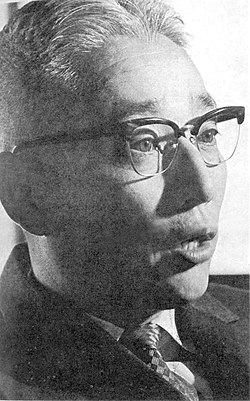
..I believe it is a big mistake to think that money is the only way to compensate a person for his work. People need money, but they also want to be happy in their work and proud of it.
The natural effort of every individual to better his own condition, when suffered to exert itself with freedom and security is so powerful a principle that it is alone, and without any assistance, not only capable of carrying on the society to wealth and prosperity, but of surmounting a hundred impertinent obstructions with which the folly of human laws too often incumbers its operations; though the effect of these obstructions is always more or less either to encroach upon its freedom, or to diminish its security.