
Echoes
William Osler
1901
“To study the phenomenon of disease without books is to sail an uncharted sea, while to study books without patients is not to go to sea at all.”
❧

The cure of many diseases is unknown to physicians of Hellas, because they are ignorant of the whole, which ought to be studied also; for the part can never be well unless the whole is well.
Medicine is a science of uncertainty and an art of probability.

I have been impressed with the urgency of doing. Knowing is not enough; we must apply.
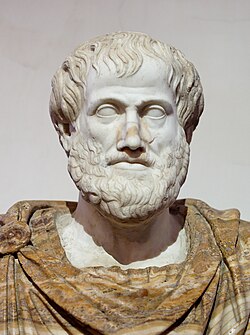
It is well said, then, that it is by doing just acts that the just man is produced, and by doing temperate acts the temperate man; without doing these no one would have even a prospect of becoming good. But most people do not do these, but take refuge in theory and think they are being philosophers and will become good in this way, behaving somewhat like patients who listen attentively to their doctors, but do none of the things they are ordered to do.
In every systematic inquiry where there are first principles, or causes, or elements, knowledge and science result from acquiring knowledge of these.

A wise man should consider that health is the greatest of human blessings, and learn how by his own thought to derive benefit from his illnesses.

Learn about pines from the pine, and about bamboo from the bamboo.
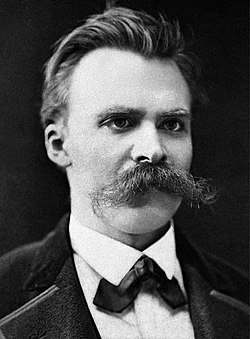
We do not belong to those who have ideas only among books, when stimulated by books. It is our habit to think outdoors — walking, leaping, climbing, dancing.

Example is the best lesson there is.

The physician should not treat the disease but the patient who is suffering from it.

You've got to have models in your head. And you've got to array your experience — both vicarious and direct — on this latticework of models.

Come forth into the light of things, let Nature be your teacher.
If we could give every individual the right amount of nourishment and exercise, not too little and not too much, we would have found the safest way to health.

Cherish that which is within you, and shut off that which is without; for much knowledge is a curse.
As long as a person exercises, exerts himself greatly, does not eat to the point of being overly full, and keeps his bowels soft, illness will not come upon him and his strength will increase.
Anyone who lives a sedentary life and does not exercise, even if he eats good foods and takes care of himself according to proper medical principles — all his days will be painful ones and his strength shall wane.

Do not go by revelation; Do not go by tradition; Do not go by hearsay; Do not go on the authority of sacred texts; Do not go on the grounds of pure logic; Do not go by a view that seems rational; Do not go by reflecting on mere appearances; Do not go along with a considered view because you agree with it; Do not go along on the grounds that the person is competent; Do not go along because "the recluse is our teacher." Kalamas, when you yourselves know: These things are unwholesome, these things are blameworthy; these things are censured by the wise; and when undertaken and observed, these things lead to harm and ill, abandon them... Kalamas, when you know for yourselves: These are wholesome; these things are not blameworthy; these things are praised by the wise; undertaken and observed, these things lead to benefit and happiness, having undertaken them, abide in them.

To explain all nature is too difficult a task for any one man or even for any one age. 'Tis much better to do a little with certainty, & leave the rest for others that come after you, than to explain all things by conjecture without making sure of any thing.
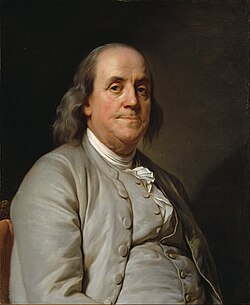
Tell me and I forget, teach me and I may remember, involve me and I learn.

Read not to contradict and confute; nor to believe and take for granted; nor to find talk and discourse; but to weigh and consider.

You cannot stay on the summit forever; you have to come down again. So why bother in the first place? Just this: what is above knows what is below, but what is below does not know what is above. One climbs, one sees. One descends, one sees no longer, but one has seen. There is an art of conducting oneself in the lower regions by the memory of what one saw higher up. When one can no longer see, one can at least still know.
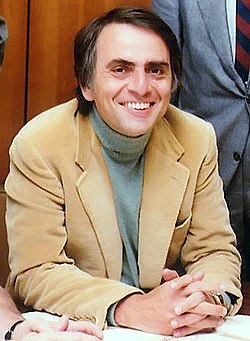
The truth may be puzzling. It may take some work to grapple with. It may be counterintuitive. It may contradict deeply held prejudices. It may not be consonant with what we desperately want to be true. But our preferences do not determine what's true. We have a method, and that method helps us to reach not absolute truth, only asymptotic approaches to the truth — never there, just closer and closer, always finding vast new oceans of undiscovered possibilities. Cleverly designed experiments are the key.
There is more wisdom in your body than in your deepest philosophy.

Only if we understand can we care. Only if we care will we help. Only if we help shall they be saved.