
The fault is in the one who blames. Spirit sees nothing to criticize.

“The writers against religion, whilst they oppose every system, are wisely careful never to set up any of their own.”
The fault is in the one who blames. Spirit sees nothing to criticize.

Do not go by revelation; Do not go by tradition; Do not go by hearsay; Do not go on the authority of sacred texts; Do not go on the grounds of pure logic; Do not go by a view that seems rational; Do not go by reflecting on mere appearances; Do not go along with a considered view because you agree with it; Do not go along on the grounds that the person is competent; Do not go along because "the recluse is our teacher." Kalamas, when you yourselves know: These things are unwholesome, these things are blameworthy; these things are censured by the wise; and when undertaken and observed, these things lead to harm and ill, abandon them... Kalamas, when you know for yourselves: These are wholesome; these things are not blameworthy; these things are praised by the wise; undertaken and observed, these things lead to benefit and happiness, having undertaken them, abide in them.

If anyone tells you that a certain person speaks ill of you, do not make excuses about what is said of you, but answer: He was ignorant of my other faults, else he would not have mentioned these alone.

To sit home, read one's favorite paper, and scoff at the misdeeds of the men who do things is easy, but it is markedly ineffective. It is what evil men count upon the good men's doing.
If pretended revelations have caused wars where they were opposed, and slavery where they were received, the pretended wise inventions of politicians have done the same. But the slavery has been much heavier, the wars far more bloody, and both more universal by many degrees. Show me any mischief produced by the madness or wickedness of theologians, and I will show you an hundred resulting from the ambition and villany of conquerors and statesmen. Show me an absurdity in religion, and I will undertake to show you an hundred for one in political laws and institutions. If you say, that natural religion is a sufficient guide without the foreign aid of revelation, on what principle should political laws become necessary? Is not the same reason available in theology and in politics? If the laws of nature are the laws of God, is it consistent with the Divine wisdom to prescribe rules to us, and leave the enforcement of them to the folly of human institutions? Will you follow truth but to a certain point?

All formal dogmatic religions are fallacious and must never be accepted by self-respecting persons as final.

Read not to contradict and confute; nor to believe and take for granted; nor to find talk and discourse; but to weigh and consider.

For nonconformity the world whips you with its displeasure. And therefore a man must know how to estimate a sour face.

There is no area in our minds reserved for superstition, such as the Greeks had in their mythology; and superstition, under cover of an abstract vocabulary, has revenged itself by invading the entire realm of thought. Our science is like a store filled with the most subtle intellectual devices for solving the most complex problems, and yet we are almost incapable of applying the elementary principles of rational thought. In every sphere, we seem to have lost the very elements of intelligence: the ideas of limit, measure, degree, proportion, relation, comparison, contingency, interdependence, interrelation of means and ends. To keep to the social level, our political universe is peopled exclusively by myths and monsters; all it contains is absolutes and abstract entities. This is illustrated by all the words of our political and social vocabulary: nation, security, capitalism, communism, fascism, order, authority, property, democracy. We never use them in phrases such as: There is democracy to the extent that... or: There is capitalism in so far as... The use of expressions like "to the extent that" is beyond our intellectual capacity. Each of these words seems to represent for us an absolute reality, unaffected by conditions, or an absolute objective, independent of methods of action, or an absolute evil; and at the same time we make all these words mean, successively or simultaneously, anything whatsoever. Our lives are lived, in actual fact, among changing, varying realities, subject to the casual play of external necessities, and modifying themselves according to specific conditions within specific limits; and yet we act and strive and sacrifice ourselves and others by reference to fixed and isolated abstractions which cannot possibly be related either to one another or to any concrete facts. In this so-called age of technicians, the only battles we know how to fight are battles against windmills.

It ought to be remembered that there is nothing more difficult to take in hand, more perilous to conduct, or more uncertain in its success, than to take the lead in the introduction of a new order of things. Because the innovator has for enemies all those who have done well under the old conditions, and lukewarm defenders in those who may do well under the new. This coolness arises partly from fear of the opponents, who have the laws on their side, and partly from the incredulity of men, who do not readily believe in new things until they have had a long experience of them.

Re-examine all you have been told. Dismiss whatever insults your own soul.

It is not a dream, it is a simple feat of scientific electrical engineering, only expensive — blind, faint-hearted, doubting world! . . . Humanity is not yet sufficiently advanced to be willingly led by the discover's keen searching sense. But who knows? Perhaps it is better in this present world of ours that a revolutionary idea or invention instead of being helped and patted, be hampered and ill-treated in its adolescence — by want of means, by selfish interest, pedantry, stupidity and ignorance; that it be attacked and stifled; that it pass through bitter trials and tribulations, through the heartless strife of commercial existence. So do we get our light. So all that was great in the past was ridiculed, condemned, combated, suppressed — only to emerge all the more powerfully, all the more triumphantly from the struggle.
A foolish consistency is the hobgoblin of little minds, adored by little statesmen and philosophers and divines. With consistency a great soul has simply nothing to do.
I like a church, I like a cowl, I love a prophet of the soul, And on my heart monastic aisles Fall like sweet strains or pensive smiles; Yet not for all his faith can see, Would I that cowled churchman be. Why should the vest on him allure, Which I could not on me endure?

Great truths do not take hold of the hearts of the masses...And now, as all the world is in error, I, though I know the true path,—how shall I guide? If I know that I cannot succeed and yet try to force success, this would be but another source of error. Better, then, to desist and strive no more. But if I strive not, who will?
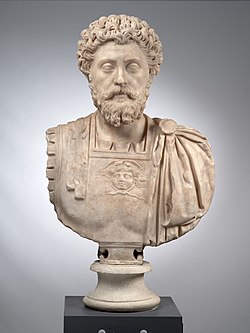
When another blames you or hates you, or people voice similar criticisms, go to their souls, penetrate inside and see what sort of people they are. You will realize that there is no need to be racked with anxiety that they should hold any particular opinion about you.

If we want to improve the world we cannot do it with scientific knowledge but with ideals. Confucius, Buddha, Jesus and Gandhi have done more for humanity than science has done. We must begin with the heart of man—with his conscience—and the values of conscience can only be manifested by selfless service to mankind. In this respect, I feel that the Churches have much guilt. She has always allied herself with those who rule, who have political power, and more often than not, at the expense of peace and humanity as a whole.
It is both foolish and wicked to teach the average man who is not well off that some wrong or injustice has been done him, and that he should hope for redress elsewhere than in his own industry, honesty and intelligence.

Do what you feel in your heart to be right — for you'll be criticized anyway. You'll be "damned if you do, and damned if you don't."
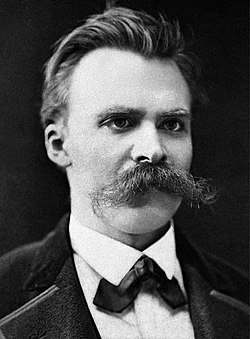
Here the ways of men part: if you wish to strive for peace of soul and pleasure, then believe; if you wish to be a devotee of truth, then inquire.

Should it be proved that woman is naturally weaker than man, from whence does it follow that it is natural for her to labour to become still weaker than nature intended her to be? Arguments of this cast are an insult to common sense, and savour of passion. The divine right of husbands, like the divine right of kings, may, it is to be hoped, in this enlightened age, be contested without danger, and though conviction may not silence many boisterous disputants, yet, when any prevailing prejudice is attacked, the wise will consider, and leave the narrow-minded to rail with thoughtless vehemence at innovation.

I cannot help fearing that men may reach a point where they look on every new theory as a danger, every innovation as a toilsome trouble, every social advance as a first step toward revolution, and that they may absolutely refuse to move at all.

The moral flabbiness born of the exclusive worship of the bitch-goddess SUCCESS. That — with the squalid cash interpretation put on the word success — is our national disease.
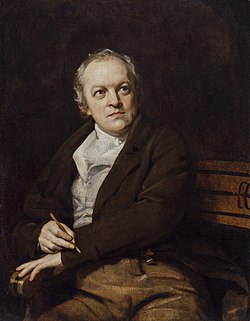
I must create a system, or be enslaved by another man's; I will not Reason and Compare: my business is to Create.

If your daily life seems poor, do not blame it; blame yourself, tell yourself that you are not poet enough to call forth its riches.