HomeSearchEssaysCollected
Nobody
@ephemeral

Today's News

What's happening

Who to follow

Degen Dave
Degen Dave
@DegenDave_
Tucker Gaines
Tucker Gaines
@TuckerGaines_
Senobia of Antioch
Senobia of Antioch
@SenobaStargazer

Echoes

Source
Edmund Burke
Edmund Burke
1756

“If pretended revelations have caused wars where they were opposed, and slavery where they were received, the pretended wise inventions of politicians have done the same. But the slavery has been much heavier, the wars far more bloody, and both more universal by many degrees. Show me any mischief produced by the madness or wickedness of theologians, and I will show you an hundred resulting from the ambition and villany of conquerors and statesmen. Show me an absurdity in religion, and I will undertake to show you an hundred for one in political laws and institutions. If you say, that natural religion is a sufficient guide without the foreign aid of revelation, on what principle should political laws become necessary? Is not the same reason available in theology and in politics? If the laws of nature are the laws of God, is it consistent with the Divine wisdom to prescribe rules to us, and leave the enforcement of them to the folly of human institutions? Will you follow truth but to a certain point?”

❧
Albert Einstein
Albert Einstein
·1950

If we want to improve the world we cannot do it with scientific knowledge but with ideals. Confucius, Buddha, Jesus and Gandhi have done more for humanity than science has done. We must begin with the heart of man—with his conscience—and the values of conscience can only be manifested by selfless service to mankind. In this respect, I feel that the Churches have much guilt. She has always allied herself with those who rule, who have political power, and more often than not, at the expense of peace and humanity as a whole.

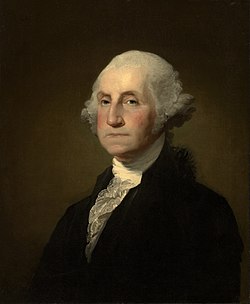
George Washington
George Washington
·1796

Of all the dispositions and habits, which lead to political prosperity, Religion and Morality are indispensable supports. In vain would that man claim the tribute of Patriotism, who should labor to subvert these great pillars of human happiness, these firmest props of the duties of Men and Citizens. The mere Politician, equally with the pious man, ought to respect and to cherish them. A volume could not trace all their connexions with private and public felicity.

Edmund Burke
Edmund Burke
·1756

The writers against religion, whilst they oppose every system, are wisely careful never to set up any of their own.

John Adams
John Adams
·1776

Statesmen, my dear Sir, may plan and speculate for Liberty, but it is Religion and Morality alone, which can establish the Principles upon which Freedom can securely stand. The only foundation of a free Constitution is pure Virtue, and if this cannot be inspired into our People in a greater Measure than they have it now, They may change their Rulers and the forms of Government, but they will not obtain a lasting Liberty. They will only exchange Tyrants and Tyrannies.

Alexis de Tocqueville
·1831

The best laws cannot make a constitution work in spite of morals; morals can turn the worst laws to advantage. That is a commonplace truth, but one to which my studies are always bringing me back. It is the central point in my conception. I see it at the end of all my reflections.

George Washington
George Washington
·1796

Let us with caution indulge the supposition, that morality can be maintained without religion. Whatever may be conceded to the influence of refined education on minds of peculiar structure, reason and experience both forbid us to expect, that national morality can prevail in exclusion of religious principle.

Simone Weil
Simone Weil
·1937

There is no area in our minds reserved for superstition, such as the Greeks had in their mythology; and superstition, under cover of an abstract vocabulary, has revenged itself by invading the entire realm of thought. Our science is like a store filled with the most subtle intellectual devices for solving the most complex problems, and yet we are almost incapable of applying the elementary principles of rational thought. In every sphere, we seem to have lost the very elements of intelligence: the ideas of limit, measure, degree, proportion, relation, comparison, contingency, interdependence, interrelation of means and ends. To keep to the social level, our political universe is peopled exclusively by myths and monsters; all it contains is absolutes and abstract entities. This is illustrated by all the words of our political and social vocabulary: nation, security, capitalism, communism, fascism, order, authority, property, democracy. We never use them in phrases such as: There is democracy to the extent that... or: There is capitalism in so far as... The use of expressions like "to the extent that" is beyond our intellectual capacity. Each of these words seems to represent for us an absolute reality, unaffected by conditions, or an absolute objective, independent of methods of action, or an absolute evil; and at the same time we make all these words mean, successively or simultaneously, anything whatsoever. Our lives are lived, in actual fact, among changing, varying realities, subject to the casual play of external necessities, and modifying themselves according to specific conditions within specific limits; and yet we act and strive and sacrifice ourselves and others by reference to fixed and isolated abstractions which cannot possibly be related either to one another or to any concrete facts. In this so-called age of technicians, the only battles we know how to fight are battles against windmills.

Henry David Thoreau
Henry David Thoreau
·1863

Do we call this the land of the free? What is it to be free from King George and continue the slaves of King Prejudice? What is it to be born free and not to live free? What is the value of any political freedom, but as a means to moral freedom? Is it a freedom to be slaves, or a freedom to be free, of which we boast? We are a nation of politicians, concerned about the outmost defences only of freedom. It is our children's children who may perchance be really free.

Theodore Roosevelt
Theodore Roosevelt
·1910

We must ever bear in mind that the great end in view is righteousness, justice as between man and man, nation and nation, the chance to lead our lives on a somewhat higher level, with a broader spirit of brotherly goodwill one for another. Peace is generally good in itself, but it is never the highest good unless it comes as the handmaid of righteousness; and it becomes a very evil thing if it serves merely as a mask for cowardice and sloth, or as an instrument to further the ends of despotism or anarchy. We despise and abhor the bully, the brawler, the oppressor, whether in private or public life, but we despise no less the coward and the voluptuary. No man is worth calling a man who will not fight rather than submit to infamy or see those that are dear to him suffer wrong. No nation deserves to exist if it permits itself to lose the stern and virile virtues; and this without regard to whether the loss is due to the growth of a heartless and all-absorbing commercialism, to prolonged indulgence in luxury and soft, effortless ease, or to the deification of a warped and twisted sentimentality.

Confucius
Confucius
·500 BC

Guide the people by law, subdue them by punishment; they may shun crime, but will be void of shame. Guide them by example, subdue them by courtesy; they will learn shame, and come to be good.

Voltaire
Voltaire
·1770

The reasonable worship of a just God who punishes and rewards, would undoubtedly contribute to the happiness of men; but when that salutary knowledge of a just God is disfigured by absurd lies and dangerous superstitions, then the remedy turns to poison.

Richard Feynman
Richard Feynman
·1956

Western civilization, it seems to me, stands by two great heritages. One is the scientific spirit of adventure — the adventure into the unknown, an unknown which must be recognized as being unknown in order to be explored; the demand that the unanswerable mysteries of the universe remain unanswered; the attitude that all is uncertain; to summarize it — the humility of the intellect. The other great heritage is Christian ethics — the basis of action on love, the brotherhood of all men, the value of the individual — the humility of the spirit. These two heritages are logically, thoroughly consistent. But logic is not all; one needs one's heart to follow an idea. If people are going back to religion, what are they going back to? Is the modern church a place to give comfort to a man who doubts God — more, one who disbelieves in God? Is the modern church a place to give comfort and encouragement to the value of such doubts? So far, have we not drawn strength and comfort to maintain the one or the other of these consistent heritages in a way which attacks the values of the other? Is this unavoidable? How can we draw inspiration to support these two pillars of western civilization so that they may stand together in full vigor, mutually unafraid? Is this not the central problem of our time?

Niccolò Machiavelli
Niccolò Machiavelli
·1513

I say that every prince must desire to be considered merciful and not cruel. He must, however, take care not to misuse this mercifulness. ... A prince, therefore, must not mind incurring the charge of cruelty for the purpose of keeping his subjects united and confident; for, with a very few examples, he will be more merciful than those who, from excess of tenderness, allow disorders to arise, from whence spring murders and rapine; for these as a rule injure the whole community, while the executions carried out by the prince injure only one individual. And of all princes, it is impossible for a new prince to escape the name of cruel, new states being always full of dangers. ... Nevertheless, he must be cautious in believing and acting, and must not inspire fear of his own accord, and must proceed in a temperate manner with prudence and humanity, so that too much confidence does not render him incautious, and too much diffidence does not render him intolerant. From this arises the question whether it is better to be loved more than feared, or feared more than loved. The reply is, that one ought to be both feared and loved, but as it is difficult for the two to go together, it is much safer to be feared than loved, if one of the two has to be wanting. For it may be said of men in general that they are ungrateful, voluble, dissemblers, anxious to avoid danger, and covetous of gain; as long as you benefit them, they are entirely yours; they offer you their blood, their goods, their life, and their children, as I have before said, when the necessity is remote; but when it approaches, they revolt. And the prince who has relied solely on their words, without making other preparations, is ruined, for the friendship which is gained by purchase and not through grandeur and nobility of spirit is merited but is not secured, and at times is not to be had. And men have less scruple in offending one who makes himself loved than one who makes himself feared; for love is held by a chain of obligation which, men being selfish, is broken whenever it serves their purpose; but fear is maintained by a dread of punishment which never fails.

Edmund Burke
Edmund Burke
·1780

Bad laws are the worst sort of tyranny.

Theodore Roosevelt
Theodore Roosevelt
·1900

No country can long endure if its foundations are not laid deep in the material prosperity which comes from thrift, from business energy and enterprise, from hard, unsparing effort in the fields of industrial activity; but neither was any nation ever yet truly great if it relied upon material prosperity alone. All honor must be paid to the architects of our material prosperity, to the great captains of industry who have built our factories and our railroads, to the strong men who toil for wealth with brain or hand; for great is the debt of the nation to these and their kind. But our debt is yet greater to the men whose highest type is to be found in a statesman like Lincoln, a soldier like Grant. They showed by their lives that they recognized the law of work, the law of strife; they toiled to win a competence for themselves and those dependent upon them; but they recognized that there were yet other and even loftier duties—duties to the nation and duties to the race. We cannot sit huddled within our own borders and avow ourselves merely an assemblage of well-to-do hucksters who care nothing for what happens beyond. Such a policy would defeat even its own end; for as the nations grow to have ever wider and wider interests, and are brought into closer and closer contact, if we are to hold our own in the struggle for naval and commercial supremacy, we must build up our power without our own borders. We must build the Isthmian Canal, and we must grasp the points of vantage which will enable us to have our say in deciding the destiny of the oceans of the East and the West.

Maimonides
Maimonides

By following entirely the guidance of lust, in the manner of fools, man loses his intellectual energy, injures his body, and perishes before his natural time; sighs and cares multiply; there is an increase of envy, hatred, and warfare, for the purpose of taking what another possesses. The cause of all this is the circumstance that the ignorant considers physical enjoyment as an object to be sought for its own sake. God in His wisdom has therefore given us such commandments as would counteract that object, and prevent us altogether from directing our attention to it, and has debarred us from everything that leads only to excessive desire and to lust. This is an important thing included in the objects of our Law.

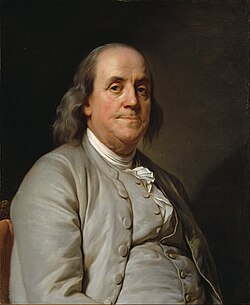
Benjamin Franklin
Benjamin Franklin
·1737

Freedom of speech is a principal pillar of a free government; when this support is taken away, the constitution of a free society is dissolved, and tyranny is erected on its ruins. Republics and limited monarchies derive their strength and vigor from a popular examination into the action of the magistrates.

Alexis de Tocqueville
·1835

The pursuit of wealth generally diverts men of great talents and strong passions from the pursuit of power; and it frequently happens that a man does not undertake to direct the fortunes of the state until he has shown himself incompetent to conduct his own.

Winston Churchill
Winston Churchill
·1947

Many forms of Government have been tried and will be tried in this world of sin and woe. No one pretends that democracy is perfect or all-wise. Indeed, it has been said that democracy is the worst form of government except all those other forms that have been tried from time to time; but there is the broad feeling in our country that the people should rule, continuously rule, and that public opinion, expressed by all constitutional means, should shape, guide, and control the actions of Ministers who are their servants and not their masters.

Hypatia
Hypatia
·415 AD·Alexandria

All formal dogmatic religions are fallacious and must never be accepted by self-respecting persons as final.

Siddhartha Gautama
Siddhartha Gautama

Do not go by revelation; Do not go by tradition; Do not go by hearsay; Do not go on the authority of sacred texts; Do not go on the grounds of pure logic; Do not go by a view that seems rational; Do not go by reflecting on mere appearances; Do not go along with a considered view because you agree with it; Do not go along on the grounds that the person is competent; Do not go along because "the recluse is our teacher." Kalamas, when you yourselves know: These things are unwholesome, these things are blameworthy; these things are censured by the wise; and when undertaken and observed, these things lead to harm and ill, abandon them... Kalamas, when you know for yourselves: These are wholesome; these things are not blameworthy; these things are praised by the wise; undertaken and observed, these things lead to benefit and happiness, having undertaken them, abide in them.

George Washington
George Washington
·1796

It is substantially true, that virtue or morality is a necessary spring of popular government. The rule, indeed, extends with more or less force to every species of free government.

John Adams
John Adams
·1790

Property must be secured, or liberty cannot exist. But if unlimited or unbalanced power of disposing property, be put into the hands of those who have no property, France will find, as we have found, the lamb committed to the custody of the wolf. In such a case, all the pathetic exhortations and addresses of the national assembly to the people, to respect property, will be regarded no more than the warbles of the songsters of the forest. The great art of law-giving consists in balancing the poor against the rich in the legislature, and in constituting the legislative a perfect balance against the executive power, at the same time that no individual or party can become its rival. The essence of a free government consists in an effectual control of rivalries. The executive and the legislative powers are natural rivals; and if each has not an effectual control over the other, the weaker will ever be the lamb in the paws of the wolf. The nation which will not adopt an equilibrium of power must adopt a despotism. There is no other alternative. Rivalries must be controlled, or they will throw all things into confusion; and there is nothing but despotism or a balance of power which can control them.

John Adams
John Adams
·1772

There is danger from all men. The only maxim of a free government ought to be to trust no man living with power to endanger the public liberty.

William James
William James
·1902

To plead the organic causation of a religious state of mind, then, in refutation of its claim to possess superior spiritual value, is quite illogical and arbitrary, unless one have already worked out in advance some psycho-physical theory connecting spiritual values in general with determinate sorts of physiological change. Otherwise none of our thoughts and feelings, not even our scientific doctrines, not even our dis-beliefs, could retain any value as revelations of the truth, for every one of them without exception flows from the state of their possessor's body at the time.