
Guide the people by law, subdue them by punishment; they may shun crime, but will be void of shame. Guide them by example, subdue them by courtesy; they will learn shame, and come to be good.

“People must be governed in a manner agreeable to their temper and disposition; and men of free character and spirit must be ruled with, at least, some condescension to this spirit and this character.”
Guide the people by law, subdue them by punishment; they may shun crime, but will be void of shame. Guide them by example, subdue them by courtesy; they will learn shame, and come to be good.

I say that every prince must desire to be considered merciful and not cruel. He must, however, take care not to misuse this mercifulness. ... A prince, therefore, must not mind incurring the charge of cruelty for the purpose of keeping his subjects united and confident; for, with a very few examples, he will be more merciful than those who, from excess of tenderness, allow disorders to arise, from whence spring murders and rapine; for these as a rule injure the whole community, while the executions carried out by the prince injure only one individual. And of all princes, it is impossible for a new prince to escape the name of cruel, new states being always full of dangers. ... Nevertheless, he must be cautious in believing and acting, and must not inspire fear of his own accord, and must proceed in a temperate manner with prudence and humanity, so that too much confidence does not render him incautious, and too much diffidence does not render him intolerant. From this arises the question whether it is better to be loved more than feared, or feared more than loved. The reply is, that one ought to be both feared and loved, but as it is difficult for the two to go together, it is much safer to be feared than loved, if one of the two has to be wanting. For it may be said of men in general that they are ungrateful, voluble, dissemblers, anxious to avoid danger, and covetous of gain; as long as you benefit them, they are entirely yours; they offer you their blood, their goods, their life, and their children, as I have before said, when the necessity is remote; but when it approaches, they revolt. And the prince who has relied solely on their words, without making other preparations, is ruined, for the friendship which is gained by purchase and not through grandeur and nobility of spirit is merited but is not secured, and at times is not to be had. And men have less scruple in offending one who makes himself loved than one who makes himself feared; for love is held by a chain of obligation which, men being selfish, is broken whenever it serves their purpose; but fear is maintained by a dread of punishment which never fails.

Resolve your mental energy into abstraction, your physical energy into inaction. Allow yourself to fall in with the natural order of phenomena, without admitting the element of self,—and the empire will be governed.
The ancients who wished to illustrate illustrious virtue throughout the Kingdom, first ordered well their own states. Wishing to order well their states, they first regulated their families. Wishing to regulate their families, they first cultivated their persons. Wishing to cultivate their persons, they first rectified their hearts. Wishing to rectify their hearts, they first sought to be sincere in their thoughts. Wishing to be sincere in their thoughts, they first extended to the utmost their knowledge. Such extension of knowledge lay in the investigation of things. Things being investigated, knowledge became complete. Their knowledge being complete, their thoughts were sincere. Their thoughts being sincere, their hearts were then rectified. Their hearts being rectified, their persons were cultivated. Their persons being cultivated, their families were regulated. Their families being regulated, their states were rightly governed. Their states being rightly governed, the whole kingdom was made tranquil and happy. From the Son of Heaven down to the mass of the people, all must consider the cultivation of the person the root of everything besides.

There is danger from all men. The only maxim of a free government ought to be to trust no man living with power to endanger the public liberty.

Water shapes its course according to the nature of the ground over which it flows; the soldier works out his victory in relation to the foe whom he is facing. Therefore, just as water retains no constant shape, so in warfare there are no constant conditions. He who can modify his tactics in relation to his opponent and thereby succeed in winning, may be called a heaven-born captain.

There are two sentences inscribed upon the Delphic oracle, hugely accommodated to the usages of man's life: "Know thyself," and "Nothing too much;" and upon these all other precepts depend.

Even despots accept the excellence of liberty. The simple truth is that they wish to keep it for themselves and promote the idea that no one else is at all worthy of it. Thus, our opinion of liberty does not reveal our differences but the relative value which we place on our fellow man. We can state with conviction, therefore, that a man's support for absolute government is in direct proportion to the contempt he feels for his country.
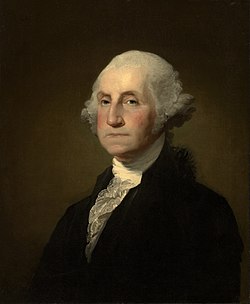
It is substantially true, that virtue or morality is a necessary spring of popular government. The rule, indeed, extends with more or less force to every species of free government.

We must see that there is civic honesty, civic cleanliness, civic good sense in our home administration of city, State, and nation. We must strive for honesty in office, for honesty toward the creditors of the nation and of the individual; for the widest freedom of individual initiative where possible, and for the wisest control of individual initiative where it is hostile to the welfare of the many. But because we set our own household in order we are not thereby excused from playing our part in the great affairs of the world. A man's first duty is to his own home, but he is not thereby excused from doing his duty to the State; for if he fails in this second duty it is under the penalty of ceasing to be a freeman. In the same way, while a nation's first duty is within its own borders, it is not thereby absolved from facing its duties in the world as a whole; and if it refuses to do so, it merely forfeits its right to struggle for a place among the peoples that shape the destiny of mankind.
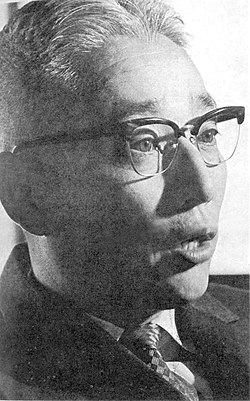
We tell our young managers: 'Don't be afraid to make a mistake. But make sure you don't make the same mistake twice'.

We must know what we think and speak out, even at the risk of unpopularity. In the final analysis, a democratic government represents the sum total of the courage and the integrity of its individuals. It cannot be better than they are. … In the long run there is no more exhilarating experience than to determine one's position, state it bravely and then act boldly.

I rely on two precedents: first, to similar cases our Sages applied the verse, "It is time to do something in honour of the Lord: for they have made void thy law"... Secondly, they have said, "Let all thy acts be guided by pure intentions." ...Lastly, when I have a difficult subject before me—when I find the road narrow, and can see no other way of teaching a well established truth except by pleasing one intelligent man and displeasing ten thousand fools—I prefer to address myself to the one man, and to take no notice whatever of the condemnation of the multitude; I prefer to extricate that intelligent man from his embarrassment and show him the cause of his perplexity, so that he may attain perfection and be at peace.

A man contains all that is needful to his government within himself. He is made a law unto himself. All real good or evil that can befal [sic] him must be from himself. He only can do himself any good or any harm. Nothing can be given to him or can taken from him but always there is a compensation.. There is a correspondence between the human soul and everything that exists in the world; more properly, everything that is known to man. Instead of studying things without the principles of them, all may be penetrated unto with him. Every act puts the agent in a new position. The purpose of life seems to be to acquaint a man with himself. He is not to live the future as described to him but to live the real future to the real present. The highest revelation is that God is in every man.

All authority is in the throne; and what is the throne? This wooden frame covered with velvet? No, I am the throne.

Those who would administer wisely must, indeed, be wise, for one of the serious obstacles to the improvement of our race is indiscriminate charity.

Many forms of Government have been tried and will be tried in this world of sin and woe. No one pretends that democracy is perfect or all-wise. Indeed, it has been said that democracy is the worst form of government except all those other forms that have been tried from time to time; but there is the broad feeling in our country that the people should rule, continuously rule, and that public opinion, expressed by all constitutional means, should shape, guide, and control the actions of Ministers who are their servants and not their masters.

Knowing others is intelligence; knowing yourself is true wisdom. Mastering others is strength; mastering yourself is true power.
Let us speak courteously, deal fairly, and keep ourselves armed and ready.

Though business conditions may change, corporations and securities may change, and financial institutions and regulations may change, human nature remains the same. Thus the important and difficult part of sound investment, which hinges upon the investor's own temperament and attitude, is not much affected by the passing years.
Statesmen, my dear Sir, may plan and speculate for Liberty, but it is Religion and Morality alone, which can establish the Principles upon which Freedom can securely stand. The only foundation of a free Constitution is pure Virtue, and if this cannot be inspired into our People in a greater Measure than they have it now, They may change their Rulers and the forms of Government, but they will not obtain a lasting Liberty. They will only exchange Tyrants and Tyrannies.
Our country—this great republic—means nothing unless it means the triumph of a real democracy, the triumph of popular government, and, in the long run, of an economic system under which each man shall be guaranteed the opportunity to show the best that there is in him.
The world is nothing, the man is all; in yourself is the law of all nature, and you know not yet how a globule of sap ascends; in yourself slumbers the whole of Reason; it is for you to know all, it is for you to dare all.

But let there be spaces in your togetherness, and let the winds of the heavens dance between you. Love one another but make not a bond of love.
Whoso would be a man must be a nonconformist. He who would gather immortal palms must not be hindered by the name of goodness, but must explore if it be goodness.