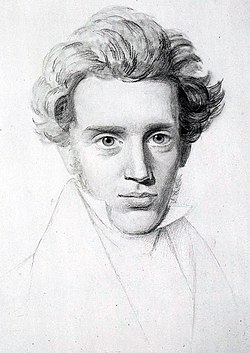
Echoes

Alexis de Tocqueville
1840
“When an opinion has taken root in a democracy and established itself in the minds of the majority, it afterward persists by itself, needing no effort to maintain it since no one attacks it. Those who at first rejected it as false come in the end to adopt it as accepted, and even those who still at the bottom of their hearts oppose it keep their views to themselves, taking great care to avoid a dangerous and futile contest.”
❧

For nonconformity the world whips you with its displeasure. And therefore a man must know how to estimate a sour face.
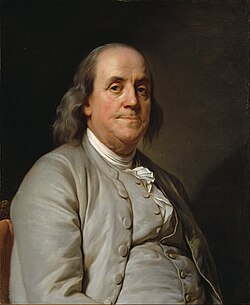
Freedom of speech is a principal pillar of a free government; when this support is taken away, the constitution of a free society is dissolved, and tyranny is erected on its ruins. Republics and limited monarchies derive their strength and vigor from a popular examination into the action of the magistrates.

Once conform, once do what other people do because they do it, and a lethargy steals over all the finer nerves and faculties of the soul. She becomes all outer show and inward emptiness; dull, callous, and indifferent.

The moment we no longer have a free press, anything can happen. What makes it possible for a totalitarian or any other dictatorship to rule is that people are not informed; how can you have an opinion if you are not informed? If everybody always lies to you, the consequence is not that you believe the lies, but rather that nobody believes anything any longer. This is because lies, by their very nature, have to be changed, and a lying government has constantly to rewrite its own history. On the receiving end you get not only one lie — a lie which you could go on for the rest of your days — but you get a great number of lies, depending on how the political wind blows. And a people that no longer can believe anything cannot make up its mind. It is deprived not only of its capacity to act but also of its capacity to think and to judge. And with such a people you can then do what you please.

We must know what we think and speak out, even at the risk of unpopularity. In the final analysis, a democratic government represents the sum total of the courage and the integrity of its individuals. It cannot be better than they are. … In the long run there is no more exhilarating experience than to determine one's position, state it bravely and then act boldly.
Totalitarianism begins in contempt for what you have. The second step is the notion: “Things must change — no matter how, Anything is better than what we have.” Totalitarian rulers organize this kind of mass sentiment, and by organizing it articulate it, and by articulating it make the people somehow love it. They were told before, thou shalt not kill; and they didn’t kill. Now they are told, thou shalt kill; and although they think it’s very difficult to kill, they do it because it’s now part of the code of behavior. They learn whom to kill and how to kill and how to do it together. This is the much talked about Gleichschaltung — the coordination process. You are coordinated not with the powers that be, but with your neighbor — coordinated with the majority. But instead of communicating with the other you are now glued to him. And you feel of course marvelous. Totalitarianism appeals to the very dangerous emotional needs of people who live in complete isolation and in fear of one another.

Great truths do not take hold of the hearts of the masses...And now, as all the world is in error, I, though I know the true path,—how shall I guide? If I know that I cannot succeed and yet try to force success, this would be but another source of error. Better, then, to desist and strive no more. But if I strive not, who will?
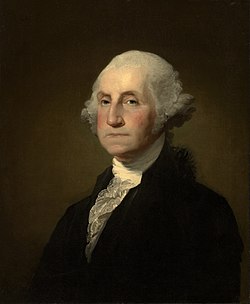
If freedom of speech is taken away, then dumb and silent we may be led, like sheep to the slaughter.
I cannot help fearing that men may reach a point where they look on every new theory as a danger, every innovation as a toilsome trouble, every social advance as a first step toward revolution, and that they may absolutely refuse to move at all.
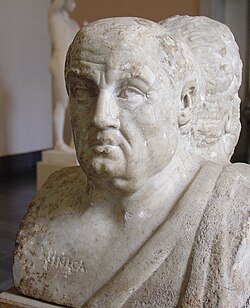
To consort with the crowd is harmful; there is no person who does not make some vice attractive to us, or stamp it upon us, or taint us unconsciously therewith.

Whenever one tries to suppress doubt, there is tyranny.

It is not a dream, it is a simple feat of scientific electrical engineering, only expensive — blind, faint-hearted, doubting world! . . . Humanity is not yet sufficiently advanced to be willingly led by the discover's keen searching sense. But who knows? Perhaps it is better in this present world of ours that a revolutionary idea or invention instead of being helped and patted, be hampered and ill-treated in its adolescence — by want of means, by selfish interest, pedantry, stupidity and ignorance; that it be attacked and stifled; that it pass through bitter trials and tribulations, through the heartless strife of commercial existence. So do we get our light. So all that was great in the past was ridiculed, condemned, combated, suppressed — only to emerge all the more powerfully, all the more triumphantly from the struggle.
Americans of all ages, all stations of life, and all types of disposition are forever forming associations... In democratic countries knowledge of how to combine is the mother of all other forms of knowledge; on its progress depends that of all the others.
One of the best ways of enslaving a people is to keep them from education... The second way of enslaving a people is to suppress the sources of information, not only by burning books but by controlling all the other ways in which ideas are transmitted. (11 May 1943)
There is no area in our minds reserved for superstition, such as the Greeks had in their mythology; and superstition, under cover of an abstract vocabulary, has revenged itself by invading the entire realm of thought. Our science is like a store filled with the most subtle intellectual devices for solving the most complex problems, and yet we are almost incapable of applying the elementary principles of rational thought. In every sphere, we seem to have lost the very elements of intelligence: the ideas of limit, measure, degree, proportion, relation, comparison, contingency, interdependence, interrelation of means and ends. To keep to the social level, our political universe is peopled exclusively by myths and monsters; all it contains is absolutes and abstract entities. This is illustrated by all the words of our political and social vocabulary: nation, security, capitalism, communism, fascism, order, authority, property, democracy. We never use them in phrases such as: There is democracy to the extent that... or: There is capitalism in so far as... The use of expressions like "to the extent that" is beyond our intellectual capacity. Each of these words seems to represent for us an absolute reality, unaffected by conditions, or an absolute objective, independent of methods of action, or an absolute evil; and at the same time we make all these words mean, successively or simultaneously, anything whatsoever. Our lives are lived, in actual fact, among changing, varying realities, subject to the casual play of external necessities, and modifying themselves according to specific conditions within specific limits; and yet we act and strive and sacrifice ourselves and others by reference to fixed and isolated abstractions which cannot possibly be related either to one another or to any concrete facts. In this so-called age of technicians, the only battles we know how to fight are battles against windmills.
Is it so bad, then, to be misunderstood? Pythagoras was misunderstood, and Socrates, and Jesus, and Luther, and Copernicus, and Galileo, and Newton, and every pure and wise spirit that ever took flesh. To be great is to be misunderstood.

Many forms of Government have been tried and will be tried in this world of sin and woe. No one pretends that democracy is perfect or all-wise. Indeed, it has been said that democracy is the worst form of government except all those other forms that have been tried from time to time; but there is the broad feeling in our country that the people should rule, continuously rule, and that public opinion, expressed by all constitutional means, should shape, guide, and control the actions of Ministers who are their servants and not their masters.
The effect of life in society is to complicate and confuse our existence, making us forget who we really are by causing us to become preoccupied with what we are not.

But a Constitution of Government once changed from Freedom, can never be restored. Liberty, once lost, is lost forever.
I think that democratic communities have a natural taste for freedom: left to themselves, they will seek it, cherish it, and view any privation of it with regret. But for equality, their passion is ardent, insatiable, incessant, invincible: they call for equality in freedom; and if they cannot obtain that, they still call for equality in slavery.

Must you value what others value, avoid what others avoid? How ridiculous!

In the first place he made short work of what I have called my 'chronological snobbery,' the uncritical acceptance of the intellectual climate common to our own age and the assumption that whatever has gone out of date is on that account discredited. You must find why it went out of date. Was it ever refuted (and if so by whom, where, and how conclusively) or did it merely die away as fashions do? If the latter, this tells us nothing about its truth or falsehood. From seeing this, one passes to the realization that our own age is also 'a period,' and certainly has, like all periods, its own characteristic illusions.
Whoso would be a man must be a nonconformist. He who would gather immortal palms must not be hindered by the name of goodness, but must explore if it be goodness.

I rely on two precedents: first, to similar cases our Sages applied the verse, "It is time to do something in honour of the Lord: for they have made void thy law"... Secondly, they have said, "Let all thy acts be guided by pure intentions." ...Lastly, when I have a difficult subject before me—when I find the road narrow, and can see no other way of teaching a well established truth except by pleasing one intelligent man and displeasing ten thousand fools—I prefer to address myself to the one man, and to take no notice whatever of the condemnation of the multitude; I prefer to extricate that intelligent man from his embarrassment and show him the cause of his perplexity, so that he may attain perfection and be at peace.