
Women are systematically degraded by receiving the trivial attentions which men think it manly to pay to the sex, when, in fact, men are insultingly supporting their own superiority.
“Should it be proved that woman is naturally weaker than man, from whence does it follow that it is natural for her to labour to become still weaker than nature intended her to be? Arguments of this cast are an insult to common sense, and savour of passion. The divine right of husbands, like the divine right of kings, may, it is to be hoped, in this enlightened age, be contested without danger, and though conviction may not silence many boisterous disputants, yet, when any prevailing prejudice is attacked, the wise will consider, and leave the narrow-minded to rail with thoughtless vehemence at innovation.”
Women are systematically degraded by receiving the trivial attentions which men think it manly to pay to the sex, when, in fact, men are insultingly supporting their own superiority.
Nothing, I am sure, calls forth the faculties so much as the being obliged to struggle with the world; and this is not a woman's province in a married state. Her sphere of action is not large, and if she is not taught to look into her own heart, how trivial are her occupations and pursuits! What little arts engross and narrow her mind!
It is vain to expect virtue from women till they are in some degree independent of men; nay, it is vain to expect that strength of natural affection which would make them good wives and mothers. Whilst they are absolutely dependent on their husbands they will be cunning, mean, and selfish.

Nature has given women so much power that the law has very wisely given them little.
To be a good mother — a woman must have sense, and that independence of mind which few women possess who are taught to depend entirely on their husbands. Meek wives are, in general, foolish mothers; wanting their children to love them best, and take their part, in secret, against the father, who is held up as a scarecrow.
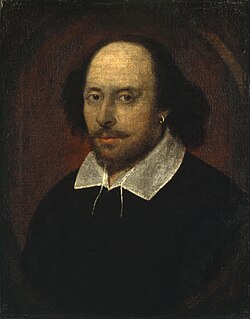
She's beautiful, and therefore to be woo'd;She is a woman, therefore to be won.
Tyrants and sensualists are in the right when they endeavour to keep women in the dark, because the former want only slaves, and the latter a play-thing.
How many women thus waste life away the prey of discontent, who might have practised as physicians, regulated a farm, managed a shop, and stood erect, supported by their own industry, instead of hanging their heads surcharged with the dew of sensibility, that consumes the beauty to which it at first gave lustre.

There is in fact a manly and legitimate passion for equality that spurs all men to wish to be strong and esteemed. This passion tends to elevate the lesser to the rank of the greater. But one also finds in the human heart a depraved taste for equality, which impels the weak to want to bring the strong down to their level, and which reduces men to preferring equality in servitude to inequality in freedom.

The extraordinary woman depends on the ordinary woman. It is only when we know what were the conditions of the average woman's life ... it is only when we can measure the way of life and the experience of life made possible to the ordinary woman that we can account for the success or failure of the extraordinary woman as a writer.

There is no area in our minds reserved for superstition, such as the Greeks had in their mythology; and superstition, under cover of an abstract vocabulary, has revenged itself by invading the entire realm of thought. Our science is like a store filled with the most subtle intellectual devices for solving the most complex problems, and yet we are almost incapable of applying the elementary principles of rational thought. In every sphere, we seem to have lost the very elements of intelligence: the ideas of limit, measure, degree, proportion, relation, comparison, contingency, interdependence, interrelation of means and ends. To keep to the social level, our political universe is peopled exclusively by myths and monsters; all it contains is absolutes and abstract entities. This is illustrated by all the words of our political and social vocabulary: nation, security, capitalism, communism, fascism, order, authority, property, democracy. We never use them in phrases such as: There is democracy to the extent that... or: There is capitalism in so far as... The use of expressions like "to the extent that" is beyond our intellectual capacity. Each of these words seems to represent for us an absolute reality, unaffected by conditions, or an absolute objective, independent of methods of action, or an absolute evil; and at the same time we make all these words mean, successively or simultaneously, anything whatsoever. Our lives are lived, in actual fact, among changing, varying realities, subject to the casual play of external necessities, and modifying themselves according to specific conditions within specific limits; and yet we act and strive and sacrifice ourselves and others by reference to fixed and isolated abstractions which cannot possibly be related either to one another or to any concrete facts. In this so-called age of technicians, the only battles we know how to fight are battles against windmills.

The writers against religion, whilst they oppose every system, are wisely careful never to set up any of their own.
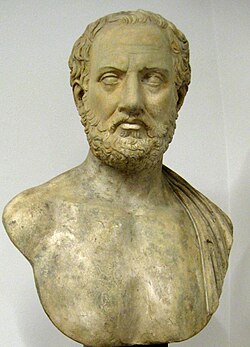
The strong do what they can and the weak suffer what they must.

It is not a dream, it is a simple feat of scientific electrical engineering, only expensive — blind, faint-hearted, doubting world! . . . Humanity is not yet sufficiently advanced to be willingly led by the discover's keen searching sense. But who knows? Perhaps it is better in this present world of ours that a revolutionary idea or invention instead of being helped and patted, be hampered and ill-treated in its adolescence — by want of means, by selfish interest, pedantry, stupidity and ignorance; that it be attacked and stifled; that it pass through bitter trials and tribulations, through the heartless strife of commercial existence. So do we get our light. So all that was great in the past was ridiculed, condemned, combated, suppressed — only to emerge all the more powerfully, all the more triumphantly from the struggle.

Do not go by revelation; Do not go by tradition; Do not go by hearsay; Do not go on the authority of sacred texts; Do not go on the grounds of pure logic; Do not go by a view that seems rational; Do not go by reflecting on mere appearances; Do not go along with a considered view because you agree with it; Do not go along on the grounds that the person is competent; Do not go along because "the recluse is our teacher." Kalamas, when you yourselves know: These things are unwholesome, these things are blameworthy; these things are censured by the wise; and when undertaken and observed, these things lead to harm and ill, abandon them... Kalamas, when you know for yourselves: These are wholesome; these things are not blameworthy; these things are praised by the wise; undertaken and observed, these things lead to benefit and happiness, having undertaken them, abide in them.
If pretended revelations have caused wars where they were opposed, and slavery where they were received, the pretended wise inventions of politicians have done the same. But the slavery has been much heavier, the wars far more bloody, and both more universal by many degrees. Show me any mischief produced by the madness or wickedness of theologians, and I will show you an hundred resulting from the ambition and villany of conquerors and statesmen. Show me an absurdity in religion, and I will undertake to show you an hundred for one in political laws and institutions. If you say, that natural religion is a sufficient guide without the foreign aid of revelation, on what principle should political laws become necessary? Is not the same reason available in theology and in politics? If the laws of nature are the laws of God, is it consistent with the Divine wisdom to prescribe rules to us, and leave the enforcement of them to the folly of human institutions? Will you follow truth but to a certain point?

Things are not so painful and difficult of themselves, but our weakness or cowardice makes them so.

If you can keep your head when all about you Are losing theirs and blaming it on you, If you can trust yourself when all men doubt you, But make allowance for their doubting too; If you can wait and not be tired by waiting, Or being lied about, don't deal in lies, Or being hated, don't give way to hating, And yet don't look too good, nor talk too wise: If you can dream—and not make dreams your master; If you can think—and not make thoughts your aim; If you can meet with Triumph and Disaster And treat those two impostors just the same; If you can bear to hear the truth you've spoken Twisted by knaves to make a trap for fools, Or watch the things you gave your life to, broken, And stoop and build 'em up with worn-out tools: If you can make one heap of all your winnings And risk it on one turn of pitch-and-toss, And lose, and start again at your beginnings And never breathe a word about your loss; If you can force your heart and nerve and sinew To serve your turn long after they are gone, And so hold on when there is nothing in you Except the Will which says to them: 'Hold on!' If you can talk with crowds and keep your virtue, Or walk with Kings—nor lose the common touch, If neither foes nor loving friends can hurt you, If all men count with you, but none too much; If you can fill the unforgiving minute With sixty seconds' worth of distance run, Yours is the Earth and everything that's in it, And—which is more—you'll be a Man, my son!
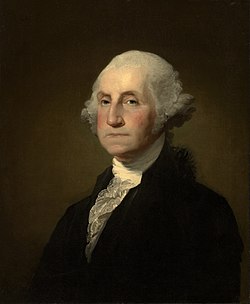
Discipline is the soul of an army. It makes small numbers formidable; procures success to the weak, and esteem to all.

For nonconformity the world whips you with its displeasure. And therefore a man must know how to estimate a sour face.
I know of no country, indeed, where the love of money has taken stronger hold on the affections of men, and where the profounder contempt is expressed for the theory of the permanent equality of property.

He whose intellect overcomes his desire is higher than the angels; he whose desire overcomes his intellect is less than an animal.

When you grow up you tend to get told that the world is the way it is and your life is just to live your life inside the world. Try not to bash into the walls too much. Try to have a nice family, have fun, save a little money. That's a very limited life. Life can be much broader once you discover one simple fact: Everything around you that you call life was made up by people that were no smarter than you and you can change it, you can influence it, you can build your own things that other people can use.
A foolish consistency is the hobgoblin of little minds, adored by little statesmen and philosophers and divines. With consistency a great soul has simply nothing to do.
Whoso would be a man must be a nonconformist. He who would gather immortal palms must not be hindered by the name of goodness, but must explore if it be goodness.