Do what you feel in your heart to be right — for you'll be criticized anyway. You'll be "damned if you do, and damned if you don't."
It isn't enough to talk about peace. One must believe in it. And it isn't enough to believe in it. One must work at it.
We have to face the fact that either all of us are going to die together or we are going to learn to live together and if we are to live together we have to talk.
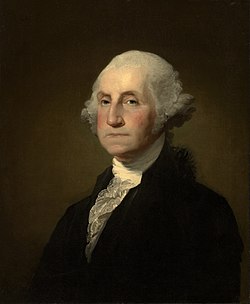 George Washington·1796
It is substantially true, that virtue or morality is a necessary spring of popular government. The rule, indeed, extends with more or less force to every species of free government.
 Theodore Roosevelt·1899
We must see that there is civic honesty, civic cleanliness, civic good sense in our home administration of city, State, and nation. We must strive for honesty in office, for honesty toward the creditors of the nation and of the individual; for the widest freedom of individual initiative where possible, and for the wisest control of individual initiative where it is hostile to the welfare of the many. But because we set our own household in order we are not thereby excused from playing our part in the great affairs of the world. A man's first duty is to his own home, but he is not thereby excused from doing his duty to the State; for if he fails in this second duty it is under the penalty of ceasing to be a freeman. In the same way, while a nation's first duty is within its own borders, it is not thereby absolved from facing its duties in the world as a whole; and if it refuses to do so, it merely forfeits its right to struggle for a place among the peoples that shape the destiny of mankind.
Theodore Roosevelt·1910Our country—this great republic—means nothing unless it means the triumph of a real democracy, the triumph of popular government, and, in the long run, of an economic system under which each man shall be guaranteed the opportunity to show the best that there is in him.