
Your vision will become clear only when you can look into your own heart. Without, everything seems discordant; only within does it coalesce into unity. Who looks outside dreams; who looks inside awakes.

“Last of all he will be able to see the sun, not turning aside to the illusory reflections of it in the water, but gazing directly at it in its own proper place and contemplating it as it is.”
Your vision will become clear only when you can look into your own heart. Without, everything seems discordant; only within does it coalesce into unity. Who looks outside dreams; who looks inside awakes.

Therefore, this terror of the mind and the darkness must be dispelled not by the rays of the sun or the bright light of day, but by the appearance and reasoning of nature.

The tao that can be told is not the eternal Tao The name that can be named is not the eternal Name. The unnameable is the eternally real. Naming is the origin of all particular things. Free from desire, you realize the mystery. Caught in desire, you see only the manifestations. Yet mystery and manifestations arise from the same source. This source is called darkness. Darkness within darkness. The gateway to all understanding.
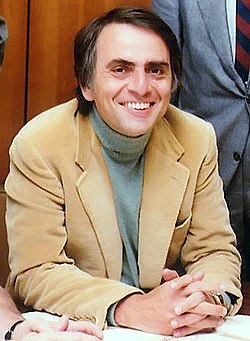
The truth may be puzzling. It may take some work to grapple with. It may be counterintuitive. It may contradict deeply held prejudices. It may not be consonant with what we desperately want to be true. But our preferences do not determine what's true. We have a method, and that method helps us to reach not absolute truth, only asymptotic approaches to the truth — never there, just closer and closer, always finding vast new oceans of undiscovered possibilities. Cleverly designed experiments are the key.

Everyone sees the unseen in proportion to the clarity of his heart, and that depends upon how much he has polished it. Whoever has polished it more sees more — more unseen forms become manifest to him.

I study myself more than any other subject. That is my metaphysics; that is my physics.
The tao that can be described is not the eternal Tao. The name that can be spoken is not the eternal Name. The nameless is the boundary of Heaven and Earth. The named is the mother of creation. Freed from desire, you can see the hidden mystery. By having desire, you can only see what is visibly real. Yet mystery and reality emerge from the same source. This source is called darkness. Darkness born from darkness. The beginning of all understanding.

I went to the woods because I wished to live deliberately, to front only the essential facts of life, and see if I could not learn what it had to teach, and not, when I came to die, discover that I had not lived. I did not wish to live what was not life, living is so dear; nor did I wish to practise resignation, unless it was quite necessary. I wanted to live deep and suck out all the marrow of life, to live so sturdily and Spartan-like as to put to rout all that was not life, to cut a broad swath and shave close, to drive life into a corner, and reduce it to its lowest terms, and, if it proved to be mean, why then to get the whole and genuine meanness of it, and publish its meanness to the world; or if it were sublime, to know it by experience, and be able to give a true account of it in my next excursion. For most men, it appears to me, are in a strange uncertainty about it, whether it is of the devil or of God, and have somewhat hastily concluded that it is the chief end of man here to "glorify God and enjoy him forever."

It is only with the heart that one can see rightly; what is essential is invisible to the eye.

Come forth into the light of things, let Nature be your teacher.

Man is a dream of a shadow. But when god-given brightness comes, a shining light rests on men, and life is sweet.
One does not become enlightened by imagining figures of light, but by making the darkness conscious.
The five colors blind the eye. The five tones deafen the ear. The five flavors dull the taste. Racing and hunting madden the mind. Precious things lead one astray. Therefore the sage is guided by what he feels and not by what he sees. He lets go of that and chooses this.
The Tao that can be told is not the eternal Tao; The name that can be named is not the eternal name. The nameless is the beginning of heaven and earth. The named is the mother of ten thousand things. Ever desireless, one can see the mystery. Ever desiring, one can see the manifestations. These two spring from the same source but differ in name; this appears as darkness. Darkness within darkness. The gate to all mystery.
My soul, my soul, where are you? Do you hear me? I speak, I call you—are you there? I have returned, here I am again. I have shaken the dust of all the lands from my feet, and I have come to you again, I am with you. After long years of long wandering, I have come to you anew. Shall I tell you everything I have seen, experienced, and drunk in? Or do you not want to hear about all the noise of life and the world? But one thing you must know, the one thing I have learned is that one must live this life. This life is the way, the long sought-after way to the unfathomable, which we call "divine". There is no other way. All other ways are false paths.
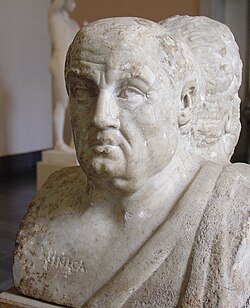
There is no reason why poverty should call us away from philosophy—no, nor even actual want. For when hastening after wisdom, we must endure even hunger. Men have endured hunger when their towns were besieged, and what other reward for their endurance did they obtain than that they did not fall under the conqueror’s power? How much greater is the promise of the prize of everlasting liberty, and the assurance that we need fear neither God nor man! Even though we starve, we must reach that goal.
The way to find out about our place in the universe is by examining the universe and by examining ourselves—without preconceptions, with as unbiased a mind as we can muster. We cannot begin with an entirely clean slate, since we arrive at this problem with predispositions of hereditary and environmental origin; but, after understanding such built-in biases, is it not possible to pry insights from nature?
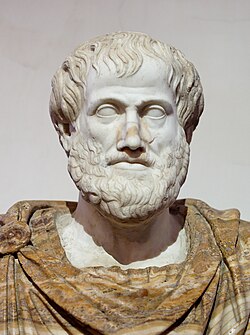
All men by nature desire to know. An indication of this is the delight we take in our senses; for even apart from their usefulness they are loved for themselves; and above all others the sense of sight. For not only with a view to action, but even when we are not going to do anything, we prefer sight to almost everything else. The reason is that this, most of all the senses, makes us know and brings to light many differences between things.
With an eye made quiet by the power of harmony, and the deep power of joy, we see into the life of things.

After the dazzle of day is gone, only the dark, dark night shows to my eyes the stars; after the plain of the surface and the breakers have gone, the depths of the ocean show beautiful forms.

Cherish that which is within you, and shut off that which is without; for much knowledge is a curse.

There is a reality outside the world, that is to say, outside space and time, outside man's mental universe, outside any sphere whatsoever that is accessible to human faculties. Corresponding to this reality, at the centre of the human heart, is the longing for an absolute good, a longing which is always there and is never appeased by any object in this world. Another terrestrial manifestation of this reality lies in the absurd and insoluble contradictions which are always the terminus of human thought when it moves exclusively in this world. Just as the reality of this world is the sole foundation of facts, so that other reality is the sole foundation of good. That reality is the unique source of all the good that can exist in this world: that is to say, all beauty, all truth, all justice, all legitimacy, all order, and all human behaviour that is mindful of obligations. Those minds whose attention and love are turned towards that reality are the sole intermediary through which good can descend from there and come among men. Although it is beyond the reach of any human faculties, man has the power of turning his attention and love towards it. Nothing can ever justify the assumption that any man, whoever he may be, has been deprived of this power. It is a power which is only real in this world in so far as it is exercised. The sole condition for exercising it is consent. This act of consent may be expressed, or it may not be, even tacitly; it may not be clearly conscious, although it has really taken place in the soul. Very often it is verbally expressed although it has not in fact taken place. But whether expressed or not, the one condition suffices: that it shall in fact have taken place. To anyone who does actually consent to directing his attention and love beyond the world, towards the reality that exists outside the reach of all human faculties, it is given to succeed in doing so. In that case, sooner or later, there descends upon him a part of the good, which shines through him upon all that surrounds him.
The Tao is like a bellows: it is empty yet infinitely capable. The more you use it, the more it produces; the more you talk of it, the less you understand.

The world is nothing, the man is all; in yourself is the law of all nature, and you know not yet how a globule of sap ascends; in yourself slumbers the whole of Reason; it is for you to know all, it is for you to dare all.

Whilst in speaking of human things, we say that it is necessary to know them before we can love them...the saints on the contrary say in speaking of divine things that it is necessary to love them in order to know them, and that we only enter truth through charity.