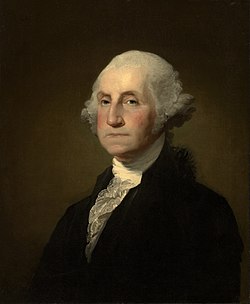
Liberty must at all hazards be supported. We have a right to it, derived from our Maker. But if we had not, our fathers have earned and bought it for us, at the expense of their ease, their estates, their pleasure, and their blood.
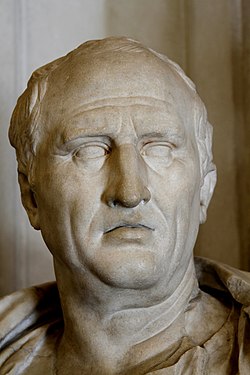
But what is liberty without wisdom, and without virtue? It is the greatest of all possible evils; for it is folly, vice, and madness, without tuition or restraint.
We hold these truths to be self-evident: that all men are created equal, that they are endowed by their Creator with certain unalienable rights, that among these are life, liberty, and the pursuit of happiness.
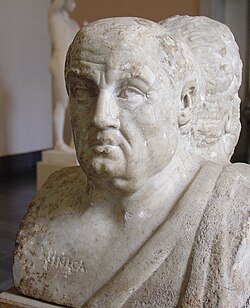
I may become a poor man; I shall then be one among many. I may be exiled; I shall then regard myself as born in the place to which I shall be sent. They may put me in chains. What then? Am I free from bonds now? Behold this clogging burden of a body, to which nature has fettered me! “I shall die,” you say; you mean to say “I shall cease to run the risk of sickness; I shall cease to run the risk of imprisonment; I shall cease to run the risk of death.”
The natural effort of every individual to better his own condition, when suffered to exert itself with freedom and security is so powerful a principle that it is alone, and without any assistance, not only capable of carrying on the society to wealth and prosperity, but of surmounting a hundred impertinent obstructions with which the folly of human laws too often incumbers its operations; though the effect of these obstructions is always more or less either to encroach upon its freedom, or to diminish its security.
Even despots accept the excellence of liberty. The simple truth is that they wish to keep it for themselves and promote the idea that no one else is at all worthy of it. Thus, our opinion of liberty does not reveal our differences but the relative value which we place on our fellow man. We can state with conviction, therefore, that a man's support for absolute government is in direct proportion to the contempt he feels for his country.