
Do you see, then, how much disgrace rolls in the mud, while virtue shines with light? In this, it is clear that rewards never fail the good, nor do punishments ever lack for the wicked.
“Do after the good and leave the evil, and it shall bring you to good fame and renown.”
Do you see, then, how much disgrace rolls in the mud, while virtue shines with light? In this, it is clear that rewards never fail the good, nor do punishments ever lack for the wicked.

Bear in mind, that if through toil you accomplish a good deed, that toil will quickly pass from you, the good deed will not leave you so long as you live; but if through pleasure you do anything dishonourable, the pleasure will quickly pass away, that dishonourable act will remain with you for ever.

Of a surety, at the Day of Judgment it will be demanded of us, not what we have read, but what we have done; not how well we have spoken, but how holily we have lived.

It is natural for a man's character and actions to be influenced by his friends and associates and for him to follow the local norms of behavior. Therefore, he should associate with the righteous and be constantly in the company of the wise, so as to learn from their deeds. Conversely, he should keep away from the wicked who walk in darkness, so as not to learn from their deeds.
Blessedness is not the reward of virtue, but virtue itself; neither do we rejoice therein, because we control our lusts, but, contrariwise, because we rejoice therein, we are able to control our lusts.
Associate with men of good quality if you esteem your own reputation.
It is well said, then, that it is by doing just acts that the just man is produced, and by doing temperate acts the temperate man; without doing these no one would have even a prospect of becoming good. But most people do not do these, but take refuge in theory and think they are being philosophers and will become good in this way, behaving somewhat like patients who listen attentively to their doctors, but do none of the things they are ordered to do.

Moral excellence is an ornament for personal beauty; righteous conduct, for high birth; success, for learning; and proper spending, for wealth.
But true good fortune is what you make for yourself. Good fortune: good character, good intentions, and good actions.
Go forth in virtue!
From my mother, piety and beneficence, and abstinence, not only from evil deeds, but even from evil thoughts; and further, simplicity in my way of living, far removed from the habits of the rich.

What interest, zest, or excitement can there be in achieving the right way, unless we are enabled to feel that the wrong way is also a possible and a natural way, — nay, more, a menacing and an imminent way? And what sense can there be in condemning ourselves for taking the wrong way, unless we need have done nothing of the sort, unless the right way was open to us as well? I cannot understand the willingness to act, no matter how we feel, without the belief that acts are really good and bad.

Faith is the best wealth for a man in this world. Righteousness when well practised brings happiness. Truth is the sweetest of flavours. They say the life of one living by wisdom is the best.

But between us and Goodness the gods have placed the sweat of our brows: long and steep is the path that leads to her, and it is rough at the first; but when a man has reached the top, then is she easy to reach, though before that she was hard.

I don't want to be interesting. I want to be good.

Wealth and honor are what every man desires. But if they have been obtained in violation of moral principles, they must not be kept.
A man is great by deeds, not by birth. Even a drop of poison can cause destruction; one does not need a large amount.

When you have decided that a thing ought to be done and are doing it, never avoid being seen doing it, though many shall form an unfavorable opinion about it. For if it is not right, avoid doing the thing; but if it is right, why are you afraid of those who shall find fault wrongly?
The man of perfect virtue is cautious and slow in his speech. When a man feels the difficulty of doing, can he be other than cautious and slow in speaking?
The man of virtue makes the difficulty to be overcome his first business, and success only a subsequent consideration.
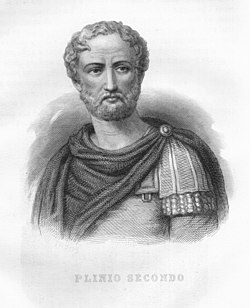
True glory consists in doing what deserves to be written, in writing what deserves to be read, and in so living as to make the world happier for our living in it.

The best portion of a good man's life is his little, nameless, unremembered acts of kindness and of love.

The people as a whole can be benefited morally and materially by a system which shall permit of ample reward for exceptional efficiency, but which shall nevertheless secure to the average man, who does his work faithfully and well, the reward to which he is entitled. Remember that I speak only of the man who does his work faithfully and well. The man who shirks his work, who is lazy or vicious, or even merely incompetent, deserves scant consideration; we may be sorry for his family, but it is folly to waste sympathy on the man himself; and it is also folly for sentimentalists to try to shift the burden of blame from such a man himself to “society” and it is an outrage to give him the reward given to his hard-working, upright, and efficient brother. Still less should we waste sympathy on the criminal; there are altogether too many honest men who need it; and one chief point in dealing with the criminal should be to make him understand that he will be in personal peril if he becomes a lawbreaker. I realize entirely that in the last analysis, with the nation as with the individual, it is private character that counts for most. It is because of this realization that I gladly lay myself open to the charge that I preach too much, and dwell too much upon moral commonplaces; for though I believe with all my heart in the nationalization of this Nation—in the collective use on behalf of the American people of the governmental powers which can be derived only from the American people as a whole—yet I believe even more in the practical application by the individual of those great fundamental moralities.
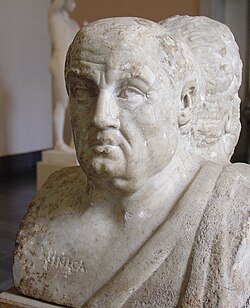
To consort with the crowd is harmful; there is no person who does not make some vice attractive to us, or stamp it upon us, or taint us unconsciously therewith.

That is not riches, which may be lost; virtue is our true good and the true reward of its possessor. That cannot be lost; that never deserts us, but when life leaves us. As to property and external riches, hold them with trembling; they often leave their possessor in contempt, and mocked at for having lost them.