
The effect of life in society is to complicate and confuse our existence, making us forget who we really are by causing us to become preoccupied with what we are not.
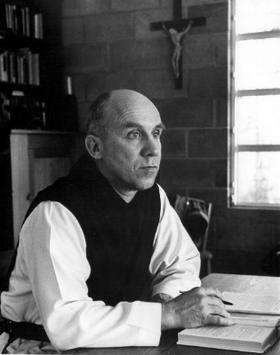
“We are so obsessed with doing that we have no time and no imagination left for being. As a result, men are valued not for what they are but for what they do or what they have.”
The effect of life in society is to complicate and confuse our existence, making us forget who we really are by causing us to become preoccupied with what we are not.

It is in your act that you exist, not in your body. Your act is yourself, and there is no other you.
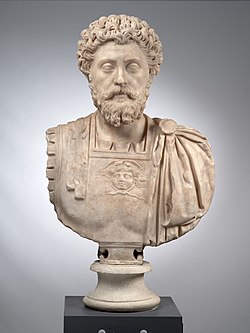
I have often wondered how it is that every man loves himself more than all the rest of men, but yet sets less value on his own opinion of himself than on the opinion of others.

We but mirror the world. All the tendencies present in the outer world are to be found in the world of our body. If we could change ourselves, the tendencies in the world would also change.

The whole work of man really seems to consist in nothing but proving to himself every minute that he is a man and not a piano-key!

You will hear every day the maxims of a low prudence. You will hear, that the first duty is to get land and money, place and name. "What is this Truth you seek? What is this Beauty?" men will ask, with derision. If, nevertheless, God have called any of you to explore truth and beauty, be bold, be firm, be true. When you shall say, "As others do, so will I. I renounce, I am sorry for it, my early visions; I must eat the good of the land, and let learning and romantic expectations go, until a more convenient season." — then dies the man in you; then once more perish the buds of art, and poetry, and science, as they have died already in a thousand thousand men. The hour of that choice is the crisis of your history; and see that you hold yourself fast by the intellect. ... Bend to the persuasion which is flowing to you from every object in Nature, to be its tongue to the heart of man, and to show the besotted world how passing fair is wisdom.

One's philosophy is not best expressed in words; it is expressed in the choices one makes. In stopping to think through the meaning of what I have learned, there is much that I believe intensely, much I am unsure of. In the long run, we shape our lives and we shape ourselves. The process never ends until we die. And, the choices we make are ultimately our own responsibility.
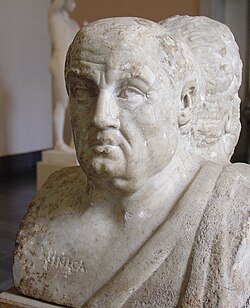
People are frugal in guarding their personal property; but as soon as it comes to squandering time they are most wasteful of the one thing in which it is right to be stingy.
Life is too short to waste The critic bite or cynic bark, Quarrel, or reprimand; ’Twill soon be dark; Up! mind thine own aim, and God speed the mark!

The moral flabbiness born of the exclusive worship of the bitch-goddess SUCCESS. That — with the squalid cash interpretation put on the word success — is our national disease.
It never ceases to amaze me: we all love ourselves more than other people, but care more about their opinions than our own.

If your daily life seems poor, do not blame it; blame yourself, tell yourself that you are not poet enough to call forth its riches.

First say to yourself what you would be; and then do what you have to do.
You should rather please yourself than the people; take thought for the quality, not the number, of judgements made about you.
Though the whole world should praise him, he would not be stimulated to greater endeavour, and though the whole world should condemn him, he would not be depressed. So fixed was he in the difference between the internal judgement of himself and the external judgement of others.

I know of no country, indeed, where the love of money has taken stronger hold on the affections of men, and where the profounder contempt is expressed for the theory of the permanent equality of property.

There are good men and bad men of all nationalities, creeds and colors; and if this world of ours is ever to become what we hope some day it may become, it must be by the general recognition that the man's heart and soul, the man's worth and actions, determine his standing.
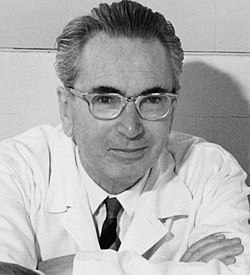
Ultimately, man should not ask what the meaning of his life is, but rather must recognize that it is he who is asked. In a word, each man is questioned by life; and he can only answer to life by answering for his own life; to life he can only respond by being responsible.

I am not concerned that I have no place; I am concerned how I may fit myself for one. I am not concerned that I am not known; I seek to be worthy to be known.
The willfully idle man, like the willfully barren woman, has no place in a sane, healthy, and vigorous community. Moreover, the gross and hideous selfishness for which each stands defeats even its own miserable aims. Exactly as infinitely the happiest woman is she who has borne and brought up many healthy children, so infinitely the happiest man is he who has toiled hard and successfully in his life-work. The work may be done in a thousand different ways —with the brain or the hands, in the study, the field, or the workshop—if it is honest work, honestly done and well worth doing, that is all we have a right to ask. Every father and mother here, if they are wise, will bring up their children not to shirk difficulties, but to meet them and overcome them; not to strive after a life of ignoble ease, but to strive to do their duty, first to themselves and their families, and then to the whole state; and this duty must inevitably take the shape of work in some form or other.

The fashion of this world passeth away and I would fain occupy myself with the things that are abiding.

I am not this hair, I am not this skin, I am the soul that lives within.
Thou oughtest in every deed and thought so to order thyself, as if thou wert to die this day.
It seems to me that the simple acceptance of this fundamental fact of American life, this acknowledgment that the law of work is the fundamental law of our being, will help us to start aright in facing not a few of the problems that confront us from without and from within. As regards internal affairs, it should teach us the prime need of remembering that, after all has been said and done, the chief factor in any man's success or failure must be his own character—that is, the sum of his common sense, his courage, his virile energy and capacity. Nothing can take the place of this individual factor.

I will not be "famous," "great." I will go on adventuring, changing, opening my mind and my eyes, refusing to be stamped and stereotyped. The thing is to free one's self: to let it find its dimensions, not be impeded.