
Echoes

Henry Beston
1928
“Our fantastic civilization has fallen out of touch with many aspects of nature, and with none more completely than with night. With lights and ever more lights, we drive the holiness and beauty of night back to the forests and the sea; the little villages, the crossroads even, will have none of it. Do they fear that vast serenity, the mystery of infinite space, the austerity of stars? Are modern folk, perhaps, afraid of night?”
❧
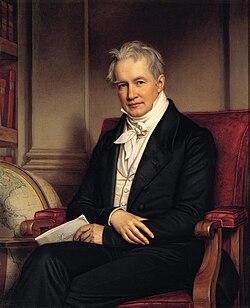
The sun and distant stars appeared to mingle in the perfection of the same natural order, and I felt, in the stillness of the tropical night, how much more alive and near to the heavens was this part of the earth.

After the dazzle of day is gone, only the dark, dark night shows to my eyes the stars; after the plain of the surface and the breakers have gone, the depths of the ocean show beautiful forms.
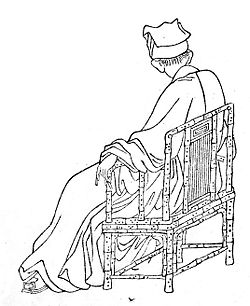
Empty mountain — no one in sight, / yet voices of men are heard. / Sun's reflected light enters the deep wood, / shining once more upon green moss.

I wiped away the weeds and foam, And fetched my sea-born treasures home; But the poor, unsightly, noisome things Had left their beauty on the shore With the sun, and the sand, and the wild uproar.

Therefore, this terror of the mind and the darkness must be dispelled not by the rays of the sun or the bright light of day, but by the appearance and reasoning of nature.
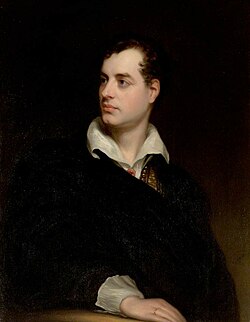
There is a pleasure in the pathless woods, there is a rapture on the lonely shore, there is society where none intrudes, by the deep sea, and music in its roar: I love not Man the less, but Nature more.

There is no area in our minds reserved for superstition, such as the Greeks had in their mythology; and superstition, under cover of an abstract vocabulary, has revenged itself by invading the entire realm of thought. Our science is like a store filled with the most subtle intellectual devices for solving the most complex problems, and yet we are almost incapable of applying the elementary principles of rational thought. In every sphere, we seem to have lost the very elements of intelligence: the ideas of limit, measure, degree, proportion, relation, comparison, contingency, interdependence, interrelation of means and ends. To keep to the social level, our political universe is peopled exclusively by myths and monsters; all it contains is absolutes and abstract entities. This is illustrated by all the words of our political and social vocabulary: nation, security, capitalism, communism, fascism, order, authority, property, democracy. We never use them in phrases such as: There is democracy to the extent that... or: There is capitalism in so far as... The use of expressions like "to the extent that" is beyond our intellectual capacity. Each of these words seems to represent for us an absolute reality, unaffected by conditions, or an absolute objective, independent of methods of action, or an absolute evil; and at the same time we make all these words mean, successively or simultaneously, anything whatsoever. Our lives are lived, in actual fact, among changing, varying realities, subject to the casual play of external necessities, and modifying themselves according to specific conditions within specific limits; and yet we act and strive and sacrifice ourselves and others by reference to fixed and isolated abstractions which cannot possibly be related either to one another or to any concrete facts. In this so-called age of technicians, the only battles we know how to fight are battles against windmills.

Thousands of tired, nerve-shaken, over-civilized people are beginning to find out that going to the mountains is going home; that wildness is a necessity; and that mountain parks and reservations are useful not only as fountains of timber and irrigating rivers, but as fountains of life.
In God's wildness lies the hope of the world — the great fresh, unblighted, unredeemed wilderness. The galling harness of civilization drops off, and wounds heal ere we are aware.
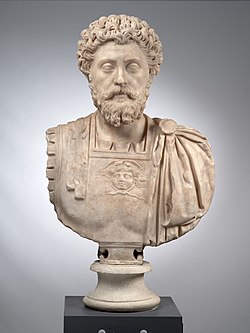
Dwell on the beauty of life. Watch the stars, and see yourself running with them.

I was utterly alone with the sun and the earth. Lying down on the grass, I spoke in my soul to the earth, the sun, the air, and the distant sea far beyond sight. I thought of the earth's firmness — I felt it bear me up; through the grassy couch there came an influence as if I could feel the great earth speaking to me.

Sometimes, in a summer morning, having taken my accustomed bath, I sat in my sunny doorway from sunrise till noon, rapt in a revery, amidst the pines and hickories and sumachs, in undisturbed solitude and stillness, while the birds sang around or flitted noiseless through the house, until by the sun falling in at my west window, or the noise of some traveller's wagon on the distant highway, I was reminded of the lapse of time.
I am no more lonely than the loon in the pond that laughs so loud, or than Walden Pond itself. I am no more lonely than a single mullein or dandelion in a pasture, or a bean leaf, or a housefly, or a bumblebee. I am no more lonely than the Mill Brook, or a weathercock, or the north star, or the south wind, or an April shower, or a January thaw, or the first spider in a new house.

Viewed from the distance of the moon, the astonishing thing about the earth, catching the breath, is that it is alive.
The sun shines not on us but in us. The rivers flow not past, but through us, thrilling, tingling, vibrating every fiber and cell of the substance of our bodies, making them glide and sing. The trees wave and the flowers bloom in our bodies as well as our souls, and every bird song, wind song, and tremendous storm song of the rocks in the heart of the mountains is our song, our very own, and sings our love.
Another glorious Sierra day in which one seems to be dissolved and absorbed and sent pulsing onward we know not where. Life seems neither long nor short, and we take no more heed to save time or make haste than do the trees and stars. This is true freedom, a good practical sort of immortality.

The most beautiful experience we can have is the mysterious. It is the fundamental emotion that stands at the cradle of true art and true science. Whoever does not know it and can no longer wonder, no longer marvel, is as good as dead, and his eyes are dimmed. It was the experience of mystery — even if mixed with fear — that engendered religion. A knowledge of the existence of something we cannot penetrate, our perceptions of the profoundest reason and the most radiant beauty, which only in their most primitive forms are accessible to our minds: it is this knowledge and this emotion that constitute true religiosity. In this sense, and only this sense, I am a deeply religious man.
After you have exhausted what there is in business, politics, conviviality, and so on — have found that none of these finally satisfy, or permanently wear — what remains? Nature remains.
We are now in the mountains and they are in us, kindling enthusiasm, making every nerve quiver, filling every pore and cell of us.
There is a love of wild Nature in everybody, an ancient mother-love ever showing itself whether recognized or no, and however covered by cares and duties.
Climb the mountains and get their good tidings. Nature's peace will flow into you as sunshine flows into trees. The winds will blow their own freshness into you, and the storms their energy, while cares will drop away from you like the leaves of autumn.
Give me the splendid silent sun with all his beams full-dazzling, give me juicy autumnal fruit ripe and red from the orchard, give me a field where the unmowed grass grows, give me an arbor, give me the trellis'd grape.
Nature everywhere speaks to man in a voice familiar to his soul.

When I consider the short duration of my life, swallowed up in the eternity before and after, the small space which I fill, or even can see, engulfed in the infinite immensity of spaces whereof I know nothing, and which know nothing of me, I am terrified, and wonder that I am here rather than there, for there is no reason why here rather than there, or now rather than then. Who has set me here? By whose order and design have this place and time been destined for me?—Memoria hospitis unius diei prætereuntis. It is not well to be too much at liberty. It is not well to have all we want. How many kingdoms know nothing of us! The eternal silence of these infinite spaces alarms me.